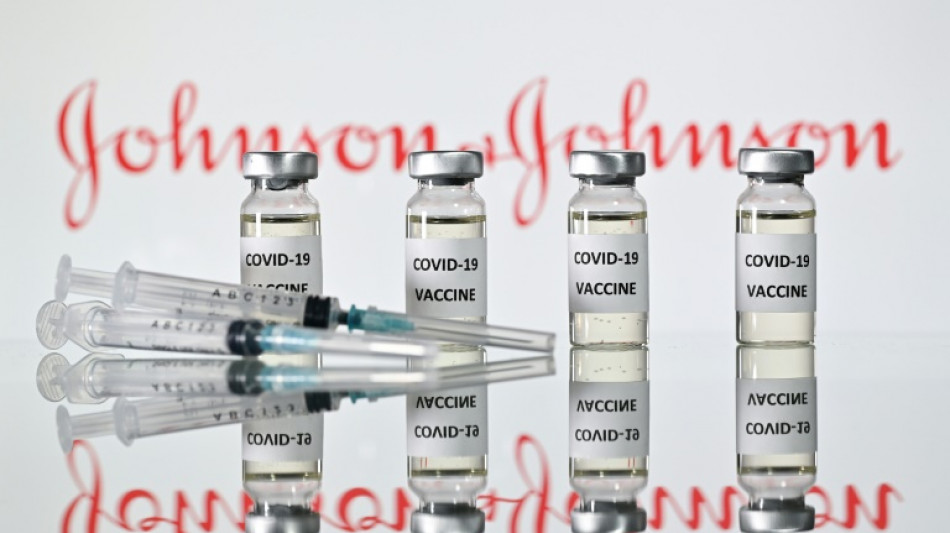
Johnson & Johnson temporarily halts Covid-19 vaccine output: report

 رئيس جامعة القدس يستعرض نموذج الشراكة بين التعليم العالي والصناعة في قمة QS بأبوظبي

 ابتكارات فلسطينية في مسابقة "سيف" العالمية بالرياض

 تحذير أمني من تكثيف إسرائيل إرسال رسائل نصية مستهدفة للفلسطينيين

 Polanski Accuses Sadiq Khan of Undermining Thames Water Nationalisation

 Nigeria Envoy's $61 Billion Claim Faces Scrutiny Amid Diplomatic Tensions

 وزير المالية يبحث مع برنامج الأمم المتحدة الإنمائي توسيع الدعم في غزة والضفة

 المغرب يبلغ محكمة التحكيم الرياضي بشأن اتصال محتمل بين مسؤول سنغالي ومحكم في قضية كأس أفريقيا
Johnson & Johnson has temporarily suspended production at a key plant manufacturing the Covid-19 vaccine, the New York Times reported Tuesday.
The facility in the Dutch city of Leiden halted output late last year, according to the report, which cited people familiar with the decision.
J&J, without confirming or denying the report, said it has continued to fulfill delivery commitments, a company spokesman said.
The factory, which is currently making an experimental vaccine, is expected to resume production of the Covid-19 vaccine again in a "few" months, the Times reported.
J&J currently has "millions of doses of our Covid-19 vaccine in inventory," according to the J&J spokesman.
"We continue to fulfill our contractual obligations in relation to the Covax facility and the African Union," the company spokesman said.
J&J has projected sales of $3 billion to $3.5 billion in 2022 for its Covid-19 vaccine, much less than the $32 billion forecast by Pfizer for the same period.
But the J&J vaccine has been sought after in developing countries because, unlike other options, it does not require transportation at very cold temperatures. Also, the vaccine was originally billed as a single-shot inoculation.
Additional plants are being outfitted to make the vaccine, but production is not expected until late spring, the Times said.
V.AbuAwwad--SF-PST