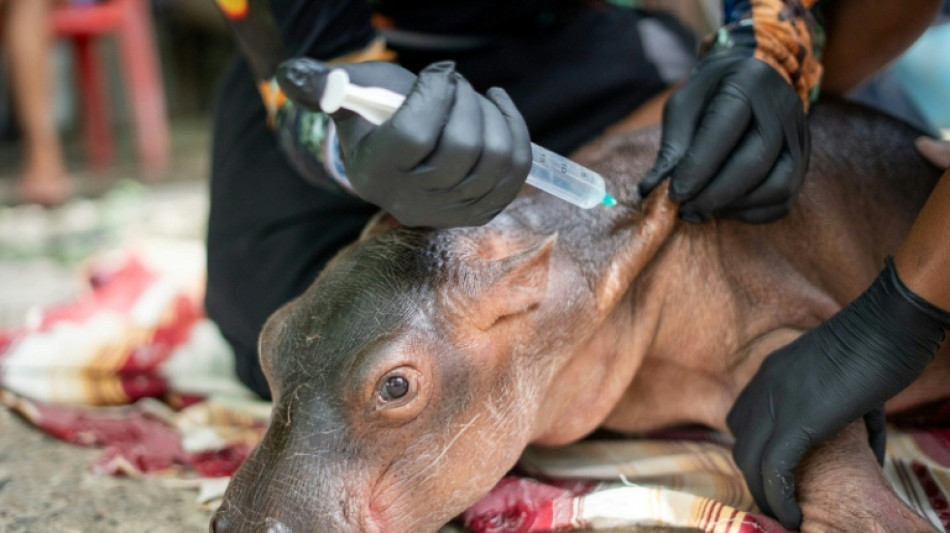
Baby hippo descended from Escobar's herd rescued in Colombia / Photo: Handout - CORNARE/AFP

 رئيس جامعة القدس يستعرض نموذج الشراكة بين التعليم العالي والصناعة في قمة QS بأبوظبي

 ابتكارات فلسطينية في مسابقة "سيف" العالمية بالرياض

 تحذير أمني من تكثيف إسرائيل إرسال رسائل نصية مستهدفة للفلسطينيين

 Polanski Accuses Sadiq Khan of Undermining Thames Water Nationalisation

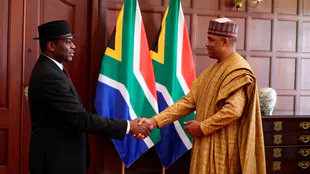 Nigeria Envoy's $61 Billion Claim Faces Scrutiny Amid Diplomatic Tensions

 وزير المالية يبحث مع برنامج الأمم المتحدة الإنمائي توسيع الدعم في غزة والضفة

 المغرب يبلغ محكمة التحكيم الرياضي بشأن اتصال محتمل بين مسؤول سنغالي ومحكم في قضية كأس أفريقيا
Authorities in northwestern Colombia said they rescued a baby hippopotamus found alone by fishermen on the banks of a river and showing signs of malnutrition.
Colombia has around 200 invasive hippos living in the wild, according to the Environment Ministry, all of which descended from a colony brought to South America by slain cocaine kingpin Pablo Escobar.
Fishermen found the small hippo separated from its mother and hidden in the bushes along the riverbank in a rural area of the Puerto Nare municipality in Antioquia, said Javier Valencia, director of the regional environmental authority, in a statement on Tuesday.
Veterinarians treated it for "advanced dehydration and malnutrition," according to a statement.
After being stabilized, the animal was transferred to a hippo sanctuary at Hacienda Napoles, the estate previously owned by Escobar and which is now a theme park.
Escobar imported four hippos in the 1980s for his private zoo at the hacienda.
After the Medellin cartel leader's death in 1993, the animals escaped and settled along the banks of the Magdalena River, where they have disrupted the ecosystem and even attacked local residents.
They are now considered an invasive species and are destabilizing native ecosystems, prompting the government this year to approve a plan to cull around 80 of them after attempts to curb their reproduction through sterilization failed.
It is the largest hippo colony outside Africa.
R.Halabi--SF-PST