One man, his dog, and ChatGPT: Australia's AI vaccine saga / Photo: SEBASTIEN BOZON - AFP

 Hotel Blacklist Launches New Accommodation Industry Risk Assessment Tool

 Bangladesh nuclear plant draws hope -- and worry

 US beat Canada 1-0 to wrap up four-win international break
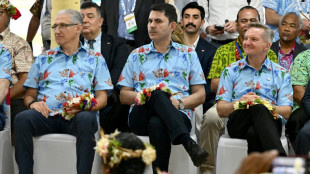 Turkey, Australia's joint COP31 leadership raises doubts
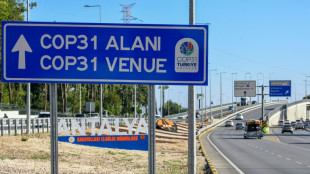 For Turkish NGOs, COP31 offers rare space for action
 Sleep, appetite, gene-editing experts contend for Nobel chemistry prize
 Nobel Peace Prize haunted by the 'spectre' of Trump

 Africa launches own credit agency in bid for cheaper borrowing

 US, China, EU: three paths to regulating AI
 Australia's High Court rules against coal mine in landmark climate case
 Australia touts new funds for Pacific infrastructure at Fiji 'pre-COP'

 Eva Marie Saint, Oscar winner of Hollywood classics, dies at 102

 Australia probes app used in cheap smart glasses over privacy fears
 England needed to 'move on' from World Cup pain, says Tuchel

 O'Neill to stay at Celtic after period of "reflection"

 Kane marks 125th England cap with Wembley Nations League double

 Quebec's incoming separatist leader wants to block Crown from swearing-in

 Emmys gala will now stream its premier television awards

 Paramount completes Warner Bros takeover, creating Skydance
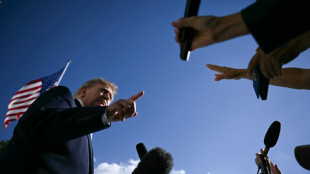 Trump blames France unrest on Islam, migration
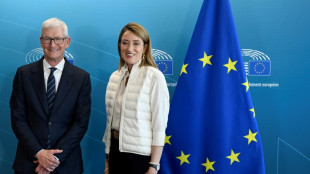 Apple's Cook praises EU over efforts to protect children online
 Nobel winner Halzen says years of October 'misery' finally over
 Quebec separatist win rattles Carney's unity push
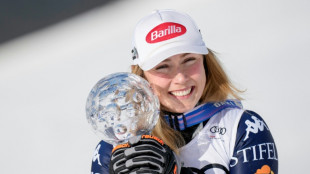 'Itching' for change: Shiffrin cuts back slaloms this season

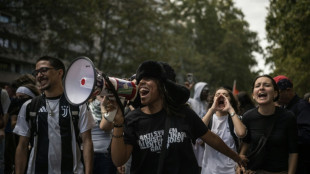
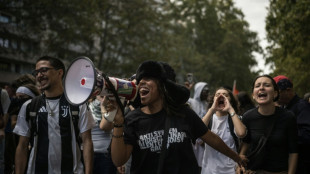 'Gen Z has risen up': Tens of thousands mass for tense France school protests
Desperate to help his sick dog, one Australian man went down the ultimate ChatGPT research hole, using artificial intelligence to design a personalised experimental treatment and finding top scientists to administer it.
Paul Conyngham's months-long quest to fight his rescue mutt Rosie's cancer has grabbed the attention of OpenAI boss Sam Altman, who called it an "amazing story" in an X post on Friday.
Sydney-based AI consultant Conyngham told AFP that eight-year-old Rosie's mast cell cancer is now in partial remission and her biggest tumour has shrunk dramatically.
"She regained a lot of mobility and function" after receiving a custom mRNA vaccine along with powerful immunotherapy in December, he said.
Conyngham does not call his findings a cure -- but experts unrelated to the dogged endeavours said they highlight AI's potential to accelerate medical research.
"I would have conversations and just keep them going non-stop" with ChatGPT, Gemini and Grok to study cancer therapies in-depth, Conyngham said.
Following the chatbots' advice, he paid $3,000 to have Rosie's genome sequenced, and used the same online tools to analyse her DNA data.
Next he turned to AlphaFold, a scientific AI model that won 2024's chemistry Nobel, to better understand one of the mutated doggy genes.
Conyngham sought the help of a University of New South Wales (UNSW) team -- also thanks to a ChatGPT recommendation -- and other academics in Australia who made his research a reality.
- 'Just a rash' -
Rosie's cancer was misdiagnosed for nearly a year, Conyngham said on the phone during one of the long daily walks the pair have resumed.
"I took her to the vet three times. And two times, the vet said, don't worry about it, it's just a rash," he said.
But Rosie got sicker and a biopsy showed in 2024 that she did have terminal cancer.
Having tried chemotherapy, standard immunotherapy and surgery, costs were mounting and Conyngham wanted more options.
So he used AI to delve deep into the world of emerging treatments including mRNA vaccines, which train the body's immune system and were widely used during the Covid pandemic.
"This was not a clinical trial by any means" and "it's not that AI cured cancer", said UNSW professor Martin Smith, who sequenced Rosie's genome for Paul.
"It was really driven by his determination to help his dog."
The combination of "three different disruptive technologies: genome sequencing, artificial intelligence, and RNA therapeutics... offers new possibilities and challenges", Smith said.
- AI promise -
Chatbots also assisted Conyngham in navigating the reams of paperwork for ethical approval.
And through his new scientific network, he met a professor at the University of Queensland able to administer the fine-tuned treatment.
Not all the tumours responded as well as the largest one, however. Rosie has had to have another operation since, and it's unclear how long she has left to live.
The "short answer is we don't know for sure" what actually led to the reduction in size of Rosie's biggest tumour, said Pall Thordarson, director of UNSW's RNA institute which created the vaccine.
"He used the AI program... to design the actual mRNA sequence. And then he gave that information to us," Thordarson explained.
"AI holds lots of promise to improve and accelerate our research strategies," Nick Semenkovich at the Medical College of Wisconsin, unrelated to the Rosie saga, told AFP.
But UNSW and Conyngham "haven't published scientific details outside of their press release and interviews, so we don't know enough about the vaccine to understand how much AI helped in its development -- or if the vaccine worked the way it was designed", Semenkovich said.
Patrick Tang Ming-kuen, a professor from The Chinese University of Hong Kong, said AI-powered research could help pets and humans survive, although the risk of errors is real.
"AI transforms a 'needle-in-a-haystack' search into a data-driven selection process, drastically shortening the timeframe between diagnosis and vaccine construction," he said.
Since Conyngham's story went global, Smith said his team have been fielding various new requests.
"You know: my cat's got a disease, my dog's got a disease, my aunt has got a disease."
But "it's hard for us to be able to help", he said. "There's a lot of things that have to align."
Y.AlMasri--SF-PST