
Brain training reduces dementia risk by 25%, study finds / Photo: Philippe LOPEZ - AFP/File

 Myanmar leader lands in Malaysia for migrant return talks

 Indian central bank hikes rates for first time since 2023

 US military on Okinawa face curfew, alcohol ban after murder case

 Fierce lobbying in EU over 'forever chemicals'

 Dodgers beat Braves and Padres avoid sweep in MLB playoffs

 Mourning, war and elections as Israel marks October 7

 Messi says Argentina retirement is 'saddest day of my career'

 Oil rises and stocks fall as Hormuz worries flare

 Pacific presses world for help 'surviving' climate change at pre-COP summit

 Verstappen revival to be put to the test in steamy Singapore

 US woman who survived botched execution is conscious, speaking: lawyers

 Climate champion Australia digging more coal

 Emotion, tears as Messi retires from Argentina national team

 Dodgers push Braves to the brink of MLB playoff exit

 Crisis-stricken Haiti postpones elections

 N. Korea's Kim pledges 'invariable support' in Putin birthday letter

 OGRD Alliance Advances PLPC Multi-Asset Platform Following APHELAR Milestone, Expanding Licensing and Strategic Capital Frameworks

 Emotion, tears as Messi prepares for Argentina farewell

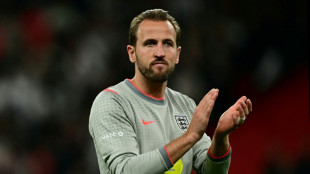 Kane eyes Ronaldo record after matching England cap mark

 Spain fight back to beat Croatia, Kane adds to record for England

 Merino double helps Spain beat Croatia, reach Nations League quarters

 US stocks hit fresh records as oil stabilizes on rising supplies

 As Messi bows out, Argentines say 'thank you'

 Ronaldo opens door for Portugal return, apologises for walkout

 'Nobody seems to care': Russian city shrugs off plague reports

Researchers announced on Monday that a randomised controlled trial -- considered the gold standard for medical research -- has finally identified something capable of significantly lowering people's risk of developing dementia.
And rather than an expensive drug, it was a cheap and simple brain-training exercise that was found to decrease dementia rates by a quarter, according to the study.
"For the first time, this is a gold-standard study that's given us an idea of what we can do to reduce risk for developing dementia," study co-author Marilyn Albert of Johns Hopkins University in the United States told AFP.
Although there are a vast amount of brain-training games and apps which claim to fight off cognitive decline, there has been little high-quality, long-term research proving their effectiveness.
The US team of researchers warned that their study -- which only found one specific type of training made a difference -- does not mean that all brain-training games are effective.
Their trial, called ACTIVE, began in the late 1990s.
More than 2,800 participants aged 65 or older were randomly assigned one of three different types of brain training -- speed, memory, or reasoning -- or were part of a control group.
First, the participants did an hour-long training session twice a week for five weeks. One and three years later, they did four booster sessions. In total, there were fewer than 24 hours of training.
During follow ups after five, 10 and most recently 20 years, the speed training was always "disproportionately beneficial", Albert said.
After two decades, Medicare records showed that the people who did the speed-training and booster sessions had a 25-percent reduced risk of getting dementia.
The researchers were surprised to find that the other two types of training did not make a statistically significant difference.
The speed training exercise involves clicking on cars and road signs that pop up in different areas of a computer screen.
- 'Extraordinarily important' -
So why did speed training have such an impact? Albert said the researchers could only guess.
"We assume that this training affected something about connectivity in the brain," Albert said.
One important difference was that it adapted to the abilities of the person, so became easier or more difficult as needed.
When asked about the study's limitations, Albert said "there aren't very many". One quarter of the participants were from minorities, suggesting that the results should apply to everyone.
Discovering the exact mechanism for why speed training worked could help researchers develop a new, more effective exercise in the future, Albert said.
But the finding is already "extraordinarily important", she emphasised, pointing out that reducing dementia among 25 percent of the US population could save $100 billion in patient care.
There have been numerous previous studies suggesting that people who have a healthier lifestyle have a lower risk of dementia. However, this research has been observational, which means it cannot directly demonstrate cause and effect -- unlike randomised controlled trials.
Dementia affects 57 million people and is the seventh leading cause of death globally, according to the World Health Organization.
The speed training task is called "Double Decision" and is available via the brain-training app BrainHQ.
The study was published in the journal Alzheimer's and Dementia: Translational Research & Clinical Research.
R.AbuNasser--SF-PST