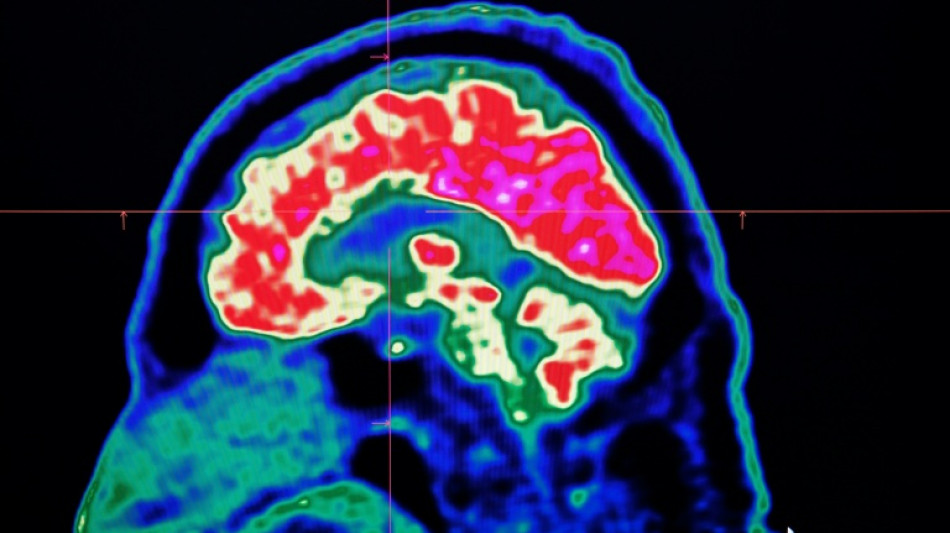
Final report casts doubt on existence of Canada mystery brain illness / Photo: Fred TANNEAU - AFP

 رئيس جامعة القدس يستعرض نموذج الشراكة بين التعليم العالي والصناعة في قمة QS بأبوظبي

 ابتكارات فلسطينية في مسابقة "سيف" العالمية بالرياض

 تحذير أمني من تكثيف إسرائيل إرسال رسائل نصية مستهدفة للفلسطينيين

 Polanski Accuses Sadiq Khan of Undermining Thames Water Nationalisation

 Nigeria Envoy's $61 Billion Claim Faces Scrutiny Amid Diplomatic Tensions

 وزير المالية يبحث مع برنامج الأمم المتحدة الإنمائي توسيع الدعم في غزة والضفة

 المغرب يبلغ محكمة التحكيم الرياضي بشأن اتصال محتمل بين مسؤول سنغالي ومحكم في قضية كأس أفريقيا
A Canadian medical report published Friday found no evidence linking environmental factors to an unusual set of neurological symptoms affecting hundreds of people, a five-year saga that has shaken a small Atlantic province.
In 2021, health officials in New Brunswick launched an investigation involving 48 patients with a range of neurological symptoms but no apparent common illness. These included muscle spasms, memory loss, hallucinations and balance issues.
Some in the province of less than a million people began describing the condition as a mystery brain disease.
Provincial officials said at the time that the patient group could be suffering from a new disease not previously seen in Canada and began using the term "possible neurological syndrome of unknown cause."
But the provincial investigations that followed, including the final report released Friday, dismissed claims that there was anything linking the patients other than a reported set of symptoms -- and a single neurologist, named Alier Marrero.
The first investigation, which concluded in 2022, "found no evidence of a common illness among these patients."
But in 2023, Marrero reported additional people complaining of neurological symptoms and the patients' stories continued receiving widespread media coverage.
Marrero said that while the condition could not be diagnosed, he believed the patients had elevated levels of certain substances -- like herbicides or toxic metals -- in their systems, suggesting an environmental cause for the illness.
- 'Unanswered questions' -
New Brunswick launched a new investigation, this time looking at data from 222 patients, about 75 percent of whom lived in or around the city of Moncton.
A Journal of the American Medical Association study published last year found no evidence of a common mystery disease, either.
But New Brunswick Premier Susan Holt said in May that her government would do what it could to provide patients "the information they need about what's causing these illnesses."
"There's too many unanswered questions for us to stop the work," Holt said.
Investigators studied living patients and analyzed autopsies.
The report released Friday would appear to close the case from the government's perspective.
"We are able to conclude that our investigation found no evidence of a widespread issue among this patient group," the report said.
"We do not feel that exposure to these substances is a contributing factor to most patients' illness," it added.
The report also pointed to concerns with Marrero's work.
"Patients were reported to (the province) as having an undiagnosed illness; however, our findings suggest that it is possible that many patients do have illnesses that can be diagnosed," it said.
The report also recommended that before a neurological condition is declared "undiagnosed," a patient must be seen by two specialists.
N.Shalabi--SF-PST

