'HIV-free generations': prevention drug rollout brings hope to South Africa
/ Photo: Ihsaan Haffejee - AFP

 Indonesian court hears 'negligence' complaint against state over fires, haze

 Rubio in Greece to urge against Western civilisation 'decline'

 Micron workers at Taiwan plant vote in favour of strike

 In 'The Social Reckoning,' Jeremy Allen White takes on Facebook's 'frightening' ambition

 Chip industry activists call for South Korea to recognise cancer cases
 Famine-scarred southern Madagascar braces for El Nino

 How the EU regulates lobbyists

 I.Coast refuge offers lifelong care for youngsters scorned as 'sorcerers'

 Indian central bank hikes rates for first time in more than 3 years

 Hotel Blacklist Launches New Accommodation Industry Risk Assessment Tool

 Bangladesh nuclear plant draws hope -- and worry

 US beat Canada 1-0 to wrap up four-win international break

 Turkey, Australia's joint COP31 leadership raises doubts

 For Turkish NGOs, COP31 offers rare space for action
 Sleep, appetite, gene-editing experts contend for Nobel chemistry prize

 Nobel Peace Prize haunted by the 'spectre' of Trump

 Africa launches own credit agency in bid for cheaper borrowing

 US, China, EU: three paths to regulating AI

 Australia's High Court rules against coal mine in landmark climate case

 Australia touts new funds for Pacific infrastructure at Fiji 'pre-COP'

 Eva Marie Saint, Oscar winner of Hollywood classics, dies at 102

 Australia probes app used in cheap smart glasses over privacy fears
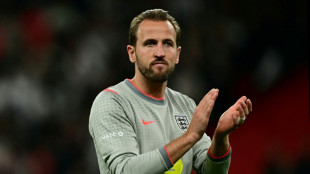
 England needed to 'move on' from World Cup pain, says Tuchel

 O'Neill to stay at Celtic after period of "reflection"

 Kane marks 125th England cap with Wembley Nations League double

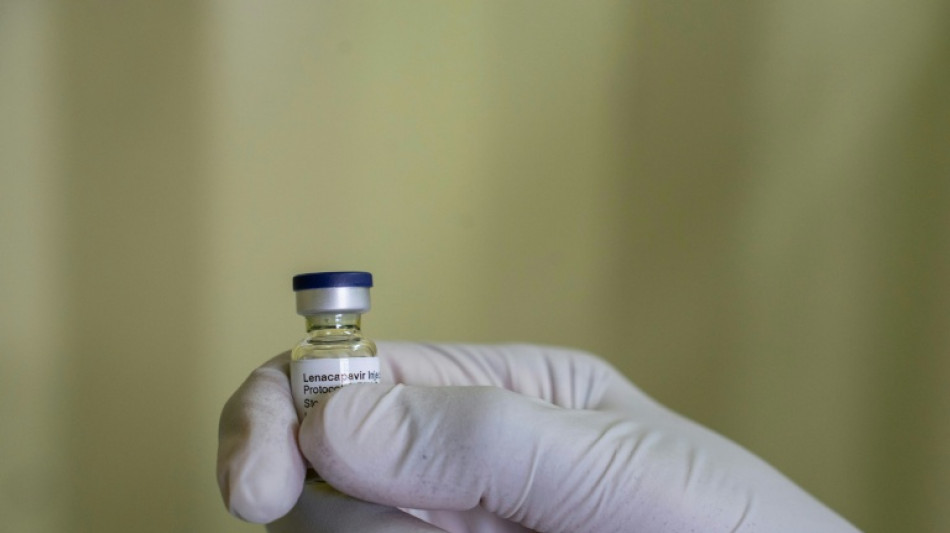
Kegoratile Aphane did not flinch when the needle pierced the skin of her right buttock, injecting a yellow-coloured drug touted as a revolution that could end the HIV pandemic.
The 32-year-old was among the very first South Africans -- and Africans -- to receive a dose of lenacapavir, a drug taken twice a year that has been shown to reduce the risk of HIV transmission by more than 99.9 percent, making it functionally akin to a powerful vaccine.
"I didn’t even feel any pain," she said with a relieved smile after receiving the two injections that form the first dose.
Five other patients received lenacapavir Tuesday at a clinic outside of Pretoria as part of an implementation study by a Wits University research unit and funded by the international health agency Unitaid, which works on ensuring equitable access to medical innovations.
The study would enrol 2,000 people and "follow them for at least a year to understand how this prevention option works in real life", according to the Wits Reproductive Health and HIV Institute (RHI)'s Saiqa Mullick.
- 'Life-changing' -
With close to one in five adults living with HIV, South Africa has one of the highest rates in the world, and reported last year the highest number of new infections for any single country -- 170,000.
Until now, the best available prevention drug for HIV-negative people was through a daily pill.
The twice-yearly lenacapavir jab would be "life-changing", said the clinic’s manager Magdaline Ngwato, especially for young people who struggled to maintain the daily schedule of the pill and groups like sex workers or LGBTQ patients who wanted to be discreet.
"Now with the injection it will be fine, because you can do it secretly," she told AFP, adding that many people had already expressed interest.
"Even mothers said they will send their children to come get it," Ngwato enthused. "I think we are going to have a lot of HIV-free generations."
For Aphane, the decision to take the groundbreaking treatment was deeply personal.
"I just lost my mom in 2021 -- she was HIV positive," she told AFP with emotion.
"It's a very, very, very painful disease. So that's why I (am) so serious about this. Let me be safe and try this."
Twenty-year-old student Katlego, who asked to speak under a pseudonym, was "proud" to have received one of the very first doses.
A broader national rollout is expected next year, starting with 400,000 doses that would be received through a deal between lenacapavir's manufacturer Gilead Sciences and the Global Fund to Fight AIDS.
While lenacapavir currently costs around $28,000 a year in the United States, generic versions are expected to be available from 2027 at around $40 per year in more than 100 countries through agreements by Unitaid and the Gates Foundation with Indian pharmaceutical companies.
The rollout could usher in a different world for Aphane's daughters and future grandchildren, she said.
"The more they introduce, the more they talk about it, the more they show (it) everywhere, it will save lives," she said.
D.Khalil--SF-PST