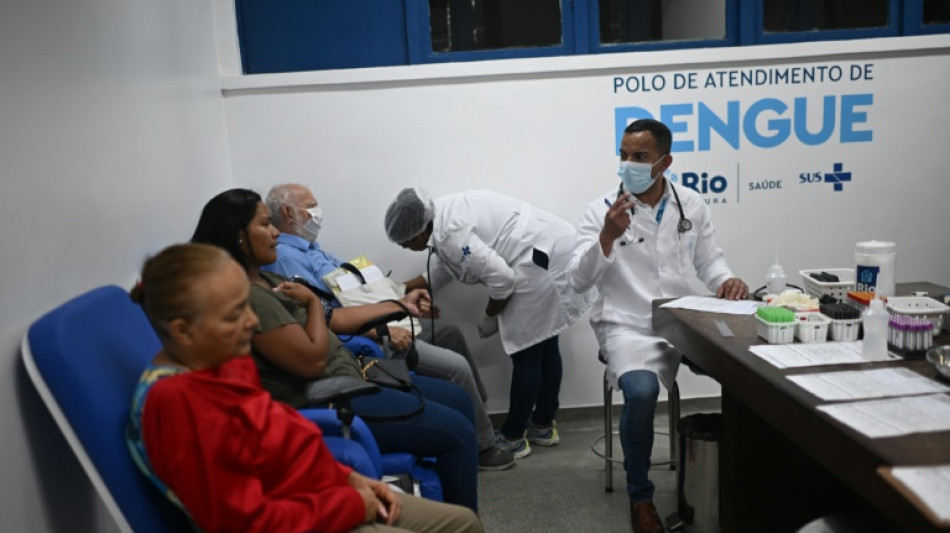
Brazil approves world's first single-dose dengue vaccine / Photo: MAURO PIMENTEL - AFP

 رئيس جامعة القدس يستعرض نموذج الشراكة بين التعليم العالي والصناعة في قمة QS بأبوظبي

 ابتكارات فلسطينية في مسابقة "سيف" العالمية بالرياض

 تحذير أمني من تكثيف إسرائيل إرسال رسائل نصية مستهدفة للفلسطينيين

 Polanski Accuses Sadiq Khan of Undermining Thames Water Nationalisation

 Nigeria Envoy's $61 Billion Claim Faces Scrutiny Amid Diplomatic Tensions

 وزير المالية يبحث مع برنامج الأمم المتحدة الإنمائي توسيع الدعم في غزة والضفة

 المغرب يبلغ محكمة التحكيم الرياضي بشأن اتصال محتمل بين مسؤول سنغالي ومحكم في قضية كأس أفريقيا
Brazilian authorities on Wednesday approved the world's first single-dose dengue vaccine, which they hailed as a "historic" achievement as cases of the mosquito-borne disease soar globally due to rising temperatures.
Dengue, known for intense flu-like symptoms, crushing fatigue and body aches, reached record global levels in 2024 and researchers have attributed its spread to climate change.
Brazil's health regulatory agency ANVISA authorized the use of Butantan-DV, developed by the Butantan Institute in São Paulo, for people aged 12 to 59.
Currently, the only dengue vaccine available worldwide is TAK-003, which requires two doses administered three months apart, according to the World Health Organization (WHO).
The single dose, developed after eight years of trials across Brazil, will allow for faster and simpler vaccination campaigns.
"This is a historic achievement for science and health in Brazil," Esper Kallas, director of the Butantan Institute, a public research center, told a press conference in Sao Paulo.
"A disease that has plagued us for decades can now be fought with a very powerful weapon," he added.
The new vaccine showed 91.6 percent efficacy against severe dengue during the clinical trials which involved more than 16,000 volunteers.
Dengue's unpleasant symptoms have earned it the nickname "breakbone fever." It can provoke hemorrhagic fever in severe cases, and death.
It is transmitted by infected Aedes mosquitoes, which have expanded beyond their usual areas, leading to dengue cases in Europe or parts of the United States where they were not typically found.
Globally, the WHO reported more than 14.6 million cases and almost 12,000 deaths in 2024, the highest number ever recorded.
Half of these deaths took place in Brazil.
Researchers at Stanford University in the United States published a study in 2024 estimating that global warming was responsible for 19 percent of dengue cases that year.
Brazil has reached an agreement with the Chinese company WuXi Biologics to deliver approximately 30 million doses of the vaccine in the second half of 2026, Health Minister Alexandre Padilha told the press conference.
M.AbuKhalil--SF-PST

