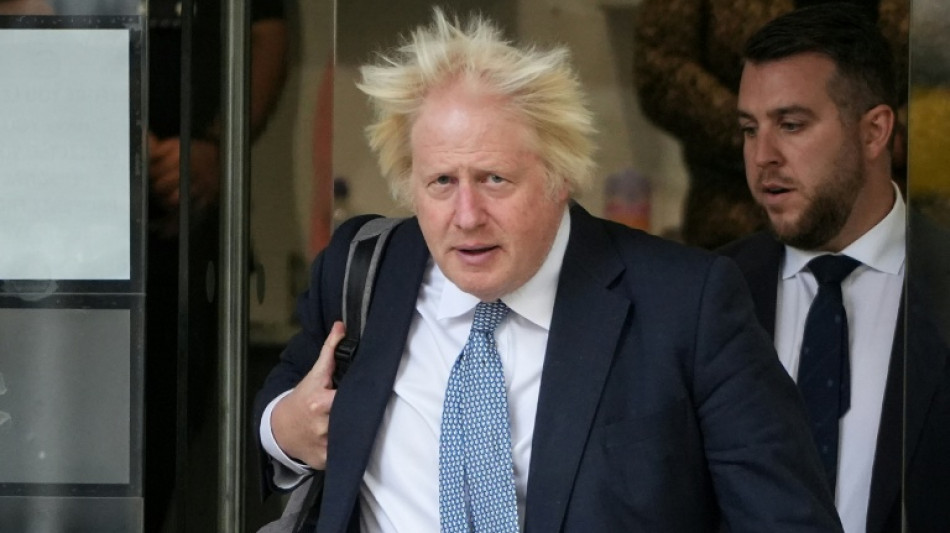
UK Covid inuiry says thousands of lives could have been saved / Photo: Niklas HALLE'N - AFP

 Indonesian court hears 'negligence' complaint against state over fires, haze

 Rubio in Greece to urge against Western civilisation 'decline'
 Micron workers at Taiwan plant vote in favour of strike
 In 'The Social Reckoning,' Jeremy Allen White takes on Facebook's 'frightening' ambition

 Chip industry activists call for South Korea to recognise cancer cases
 Famine-scarred southern Madagascar braces for El Nino
 How the EU regulates lobbyists
 I.Coast refuge offers lifelong care for youngsters scorned as 'sorcerers'

 Indian central bank hikes rates for first time in more than 3 years
 Hotel Blacklist Launches New Accommodation Industry Risk Assessment Tool
 Bangladesh nuclear plant draws hope -- and worry

 US beat Canada 1-0 to wrap up four-win international break

 Turkey, Australia's joint COP31 leadership raises doubts

 For Turkish NGOs, COP31 offers rare space for action
 Sleep, appetite, gene-editing experts contend for Nobel chemistry prize

 Nobel Peace Prize haunted by the 'spectre' of Trump

 Africa launches own credit agency in bid for cheaper borrowing

 US, China, EU: three paths to regulating AI

 Australia's High Court rules against coal mine in landmark climate case
 Australia touts new funds for Pacific infrastructure at Fiji 'pre-COP'

 Eva Marie Saint, Oscar winner of Hollywood classics, dies at 102

 Australia probes app used in cheap smart glasses over privacy fears
 England needed to 'move on' from World Cup pain, says Tuchel

 O'Neill to stay at Celtic after period of "reflection"

 Kane marks 125th England cap with Wembley Nations League double
About 23,000 deaths could have been prevented in England if the first Covid-19 lockdown had been introduced sooner at the start of the pandemic, a UK public inquiry found Thursday.
The second report from an inquiry into the UK response to the Covid-19 pandemic criticised the government in 2020 led by Boris Johnson for a "lack of urgency" in the early days of the pandemic, adding the lockdown was "too little, too late".
Modelling shows that if the first lockdown had been imposed earlier, it could have prevented 23,000 deaths in England alone in the first wave, according to the 800-page report.
"Had the lockdown been imposed one week earlier than March 23, the evidence suggests that the number of deaths in England alone in the first wave up until July 1, 2020 would have been reduced by 48 percent," inquiry chair Heather Hallett said.
"The tempo of the response should have been increased. It was not. February 2020 was a lost month," added Hallett, a retired senior judge.
The inquiry chair also said that if restrictions had been introduced sooner, the mandatory lockdown could have been shorter, or "might not have been necessary at all".
- 'Unacceptable loss of life' -
However, the report -- the second in a series from the independent inquiry -- rejected claims that the government was wrong to implement the March 2020 lockdown.
"Without it, the growth in transmission would have led to an unacceptable loss of life," the report said.
The UK suffered one of the worst Covid-19 death tolls in Europe with more than 128,500 fatalities recorded by mid-July 2021.
More than 226,000 people have died from Covid in Britain since the start of the global pandemic in early 2020.
Johnson, who was prime minister from 2019 to 2022, has been criticised on various fronts for the pandemic response, including a lack of preparedness and failing to have enough protective equipment for frontline staff.
During inquiry hearings last month, Johnson said he regretted the impact of the decisions his government took on children, especially the "nightmare" school closures.
The report also criticised a "lack of trust" between Johnson and leaders of Wales, Scotland and Northern Ireland, which have devolved public healthcare systems.
The first inquiry report published in July 2024 found that UK ministers and officials had been woefully underprepared for a global pandemic.
In a statement, a group representing families who lost loved ones during the pandemic slammed the government's "catastrophic mishandling".
"We now know that many of our family members would still be alive today if it weren't for the leadership of Boris Johnson and his colleagues," Covid-19 Bereaved Families for Justice UK said.
Y.Zaher--SF-PST