New Zealand to start easing tough Covid border controls

 Hotel Blacklist Launches New Accommodation Industry Risk Assessment Tool

 Bangladesh nuclear plant draws hope -- and worry

 US beat Canada 1-0 to wrap up four-win international break

 Turkey, Australia's joint COP31 leadership raises doubts

 For Turkish NGOs, COP31 offers rare space for action

 Sleep, appetite, gene-editing experts contend for Nobel chemistry prize

 Nobel Peace Prize haunted by the 'spectre' of Trump

 Africa launches own credit agency in bid for cheaper borrowing

 US, China, EU: three paths to regulating AI

 Australia's High Court rules against coal mine in landmark climate case

 Australia touts new funds for Pacific infrastructure at Fiji 'pre-COP'

 Eva Marie Saint, Oscar winner of Hollywood classics, dies at 102

 Australia probes app used in cheap smart glasses over privacy fears

 England needed to 'move on' from World Cup pain, says Tuchel

 O'Neill to stay at Celtic after period of "reflection"

 Kane marks 125th England cap with Wembley Nations League double

 Quebec's incoming separatist leader wants to block Crown from swearing-in

 Emmys gala will now stream its premier television awards

 Paramount completes Warner Bros takeover, creating Skydance
 Trump blames France unrest on Islam, migration

 Apple's Cook praises EU over efforts to protect children online
 Nobel winner Halzen says years of October 'misery' finally over

 Quebec separatist win rattles Carney's unity push

 'Itching' for change: Shiffrin cuts back slaloms this season

 'Gen Z has risen up': Tens of thousands mass for tense France school protests

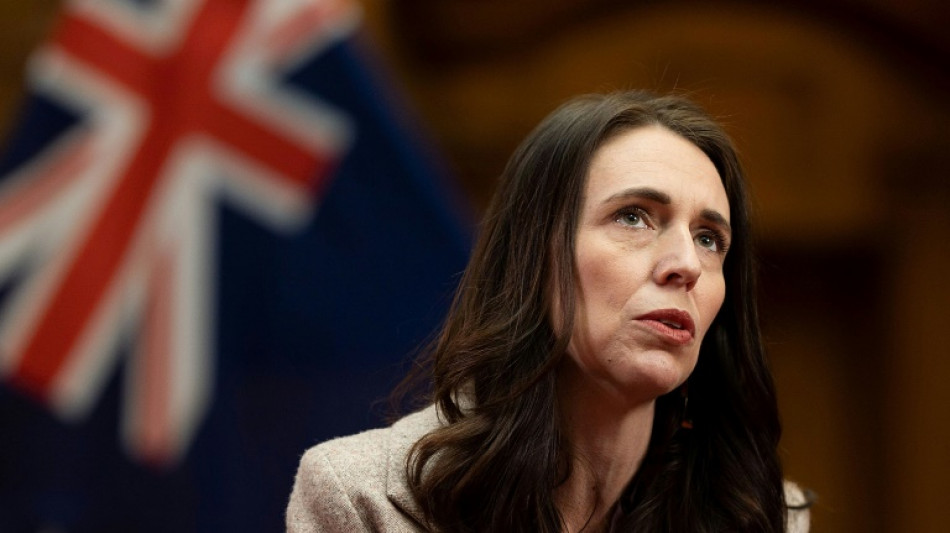
New Zealand will start easing some of the world's toughest pandemic border restrictions this month but will not fully reopen until October, Prime Minister Jacinda Ardern said Thursday.
Ardern announced a five-step plan to reconnect New Zealand to the rest of the world, beginning with waiving hotel quarantine requirements for its nationals stranded overseas by the pandemic.
"It's time to move again," said Ardern, who has been under pressure recently to relax border policies that have been largely unchanged since the beginning of the Covid-19 crisis almost two years ago.
"Families and friends need to reunite, our businesses need skills to grow, exporters need to travel to make new connections."
Ardern said New Zealanders in Australia could return home and self-isolate, rather than going into quarantine, from February 27, followed two weeks later by Kiwis elsewhere in the world.
The option will then be progressively made available to other groups such as skilled migrants, international students, Australians, and eventually all vaccinated foreign nationals.
It will involve international arrivals self-isolating for 10 days instead of undergoing a 10-day hotel quarantine monitored by New Zealand military personnel.
Only 800 rooms per month are available under the current system, with demand regularly exceeding supply tenfold.
Many New Zealanders have criticised it as too harsh on international arrivals, with business groups saying it was contributing to a labour shortage and crippling the tourism industry.
There have been numerous stories of fully vaccinated overseas-based New Zealanders unable to get home to see dying loved ones or give birth, such as pregnant journalist Charlotte Bellis.
Bellis prompted a rare about-face from officials this week when she said her initial failure to secure a quarantine spot left her no choice but to deliver her baby in Afghanistan under the Taliban regime.
- 'Anguish and heartbreak' -
Ardern said the quarantine system -- known locally as MIQ -- had been a key part of New Zealand's success containing the coronavirus, with only 53 deaths recorded in a population of five million.
"The anguish of MIQ has been real and heartbreaking but the choice to use it undeniably saved lives," she said.
New Zealand initially planned to start easing border controls last month and fully reopen in April but delayed the move as the Omicron variant emerged.
Ardern said New Zealand's high vaccination rate -- almost 95 percent of the population is double-jabbed, with a third also receiving a booster -- meant change was now possible.
The prime minister said 92 percent of adult Kiwis were expected to have a booster when the changes begin at the end of February.
The quarantine system will not be completely dismantled as it will still be needed to cater for unvaccinated international arrivals.
Air New Zealand said it was "thrilled" at the changes and was geared up to operate more than 300 flights between New Zealand and Australia in March.
"(It's) incredibly exciting news for New Zealanders overseas," spokeswoman Leanne Geraghty said.
"Having the certainty they will be touching down on home soil and reuniting with friends and whanau (family) in just over three weeks will come as a relief."
J.Saleh--SF-PST