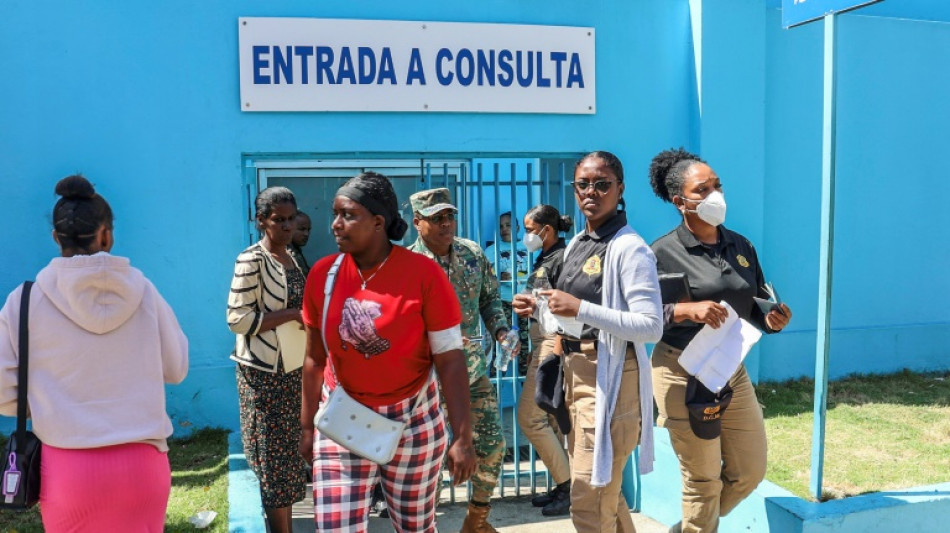
'Cruel measure': Dominican crackdown on Haitian hospitals / Photo: Erickson POLANCO - AFP

 West must embrace 'national power' or face decline: Rubio

 Shell refining margins reach record highs as wars hit supply

 Former Spain, Barca winger Pedro retires from football
 Arteta signs new Arsenal deal until 2030

 Stocks decline as oil climbs on Mideast flareup

 Gauff says online abuse was 'draining' after China Open exit

 As sector struggles, Porsche puts luxury ahead of volume
 'It's personal': Fiji minister pushes better climate finance at pre-COP

 Russia glosses over dark Soviet past in reinvented museum

 UK tax body opened probe into Man City in 2018: FT

 Yemen's Houthis claim new attacks on Saudi airports as conflict deepens
 Germany factory production at highest level for 18 months

 Thailand floods death toll rises to 60 since mid-September

 US pushes Russia for information on plague reports

 Myanmar leader lands in Malaysia for migrant return talks
 Indian central bank hikes rates for first time since 2023
 US military on Okinawa face curfew, alcohol ban after murder case

 Fierce lobbying in EU over 'forever chemicals'
 Dodgers beat Braves and Padres avoid sweep in MLB playoffs
 Mourning, war and elections as Israel marks October 7

 Messi says Argentina retirement is 'saddest day of my career'
 Oil rises and stocks fall as Hormuz worries flare

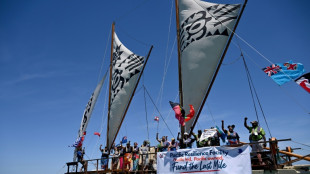 Pacific presses world for help 'surviving' climate change at pre-COP summit

 Verstappen revival to be put to the test in steamy Singapore
 US woman who survived botched execution is conscious, speaking: lawyers
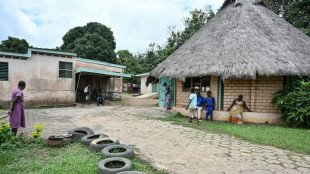
Still in pain from giving birth, a Haitian mother carrying her newborn was helped onto a migration services bus in the Dominican Republic, joining a family member who was arrested when he visited her in hospital.
Both were detained in a series of raids on Dominican health facilities, launched just over a week ago in the country's latest drive to eject undocumented migrants.
Since early 2024, more than 350,000 Haitians have been deported from the comparatively wealthy and stable Dominican Republic, shuttled across the 340-kilometer (211-mile) border with poverty and gang-violence riddled Haiti.
Dominican President Luis Abinader has championed a MAGA-style hard line on migration since first coming to power in 2020, with mass expulsions of Haitians and the construction of a wall that so far stretches across more than half the border.
Now, his administration has turned its attention to public hospitals, flushing out migrants who may have gone under the radar if it wasn't for the fact that they needed medical attention.
Arresting and deporting new mothers, "I don't like that.... women must be respected," Haitian Erony Auguste, 42, told AFP from the migration bus next to his sister-in-law who had recently given birth.
He claimed he was detained at the hospital despite having residency papers.
For William Charpentier, coordinator of the National Bureau for Migration and Refugees, a Dominican-based rights group, "mixing health with the issue of border control... is really a violation of human rights. It seems a very cruel measure."
Migrants seek the group's help daily, he told AFP, adding they are afraid to seek medical and maternal care for fear of being arrested and expelled from the country so many Haitians see as their only hope for a better life.
The measure "puts people, mainly women, at risk," said Charpentier.
Martin Ortiz Garcia of the Dominican National Health Service (SNS), confirmed the number of Haitians seeking hospital treatment has dropped.
- 'Everyone is afraid' -
Since 2010, the Dominican Republic does not grant birthright citizenship to children born in the country to undocumented migrants. A 2013 court ruling backdated the restriction to people born as far back as 1929.
Last year, Abinader's government deported over 276,200 Haitians and is on track to exceed that number with more than 86,400 deportations in the first quarter of 2025 alone.
"Of course, everyone is afraid. Sometimes even people with papers are arrested, even Dominicans are arrested if they leave home without papers," merchant Marie Casale, 63, told AFP in the capital Santo Domingo.
The Dominican Migration Service reported that on Day 1 of the hospital crackdown, 48 pregnant women, 39 new mothers, and 48 children were arrested and taken to a detention center for deportation.
At the center, 34-year-old Dominican national Santo Heredia waited, desperate for news of his wife, who is five months pregnant and was detained after a prenatal appointment.
His wife, said Heredia, was born in the Dominican Republic to Haitian parents, but has not been able to legalize her status in the country as they did not have enough money to file the paperwork.
The couple has another daughter, 4.
"She is alone, she has no money on her, she has no means of communicating with anyone," he told AFP. "This has me really tormented, honestly."
Last year, 36 out of every 100 births in Dominican hospitals were to Haitian women, according to Ortiz Garcia of the SNS.
Public hospitals require patients to provide identification, proof of employment and residence, and payment for services rendered.
But Ortiz Garcia insisted care is not denied to the undocumented.
"Illegals are treated in emergencies. If they need admission, they are admitted, and then after their medical event, they go through the migration protocol," he told AFP.
Many migrants from Haiti, a Creole- and French-speaking nation of some 11 million people of mainly African descent, are fleeing violent gangs that control about 85 percent of Port-au-Prince, the capital of the poorest country in the Americas.
Many in the Spanish-speaking Dominican Republic have turned on those of their neighbors who cross the border, accusing them of usurping Dominican jobs and resources.
A nationalist group calling itself "Ancient Dominican Order," has been campaigning against the "Haitianization" of the country and has urged the authorities to be "vigilant at all maternity wards."
On Sunday, two migration trucks with Haitians being deported were jeered at as they drove past a group of nationalist protesters shouting "Go back to your country" and "Out! Out!"
K.AbuDahab--SF-PST