As war grinds on, Ukraine's seniors suffer / Photo: Ivan SAMOILOV - AFP

 West must embrace 'national power' or face decline: Rubio
 Shell refining margins reach record highs as wars hit supply

 Former Spain, Barca winger Pedro retires from football

 Arteta signs new Arsenal deal until 2030

 Stocks decline as oil climbs on Mideast flareup

 Gauff says online abuse was 'draining' after China Open exit

 As sector struggles, Porsche puts luxury ahead of volume
 'It's personal': Fiji minister pushes better climate finance at pre-COP

 Russia glosses over dark Soviet past in reinvented museum

 UK tax body opened probe into Man City in 2018: FT
 Yemen's Houthis claim new attacks on Saudi airports as conflict deepens
 Germany factory production at highest level for 18 months

 Thailand floods death toll rises to 60 since mid-September

 US pushes Russia for information on plague reports

 Myanmar leader lands in Malaysia for migrant return talks
 Indian central bank hikes rates for first time since 2023
 US military on Okinawa face curfew, alcohol ban after murder case

 Fierce lobbying in EU over 'forever chemicals'
 Dodgers beat Braves and Padres avoid sweep in MLB playoffs

 Mourning, war and elections as Israel marks October 7

 Messi says Argentina retirement is 'saddest day of my career'
 Oil rises and stocks fall as Hormuz worries flare

 Pacific presses world for help 'surviving' climate change at pre-COP summit

 Verstappen revival to be put to the test in steamy Singapore
 US woman who survived botched execution is conscious, speaking: lawyers

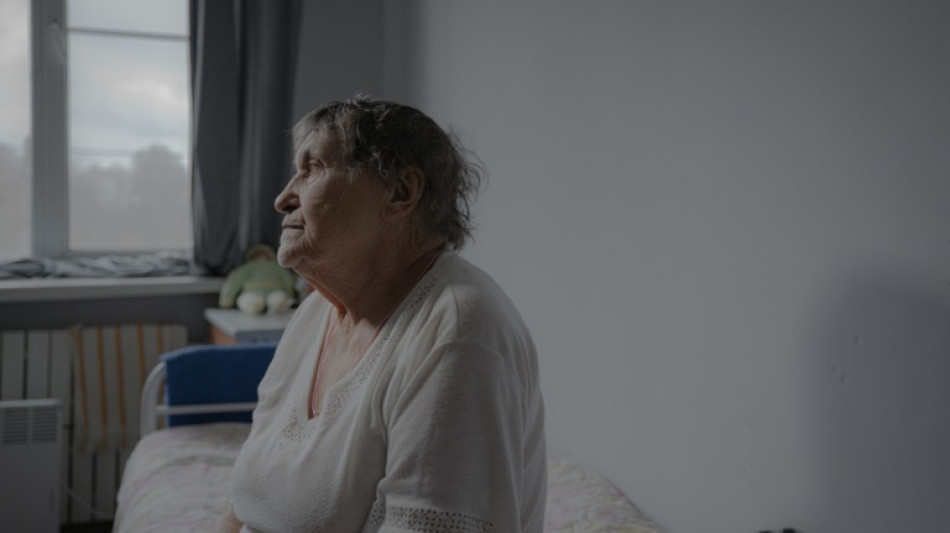
Like thousands of senior citizens in Ukraine, Zinaida Gyrenko was spending the sunset years of her life in a shelter, her retirement upended by Russia's invasion.
Her memory was foggy but the moment Russia struck her village in the northeast of the country, sending her sprawling, was crystal clear.
"It was so loud. Everyone fell to the ground. I was lying there. Then I opened my eyes again, and I thought: I'm still alive," Gyrenko, born in 1939, told AFP.
The invasion launched by the Kremlin more than three years ago has disproportionately affected Ukraine's seniors.
A quarter of Ukraine's people are older than 60, but they accounted for nearly half of civilian deaths near the front last year, according to the United Nations.
The elderly are often the last to leave frontline territories, saying they lack money or strength to relocate -- or the will to part with their homes.
Gyrenko lived in the village of Zaoskillya in the eastern Kharkiv region until last May. Russia has been advancing on the nearby town of Kupiansk further west, raining down bombs on settlements nearby.
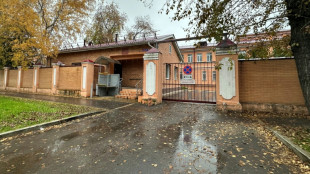
She now stays at a dormitory-turned-shelter for senior citizens called Velyka Rodina, meaning Big Family, in Kharkiv city further north.
Gyrenko was grateful to her carers for looking after what she called the "second-hand" residents. She said she could no longer remember her age: "I'm from '39. You do the maths."
She said she had worked in the rail industry her whole life.
"I've loved the railways very, very much, ever since I was a child," she said, her blue eyes welling up with tears.
- Dignity in retirement -
The shelter's founder Olga Kleytman said the needs of elderly people were immense.
In Kharkiv alone, she estimated that 32,000 seniors who had fled their homes needed help.
There are only eight public retirement homes in the Kharkiv region -- not enough to meet demand, she said.
Authorities have not provided financial support to her establishment, which had 60 residents at the end of March and depends solely on private donations, she added.
"They have worked all their lives, and they deserve a decent old age," the 56-year-old said.
"This is about our dignity."
An architect by profession, Kleytman told AFP she had plans to expand.
Since most of the seniors come from rural areas, she wants to create a large vegetable garden with animals to reproduce village "smells and sounds".
One of the residents, 50-year-old Sergiy Yukovsky, who had both legs amputated after an accident at work, used to live in the countryside with his younger brother.
His brother was killed by a mine while "fetching wood" near the village of Kochubeivka, also in the Kharkiv region.
"I don't even know where he is buried," Yukovsky said. For a year, he lived alone before being evacuated to Kharkiv city.
The future is bleak, he confessed, but added: "Ukraine will have it all, and Putin is an asshole."
- Hopes for future -
In another room 84-year-old Yuri Myagky lay in bed facing a window.
He was from Saltivka, a Kharkiv suburb that was bombed heavily when Russian forces were attempting to capture the city at the start of the invasion.
"Has Ukraine been divided?" Myagky asked, confused -- like so many others -- by the twists and turns of the conflict.
Since September 2024, Gyrenko has been sharing a room with Olga Zolotareva, 71, who grumbled when her roommate lost the thread of their conversation.
For 28 years, Zolotareva looked after people with learning disabilities in the town of Lyptsi, not far from the Russian border.
When the invasion began, they were evacuated, but Zolotareva stayed.
In May 2024, when Russia launched a new offensive on the Kharkiv region, she was in her house when "there was a strike".
A shard "from I don't know what" broke her right leg, she said, showing her scar.
As well as peace, she hopes to be able to walk normally again.
That, Zolotareva said, and to have "the smell of a man" around her. She misses it a lot, she told AFP.
Gyrenko said she remained optimistic, despite everything.
"Happiness, as I understand, means not being hungry, not being without clothes and not being shoeless," she said.
"I'm not those things."
E.Aziz--SF-PST