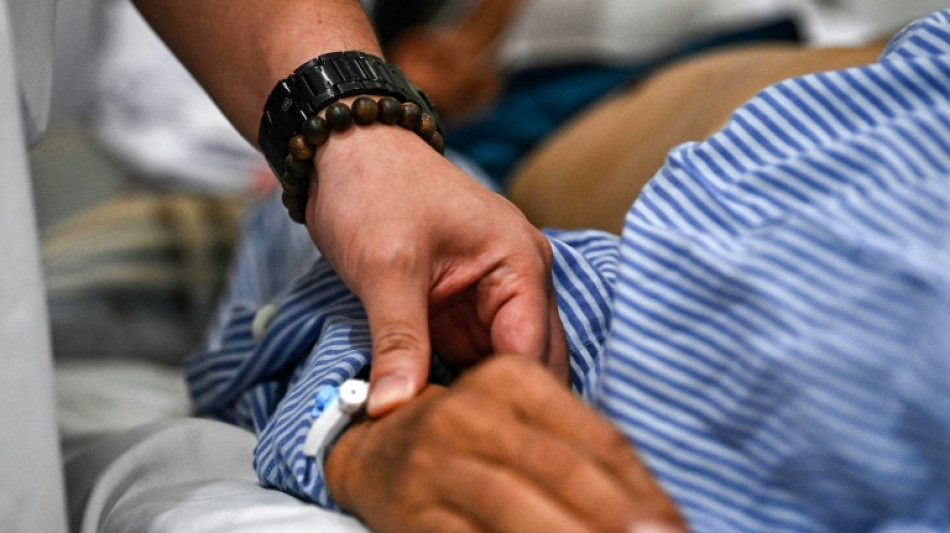
'Getting scary': US aid cuts undermine global fight against TB / Photo: Nhac NGUYEN - AFP/File

 West must embrace 'national power' or face decline: Rubio
 Shell refining margins reach record highs as wars hit supply

 Former Spain, Barca winger Pedro retires from football
 Arteta signs new Arsenal deal until 2030

 Stocks decline as oil climbs on Mideast flareup
 Gauff says online abuse was 'draining' after China Open exit

 As sector struggles, Porsche puts luxury ahead of volume
 'It's personal': Fiji minister pushes better climate finance at pre-COP

 Russia glosses over dark Soviet past in reinvented museum
 UK tax body opened probe into Man City in 2018: FT

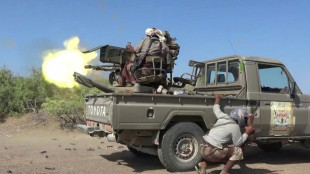 Yemen's Houthis claim new attacks on Saudi airports as conflict deepens
 Germany factory production at highest level for 18 months
 Thailand floods death toll rises to 60 since mid-September

 US pushes Russia for information on plague reports
 Myanmar leader lands in Malaysia for migrant return talks
 Indian central bank hikes rates for first time since 2023
 US military on Okinawa face curfew, alcohol ban after murder case
 Fierce lobbying in EU over 'forever chemicals'
 Dodgers beat Braves and Padres avoid sweep in MLB playoffs
 Mourning, war and elections as Israel marks October 7

 Messi says Argentina retirement is 'saddest day of my career'
 Oil rises and stocks fall as Hormuz worries flare

 Pacific presses world for help 'surviving' climate change at pre-COP summit
 Verstappen revival to be put to the test in steamy Singapore
 US woman who survived botched execution is conscious, speaking: lawyers
The Trump administration's sweeping foreign aid cuts will send tuberculosis cases and deaths soaring around the world, humanitarian workers have warned.
One told AFP that people are already dying from a lack of treatment in the war-torn Democratic Republic of Congo (DRC).
The United States has long been the biggest funder for the global fight against tuberculosis -- once known as consumption -- which is again the world's biggest infectious disease killer after being briefly surpassed by Covid-19.
But President Donald Trump froze US foreign aid after returning to the White House in January, abruptly halting the work of many US-funded programmes against tuberculosis and other health scourges such as HIV and malaria.
Trump's billionaire advisor Elon Musk has boasted of putting the vast US humanitarian agency USAID "through the woodchipper".
On Monday, US Secretary of State Marco Rubio announced that 83 percent of all USAID contracts were officially cancelled. It was unclear which programmes would be spared.
The World Health Organization warned last week that the cuts would endanger millions of lives, pointing out that tuberculosis (TB) efforts averted 3.65 million deaths last year alone.
The change has already brought about a major impact in many developing countries, according to aid workers and activists on the ground.
In the Democratic Republic of Congo, many frontline community workers have been forced to stop helping tuberculosis patients, said Maxime Lunga, who heads a local group called Club des Amis.
Even before the US funding cuts, there was shortage of TB drugs in the country, which is also facing outbreaks of mpox, as well as a mystery illness and a surge in fighting in its conflict-plagued east.
"The chaotic situation is starting to get scary here," said Lunga, who is himself a tuberculosis survivor.
"Right now we are receiving a lot of phone calls from patients asking us how to help them access care," he told AFP.
"We know that some of the patients on waiting lists are now dying because they are not being treated."
- 'People will suffer' -
In Ukraine, another war-battered nation with high TB rates, a programme to teach children about the dangers of tuberculosis was just three days from starting in schools when the US order to stop work came in.
Olya Klymenko, whose group TB People Ukraine spent two years setting up the programme, lamented that the money had been wasted.
It was, she said, a "very bad deal".
Klymenko feared the US cuts would reverse the gains that have been made since she survived TB a decade ago.
"As a person who started receiving treatment when the old approaches were used, I know perfectly well what we have lost now," she told AFP.
"People will suffer a lot."
Lunga and Klymenko's organisations both received US funds through the Stop TB Partnership.
The Geneva-based NGO received a letter from the US government terminating all funding late last month.
It had to share the bad news with 150 community organisations that test, treat and care for patients in affected countries.
Then Stop TB received a new letter last week rescinding the termination.
"The new letter clearly indicates that all work should resume as planned," the organisation's executive director, Lucica Ditiu, told AFP.
But it was still unclear whether the decision was permanent -- or when any new US money would actually be released, she added.
- 'Snowball effect' -
Allowing airborne TB to go untested and untreated could have a "snowball effect" across the world, Ditiu warned.
There are already mutated forms of TB that are resistant to most drugs, and Ditiu feared the US cuts could result in a bug that no treatment can stop.
"Interrupting a treatment for a drug-resistant TB person is horrible, because it will create a bug that will be spread through the air, so me and you and our families or friends can get it," she warned.
The funding cuts were particularly "devastating" because 2024 was the "best year ever" for the fight against TB, Ditiu added.
According to an internal USAID memo by a now-dismissed assistant administrator, the aid cuts will cause rates of tuberculosis and drug-resistant TB to both surge by roughly 30 percent.
"The US will see more cases of hard-to-treat TB arriving at its doorstep," according to the memo, published in the New York Times earlier this month.
The US is already reportedly experiencing the largest TB outbreak in its modern history in Kansas City.
A humanitarian source in Geneva who wished to remain anonymous told AFP the situation was "very dangerous, even for the European Union" because of the risk linked to drug-resistant TB in Ukraine and Georgia.
K.AbuTaha--SF-PST