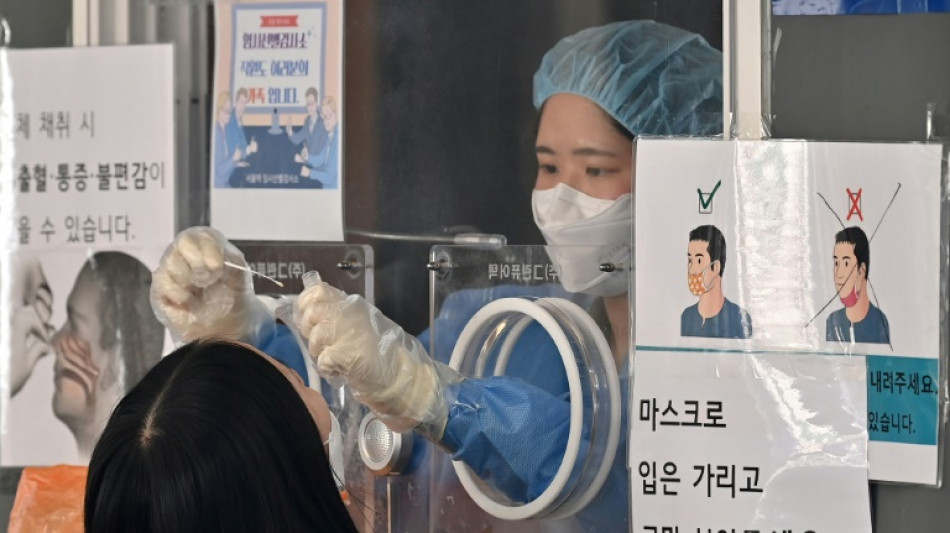
South Korea drops most Covid restrictions as cases fall / Photo: Jung Yeon-je - AFP/File

 رئيس جامعة القدس يستعرض نموذج الشراكة بين التعليم العالي والصناعة في قمة QS بأبوظبي

 ابتكارات فلسطينية في مسابقة "سيف" العالمية بالرياض

 تحذير أمني من تكثيف إسرائيل إرسال رسائل نصية مستهدفة للفلسطينيين

 Polanski Accuses Sadiq Khan of Undermining Thames Water Nationalisation

 Nigeria Envoy's $61 Billion Claim Faces Scrutiny Amid Diplomatic Tensions

 وزير المالية يبحث مع برنامج الأمم المتحدة الإنمائي توسيع الدعم في غزة والضفة

 المغرب يبلغ محكمة التحكيم الرياضي بشأن اتصال محتمل بين مسؤول سنغالي ومحكم في قضية كأس أفريقيا
South Korea will lift almost all social distancing measures, the government said Friday, citing a dramatic fall in reported cases of Covid-19 after an Omicron-fuelled surge, but the mask mandate will remain.
South Koreans will be required to wear masks indoors "for a considerable time ahead," authorities said, adding that they may lift the requirement to mask outdoors in two weeks' time, if cases continue to fall.
"The midnight business curfew and a 10-person cap on the size of gatherings will be lifted starting Monday," said Prime Minister Kim Boo-kyum.
The decision marks the end of two years of strict distancing requirements, which have put huge strain on small businesses, and indicates South Korea is returning to normality.
Restrictions on eating inside facilities such as cinemas will also be lifted from April 25.
But requiring the public to wear masks indoors was "inevitable for a considerable time ahead," to prevent another outbreak, Kim added.
Officials will reassess whether to lift the outdoor mask requirement in two weeks, he added.
Much evidence suggests the risk of transmission outdoors is extremely low, and many countries, including the United States, have said masks aren't needed outdoors for vaccinated people.
The move comes after South Korea appears to have passed the peak of an Omicron-driven outbreak, with daily cases falling to below 100,000 last week, down from a peak of over 620,000 in mid-March.
More than 86 percent of the South Korean population of 51 million has been fully vaccinated, with the majority also receiving a booster shot.
South Korea is rolling out second boosters to vulnerable populations.
Around 20,000 people in South Korea have died from the coronavirus -- a 0.13 percent fatality rate, which is one of the world's lowest.
B.Khalifa--SF-PST

