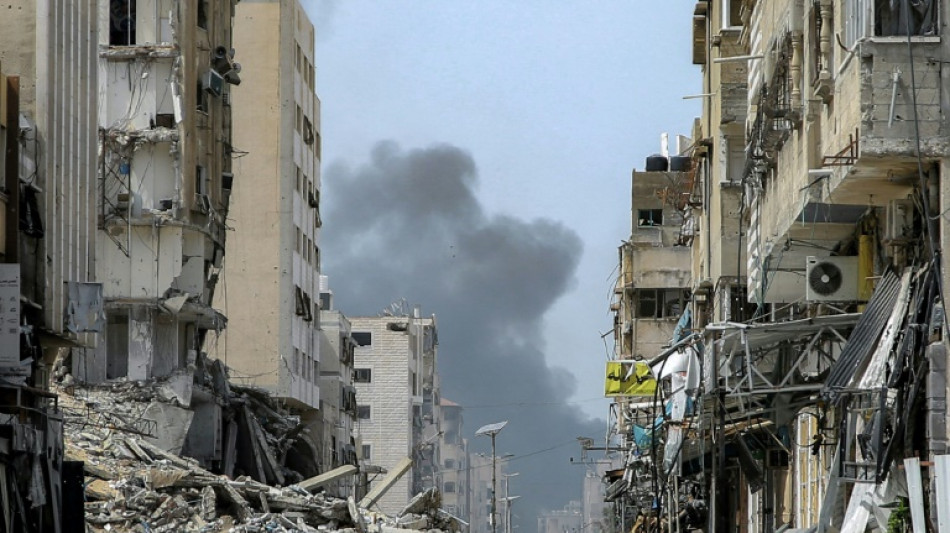
Israel's Netanyahu approves new Gaza ceasefire talks / Photo: - - AFP

 The British historian helping the French rediscover de Gaulle
 Dodgers beat Braves to advance, Guardians survive in MLB playoffs

 Latin American, Caribbean women top Nobel literature buzz
 US says Fiji-based Chinese official paid bribes for Beijing

 After botched US execution, Christa Pike was nearly taken off life support

 Guinea-Bissau junta urges military unit loyal to ex-president to disarm

 As species decline, green turtles offer glimmer of hope
 Brothers Scott and Beauden Barrett named to start for All Blacks
 EU trade chief seeks to dial down China tensions

 'Never again Bolsonaro': thousands march ahead of Brazil election runoff

 After botched execution, US woman was nearly taken off life support before revival
 Searing AIDS drama 'Elsinore' opens London film festival

 Evicted pensioner who sparked Spain housing protests dies: tenant union
 Golf star Rahm quitting LIV tour over 'unacceptable' terms

 Thousands march fearing return of a Bolsonaro presidency in Brazil
 French PM denies police ordered to confront student protesters

 Rubio touts US power, calls on Europe to emerge from 'slumber'

 Trump says 'we don't think' Russian plague is bio-weapon

 Five children among 26 killed in Ukraine after Russian strikes

 Man City should 'accept' punishment for rule breaches, says Lineker

 US woman who survived botched execution is awake and speaking
 From 1800s to modern pharma: a Nobel-winning chemistry quest

 Southampton boss Eckert given suspended ban over 'Spygate'

 Russia warns of 'false' information as second plague case reported

 IEA ready to release more oil reserves if necessary
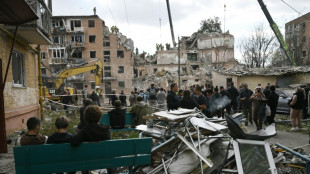
Israeli Prime Minister Benjamin Netanyahu approved Friday new talks on a Gaza ceasefire, a day after the world's top court ordered Israel to ensure urgent humanitarian aid reaches people in the Palestinian territory.
But despite a binding United Nations Security Council resolution this week demanding an "immediate ceasefire", fighting continued Friday, including around hospitals.
Regional fallout from the conflict also flared, with Israel saying it killed a Hezbollah rocket commander in Lebanon, and several Hezbollah fighters killed in Syria strikes that a war monitor blamed on Israel.
Netanyahu's office said new talks on a Gaza ceasefire and hostage release will take place in Doha and Cairo "in the coming days... with guidelines for moving forward in the negotiations", days after they appeared stalled.
In its order, the International Court of Justice (ICJ) in The Hague said: "Palestinians in Gaza are no longer facing only a risk of famine, but... famine is setting in."
Philippe Lazzarini, head of the UN agency for Palestinian refugees, posted on X that the ruling was "a stark reminder that the catastrophic humanitarian situation in the Gaza Strip is man made + worsening".
The court had ruled in January that Israel must facilitate "urgently needed" humanitarian aid to Gaza and prevent genocidal acts, but Israel rejected the case brought by South Africa.
The latest binding ICJ ruling, which has little means of enforcement, came as Israel's military said Friday it was continuing operations in Al-Shifa Hospital, the territory's largest, for a 12th day.
Throughout the coastal territory, dozens of people were killed overnight, the health ministry in Hamas-run Gaza said.
Among the dead were 12 people killed in a home in the southern city of Rafah, which has been regularly bombed ahead of a mooted Israeli ground operation there.
Men worked under the light of mobile phones to free people trapped under debris after an air strike, AFPTV images showed.
The ICJ ordered Israel to "take all necessary and effective measures to ensure, without delay" the supply "of urgently needed basic services and humanitarian assistance".
- 'Immediate ceasefire' -
The war began with Hamas's October 7 attack that resulted in about 1,160 deaths in Israel, mostly civilians, according to an AFP tally based on Israeli official figures.
Israel's retaliatory campaign to destroy Hamas has killed at least 32,623 people, mostly women and children, Gaza's health ministry says.
Large parts of the territory have been reduced to rubble, and most of Gaza's population are now sheltering in Rafah.
On Monday the UN Security Council demanded an "immediate ceasefire" in Gaza, the release of hostages held by militants, and "ensuring humanitarian access".
Member states are obliged to abide by such resolutions, but the Doctors Without Borders (MSF) charity said nothing has changed on the ground.
Aid groups say only a fraction of the supplies required have been allowed in since October, when Israel placed Gaza under near-total siege.
Israel has blamed shortages on the Palestinian side, namely a lack of capacity to distribute aid, with humanitarians saying not enough trucks are allowed in to make deliveries.
With limited ground access, several nations have staged airdrops, and a sea corridor from Cyprus has delivered its first food aid.
- Heavy damage -
The UN says Gaza's health system is collapsing "due to ongoing hostilities and access constraints".
Israel's military accuses Hamas and the Islamic Jihad of hiding inside medical facilities, using patients, staff and displaced people for cover -- charges the militants have denied.
On Friday the army said it was "continuing precise operation activities in Shifa Hospital" where it began a raid early last week.
Troops first raided Al-Shifa in November, before Israel in January announced it had "completed the dismantling" of Hamas's command structure in northern Gaza. Palestinian militants and commanders had since returned to Al-Shifa, the army said.
Netanyahu has said troops "are holding the northern Gaza Strip" and also the southern city of Khan Yunis, amid heavy fighting.
"We have bisected the Strip and we are preparing to enter Rafah," he said Thursday.
Netanyahu is under domestic pressure over his failure to bring home all of the hostages seized by militants on October 7. Israel says about 130 captives remain in Gaza, including 34 presumed dead.
About 200 militants have been killed during the latest Al-Shifa operation, the military said.
Near Al-Amal Hospital in Khan Yunis, troops carried out "targeted raids on terrorist infrastructure", killing dozens in combat backed by air support, the army said Thursday.
Israeli tanks and armoured vehicles have massed around another Khan Yunis health facility, the Nasser Hospital, the Gaza health ministry said.
An analysis of satellite images shows heavily damaged areas around the Nasser and Al-Amal hospitals.
- Deadliest toll -
Since the Gaza war began, Israel has increased its strikes in Syria, targeting army positions and Iran-backed forces including Lebanon's Hezbollah movement, a key Hamas ally.
A Britain-based war monitor said Israeli air strikes Friday in north Syria killed at least 42 people, six from Hezbollah and 36 Syrian soldiers.
And Israel's military said it killed Ali Abdel Hassan Naim, deputy commander of Hezbollah's rocket unit, in an air strike in south Lebanon Friday.
US, Egyptian and Qatari mediators have tried to secure a truce in Gaza, but those talks had appeared deadlocked more than halfway through the Muslim holy month of Ramadan.
Tensions have risen between Netanyahu and Washington, which provides billions of dollars in military aid but has grown increasingly vocal about the war's impact on civilians.
On Thursday, Palestinian president Mahmud Abbas approved the new government of prime minister Mohammed Mustafa, who said his cabinet will work on "visions to reunify the institutions, including assuming responsibility for Gaza".
Hamas forcibly took Gaza from Abbas's government in 2007.
Netanyahu says Israel must have "security responsibility" in Gaza, and has rejected calls for a Palestinian state.
burs-srm/hkb
R.Halabi--SF-PST