
What is aphasia? Here's what you need to know

 Myanmar leader lands in Malaysia for migrant return talks

 Indian central bank hikes rates for first time since 2023

 US military on Okinawa face curfew, alcohol ban after murder case

 Fierce lobbying in EU over 'forever chemicals'

 Dodgers beat Braves and Padres avoid sweep in MLB playoffs

 Mourning, war and elections as Israel marks October 7

 Messi says Argentina retirement is 'saddest day of my career'

 Oil rises and stocks fall as Hormuz worries flare

 Pacific presses world for help 'surviving' climate change at pre-COP summit

 Verstappen revival to be put to the test in steamy Singapore

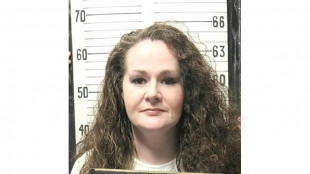 US woman who survived botched execution is conscious, speaking: lawyers

 Climate champion Australia digging more coal

 Emotion, tears as Messi retires from Argentina national team

 Dodgers push Braves to the brink of MLB playoff exit

 Crisis-stricken Haiti postpones elections

 N. Korea's Kim pledges 'invariable support' in Putin birthday letter

 OGRD Alliance Advances PLPC Multi-Asset Platform Following APHELAR Milestone, Expanding Licensing and Strategic Capital Frameworks

 Emotion, tears as Messi prepares for Argentina farewell

 Kane eyes Ronaldo record after matching England cap mark

 Spain fight back to beat Croatia, Kane adds to record for England

 Merino double helps Spain beat Croatia, reach Nations League quarters

 US stocks hit fresh records as oil stabilizes on rising supplies

 As Messi bows out, Argentines say 'thank you'

 Ronaldo opens door for Portugal return, apologises for walkout

 'Nobody seems to care': Russian city shrugs off plague reports

The news that film star Bruce Willis has retired from acting due to aphasia has shone a spotlight on the poorly understood communication disorder.
Here's what you should know.
- What is aphasia? -
"Aphasia just means that someone has a problem with language that they weren't born with," Hugo Botha, a neurologist at Mayo Clinic in Minnesota explained.
The most common cause is stroke or head injury -- and experts stress that while it can affect the production and comprehension of both speech and written words, it normally doesn't impact intelligence.
It affects some two million Americans, according to the National Aphasia Association, making it more common than Parkinson's Disease, cerebral palsy or muscular dystrophy.
A 2016 survey carried out by the same group found that fewer than nine percent of people knew what was.
While it's normally caused by a specific one-time event such as stroke, "there are other possibilities, such as from a neurodegenerative disease," explained Brenda Rapp, a cognition scientist at Johns Hopkins University.
In such cases the damage is progressive and therapy focuses on preventing further loss of function.
Willis' family did not share the cause of his diagnosis in their statement.
- What are the different forms? -
The brain system governing language is a "very complex machine" that involves selecting the right words, moving the mouth appropriately to vocalize them, and on the other end hearing and decoding their meaning, said Rapp.
Everyone occasionally struggles to find the right word, "but you could imagine in aphasia, this happens a lot," she added.
Doctors sometimes split aphasia into broad clinical categories which correlate to where in the brain injury occurred.
In expressive aphasia, people "usually understand fairly well but have trouble getting words out," said speech pathologist Brooke Hatfield, of the American Speech Language Hearing Association (ASHA).
A person with this type of aphasia might use simple sentences like "want food" to be understood.
In receptive aphasia "the words come easily, but they might not be the right words. And it's difficult for that person to understand what they're hearing," added Hatfield.
- Speech therapy -
The good news, says Hatfield, is "everybody has a chance to get better" over the long term.
"There are people who had their stroke 30 years ago, who still work at their language and communication and they still make gains."
The brain is extremely plastic, and speech therapy can engage other parts of it to "bypass the roadblocks" of the damaged areas, and forge new connections, said Rapp.
Such therapy also trains people to talk around the subject if they get stuck on a specific word.
Family members can also develop strategies to make themselves better understood: "Things like shorter sentences, and making sure that you're talking to the person in full view instead of the other room, and minimizing background noise," said Botha.
Some people do well with assistive devices because their ability to write isn't affected in the same way.
Over the horizon, there are experimental treatments that combine electrical stimulation of the brain with speech therapy that have shown promise in recovering function, said Rapp.
- Bottom line -
All the experts emphasized patience. Aphasia can be frustrating and isolating, because "our relationships with others depend so much on being able to talk to them and communicate with them," said Rapp, leading to a person or their caregivers withdrawing.
"It's similar to all of a sudden waking up in a country where you don't speak the language," said Hatfield, rather a change in underlying cognitive abilities.
D.Qudsi--SF-PST