Sri Lanka hospitals running out of life-saving drugs

 Indonesian court hears 'negligence' complaint against state over fires, haze
 Rubio in Greece to urge against Western civilisation 'decline'
 Micron workers at Taiwan plant vote in favour of strike
 In 'The Social Reckoning,' Jeremy Allen White takes on Facebook's 'frightening' ambition
 Chip industry activists call for South Korea to recognise cancer cases
 Famine-scarred southern Madagascar braces for El Nino
 How the EU regulates lobbyists
 I.Coast refuge offers lifelong care for youngsters scorned as 'sorcerers'

 Indian central bank hikes rates for first time in more than 3 years
 Hotel Blacklist Launches New Accommodation Industry Risk Assessment Tool

 Bangladesh nuclear plant draws hope -- and worry

 US beat Canada 1-0 to wrap up four-win international break

 Turkey, Australia's joint COP31 leadership raises doubts

 For Turkish NGOs, COP31 offers rare space for action
 Sleep, appetite, gene-editing experts contend for Nobel chemistry prize
 Nobel Peace Prize haunted by the 'spectre' of Trump

 Africa launches own credit agency in bid for cheaper borrowing

 US, China, EU: three paths to regulating AI
 Australia's High Court rules against coal mine in landmark climate case
 Australia touts new funds for Pacific infrastructure at Fiji 'pre-COP'

 Eva Marie Saint, Oscar winner of Hollywood classics, dies at 102

 Australia probes app used in cheap smart glasses over privacy fears

 England needed to 'move on' from World Cup pain, says Tuchel

 O'Neill to stay at Celtic after period of "reflection"

 Kane marks 125th England cap with Wembley Nations League double
Sri Lanka's state-run hospitals are running out of life-saving medicines due to a shortage of dollars needed to import essentials as the country reels from a dire economic crisis, officials said Tuesday.
Teaching Hospital Peradeniya which serves a population of 2.4 million people in the Central province said it was suspending all routine surgeries and was out of anaesthetic drugs and other essentials for operations.
A key health trade union said the problem at Peradeniya was common in most state hospitals where suppliers had not been paid for over six months.
A surgeon at the main National Hospital in Colombo said they were short of many vital medicines and patients requiring human insulin were told to bring their own.
"The situation is very grave and we need a disaster management initiative to deal with the worsening situation," said Ravi Kumudesh, the head of the Medical Laboratory Technologists Association (MLTA).
He said they were unable to carry out diagnostics as most chemicals and solutions needed for their tests were not freely available at state hospitals.
Meanwhile, the government said it allowed suppliers -- hit by higher costs -- to hike by 30 percent prices of all medical devices, including stents for heart patients.
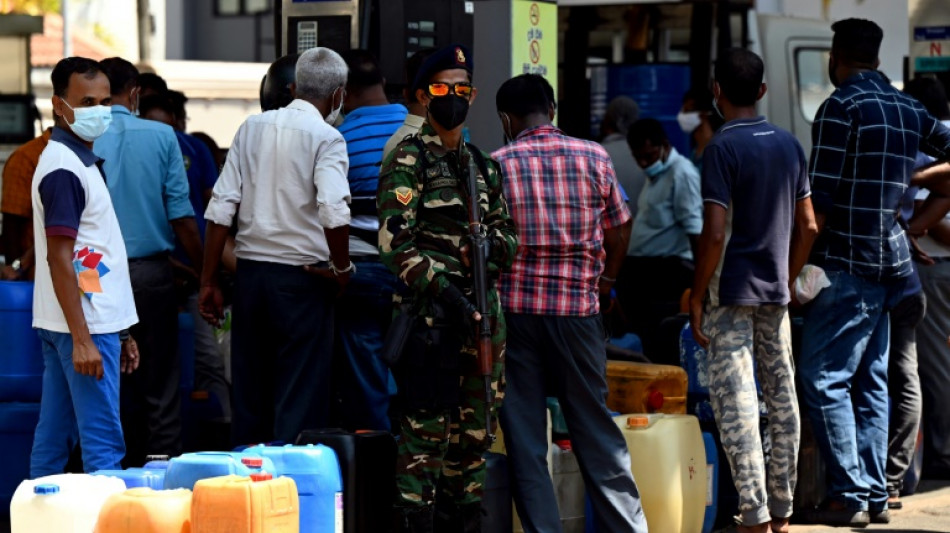
Sri Lankans are forced to spend long hours to buy food, fuel and even medicines as the dollar shortage has led to scarce imports in the country's worst economic crisis since independence in 1948.
The country's inflation hit a record 17.5 percent in February with food inflation hitting 25 percent.
The government is seeking an IMF bailout after the country's foreign currency reserves fell to $2.0 billion, down from $7.5 billion when the current government took over in November 2019.
Indian Foreign Minister S. Jaishankar, who was in Sri Lanka for a regional meeting, said he was "disturbed" by the medical shortages and asked the embassy to look into helping.
The Sri Lankan health ministry said it was also rushing fresh supplies to resume surgeries at Peradeniya.
G.AbuGhazaleh--SF-PST