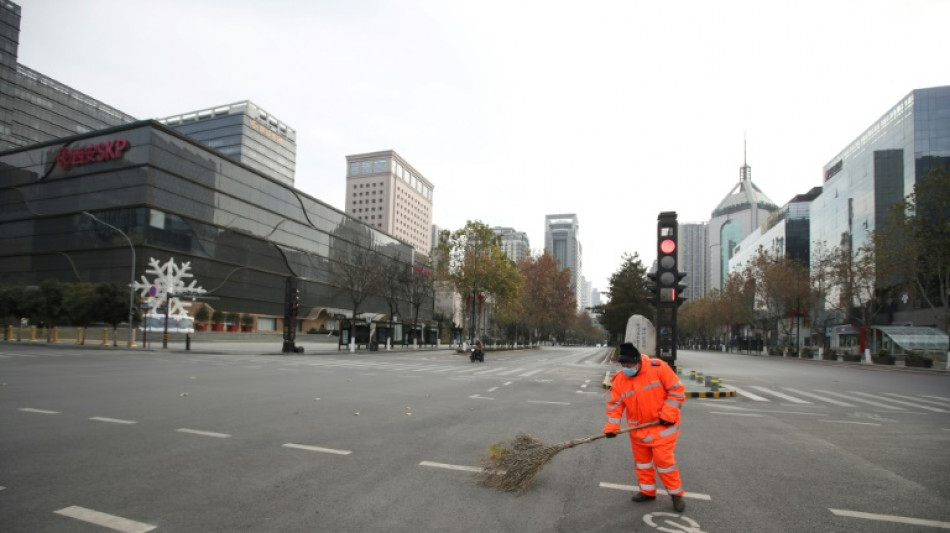
China should eventually 'co-exist' with Covid: top scientist

 Myanmar leader lands in Malaysia for migrant return talks
 Indian central bank hikes rates for first time since 2023

 US military on Okinawa face curfew, alcohol ban after murder case

 Fierce lobbying in EU over 'forever chemicals'

 Dodgers beat Braves and Padres avoid sweep in MLB playoffs

 Mourning, war and elections as Israel marks October 7

 Messi says Argentina retirement is 'saddest day of my career'

 Oil rises and stocks fall as Hormuz worries flare

 Pacific presses world for help 'surviving' climate change at pre-COP summit

 Verstappen revival to be put to the test in steamy Singapore

 US woman who survived botched execution is conscious, speaking: lawyers

 Climate champion Australia digging more coal
 Emotion, tears as Messi retires from Argentina national team

 Dodgers push Braves to the brink of MLB playoff exit

 Crisis-stricken Haiti postpones elections

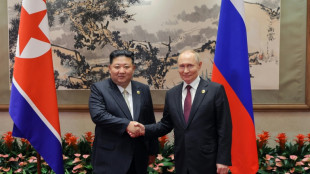 N. Korea's Kim pledges 'invariable support' in Putin birthday letter

 OGRD Alliance Advances PLPC Multi-Asset Platform Following APHELAR Milestone, Expanding Licensing and Strategic Capital Frameworks

 Emotion, tears as Messi prepares for Argentina farewell

 Kane eyes Ronaldo record after matching England cap mark

 Spain fight back to beat Croatia, Kane adds to record for England

 Merino double helps Spain beat Croatia, reach Nations League quarters

 US stocks hit fresh records as oil stabilizes on rising supplies

 As Messi bows out, Argentines say 'thank you'

 Ronaldo opens door for Portugal return, apologises for walkout

 'Nobody seems to care': Russian city shrugs off plague reports

China should aim to co-exist with the virus and could move away from its zero-Covid strategy "in the near future," a top Chinese scientist said in a possible sign that the country's leadership is rethinking its strict approach.
The country where the coronavirus was first detected in 2019 is now one of the last places still clinging to a zero-tolerance approach, responding to small outbreaks with snap lockdowns and cutting off most international travel.
But fatigue over disruptions to everyday life as well as semi-autonomous Hong Kong's struggle to contain a mass Omicron outbreak have raised questions about the sustainability of Beijing's approach.
China's strategy against Covid-19 cannot "remain unchanged forever" and "it is the long-term goal of humanity to co-exist with the virus" at tolerable death and illness rates, Zeng Guang wrote on social media platform Weibo on Monday.
Zeng is the former chief scientist of China's Center for Disease Control and Prevention and one of the experts behind the country's initial Covid response.
Zeng said that while China's approach had prevented the early chaos of widespread infection experienced by many Western countries, its low infection rate was now a "soft spot" as far fewer people had built up natural immunity.
He said Western countries were now showing "commendable courage" in exploring how to live with the virus and that China should "observe and learn" even though there was still "no need to open the country's doors at the peak of the global pandemic".
"In the near future, at the right time, the roadmap for Chinese-style co-existence with the virus should be presented," Zeng said.
His comments are unusual for an official in China's government, which has touted its low infection rates to the Chinese public as a sign of the superiority of its approach.
Experts who previously questioned "zero Covid" have faced a backlash, including prominent scientist Zhang Wenhong who was attacked by online trolls and probed for plagiarism after a similar Weibo post in July.
Zeng's post did not appear to make as much of a splash online, attracting only a few thousand responses on a platform where trending topics normally engage millions of users.
His comments come after authorities said in February that they would crack down on "excessive" Covid-19 measures by local governments, including arbitrary quarantines and business shutdowns.
The problems associated with a zero-Covid approach have been laid bare in Hong Kong, which is in the midst of its worst outbreak yet and has seen panic buying following mixed messaging from the government over whether it would impose strict mainland-style measures.
Authorities plan to test all 7.4 million residents this month and isolate all infections either at home or in a series of camps that are still being constructed with mainland help.
But experts from the University of Hong Kong published new modelling data on Tuesday which estimated the current number of infections at 1.7 million and suggested delaying mass testing to avoid overwhelming the financial hub's ability to isolate and care for those infected.
H.Nasr--SF-PST