US maternal mortality soars amid widening racial disparities

 Hotel Blacklist Launches New Accommodation Industry Risk Assessment Tool

 Bangladesh nuclear plant draws hope -- and worry

 US beat Canada 1-0 to wrap up four-win international break

 Turkey, Australia's joint COP31 leadership raises doubts

 For Turkish NGOs, COP31 offers rare space for action
 Sleep, appetite, gene-editing experts contend for Nobel chemistry prize

 Nobel Peace Prize haunted by the 'spectre' of Trump

 Africa launches own credit agency in bid for cheaper borrowing

 US, China, EU: three paths to regulating AI

 Australia's High Court rules against coal mine in landmark climate case

 Australia touts new funds for Pacific infrastructure at Fiji 'pre-COP'

 Eva Marie Saint, Oscar winner of Hollywood classics, dies at 102

 Australia probes app used in cheap smart glasses over privacy fears

 England needed to 'move on' from World Cup pain, says Tuchel

 O'Neill to stay at Celtic after period of "reflection"

 Kane marks 125th England cap with Wembley Nations League double

 Quebec's incoming separatist leader wants to block Crown from swearing-in

 Emmys gala will now stream its premier television awards

 Paramount completes Warner Bros takeover, creating Skydance

 Trump blames France unrest on Islam, migration

 Apple's Cook praises EU over efforts to protect children online

 Nobel winner Halzen says years of October 'misery' finally over

 Quebec separatist win rattles Carney's unity push

 'Itching' for change: Shiffrin cuts back slaloms this season

 'Gen Z has risen up': Tens of thousands mass for tense France school protests

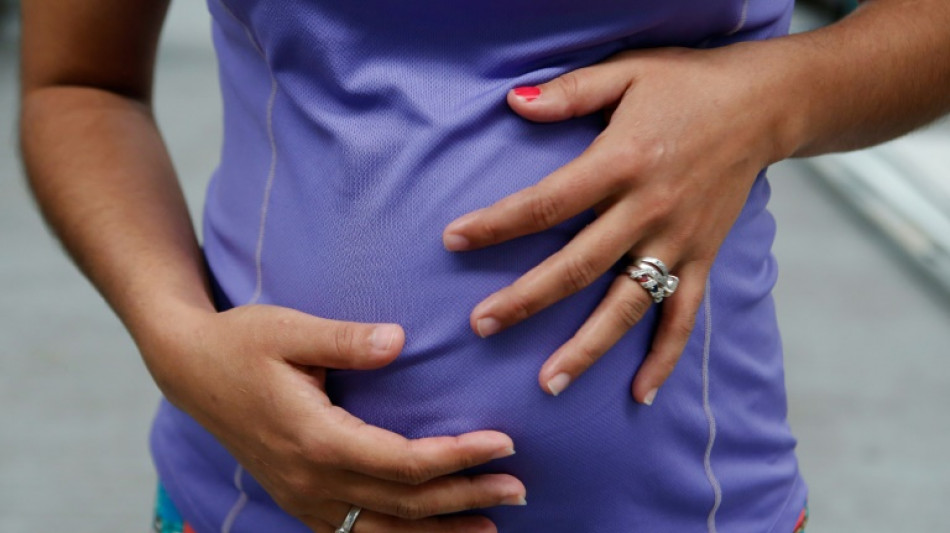
The US maternal mortality rate -- already the worst in the industrialized world -- rose in 2020 to its highest level in half a century, with Black women three times more likely to die than white women, data showed Wednesday.
A National Center for Health Statistics report showed the rate was 23.8 deaths per 100,000 live births, far higher than comparable countries, such as Canada where it was 7.5 per 100,000, according to OECD statistics for the same year.
Overall, 861 women were identified as having died of maternal causes, which the World Health Organization defines as a death while pregnant or within 42 days of the end of pregnancy, from any cause related to or aggravated by pregnancy or its management.
In 2019, the number of deaths per 100,000 live US births was 20.1, while in 2018 it was 17.4.
"We observed increases across a broad number of categories, and Covid-19 likely contributed," Donna Hoyert, who authored the report, told AFP.
But, she added, the disease was not mentioned in 88 percent of cases, and was thus only a part of the overall picture.
Despite spending more than twice per person on health than the average of high-income nations, the United States has historically remained an outlier on maternal mortality compared to its peers.
Across the world, maternal mortality dropped throughout the 20th century thanks to advances in medical care such as antibiotics and basic hygiene. But the United States has seen backsliding since the year 2000, unlike most other countries.
In fact, the last time the US rate was officially this high was 1968, though a new reporting methodology was introduced in 2018.
"Most of the peer countries have some form of universal health care," Boston University professor Eugene Declercq, who studies the field, told AFP.
"What we do in the United States is we focus on care so intently on the time of birth -- and that's nice -- but the fact of the matter is, women enter their pregnancies in a less healthy state because they're not covered."
Certain conservative-led states, such as Texas and Alabama, have increased hurdles to eligibility to Medicaid, the publicly funded health insurance program, said Declercq.
Upper income limits to enroll in Medicaid are lower for women who are pregnant, but there is a greater chance that by the time they become pregnant, they have untreated chronic conditions.
Limiting access to abortion -- as conservative-led states have increasingly done in recent years -- is also linked to worse maternal health outcomes a 2021 study in the American Journal of Public Health found.
- Racial disparities -
The racial breakdown of the 2020 figures reveal widening disparities.
The number of maternal deaths per 100,000 live births was 55.3 among Black women, compared to 19.1 among white women, which would by itself still be higher than peer countries.
Here too, there are thought to be many factors, and experts say it's not as simple as race being a surrogate for socioeconomic conditions such as access to care and environmental stressors, though these undoubtedly play a role.
In fact, a 2016 study by the Centers for Disease Control and Prevention (CDC) showed for a Black woman with a college education, the likelihood of maternal death is still 60 percent greater than for a white woman with less than a high school education.
"Black women are time and time again shown to not receive the same level of treatment or medications," Ebony Hilton, an anesthesiologist at the University of Virginia - Charlottesville, and an expert in disparities in health care, told AFP.
L.AbuTayeh--SF-PST