Kuwait schools restore classroom routines after remote learning

 AI giants pursue self-regulation as safety fears mount

 Argentina begin life after Messi with Bolivia friendly

 Helen Mirren delves into Patricia Highsmith's mind in 'A Talent for Murder'

 Sanders, Bannon warn of AI dangers in rare US left-right alignment

 US Senate crypto bill collapses amid partisan deadlock
 Raptors confirm Leonard return after Clippers salary cap scandal

 Empty benches as schools reopen in Venezuela's quake-hit Guaira

 US judge rules Trump's name must remain off Kennedy Center

 Samson fires India to T20 series win over Afghanistan

 Carney sells Canada to global investors but says US ties still key

 Tiny English village holds 'independence' vote over asylum seeker housing

 Trump slams Supreme Court over 'horrible' mail-in ballot ruling

 Protesting shepherds, farmers clash with Romanian police

 Saudi, Egypt demand open Red Sea, as Riyadh vows to hit back against Houthis

 Foundation Lets Ledger Users Switch to Open Source Without Starting Over

 Canada remains 'most important partner' for US in 'key areas': Carney

 Carrick urges Man Utd to use derby pain as fuel against Brighton

 Turkey police detain dozens over pro-LGBTQ Istanbul rally

 'Kenya's moment' as Nairobi to host 2029 world athletics champs in African first

 China warns against space 'battlefield' after US says weapons deployed

 Denmark says Russian frigate fired flares at helicopter

 EU to propose curbing social media, online games for under 15s

 FX Junction Reaches 40,600 Members and 26 Million Trades

 Prominent Greek neo-Nazi exits prison, vows return to politics

 'Obsessed': explosive state crime inquiry grips South Africa

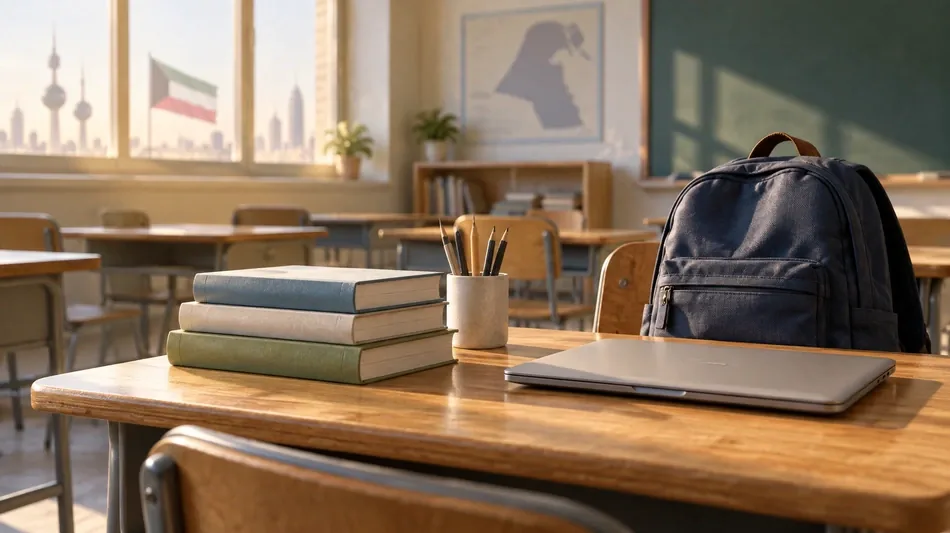
Students returned to Kuwait’s public and private Arabic schools on September 14 as educators prepared to address learning gaps and rebuild classroom routines after months of online education.
Students returned to Kuwait’s public and private Arabic schools on September 14 as educators prepared to address learning gaps and rebuild classroom routines after months of online education.
For many children from kindergarten through middle school, the return marked their first in-person lessons in six months. Students, parents and teachers described the importance of renewing friendships, daily habits and direct contact with educators, alongside recovering academic skills.
Grade 7 student Salma Essam said she had almost forgotten the school’s exterior and was pleased to see teachers and classmates again. Although she had not missed studying, she welcomed the end of technical problems that had made remote lessons difficult.
Kindergarten assistant principal Lina Aranki said the children’s absence had left the building unusually quiet. Middle school principal Lara Shawareb said online education had increased teachers’ and pupils’ appreciation of books, classroom boards and direct interaction.
Parents stressed that school provides a social setting as well as academic instruction. Mohamed Al-Sagheer, whose children attend Grades 9, 6 and 3, said he had long awaited their return, even apart from the lessons themselves.
Ruqayya Mohammed, the parent of Grade 5 and Grade 3 children, recognised that online instruction had been required for safety. She nevertheless valued early waking, morning assemblies and an organised routine, and wanted her children to resume meeting friends and learning alongside classmates.
Aranki said kindergarten pupils were among those most affected by the disruption. At that age, education includes social interaction and skills that extend beyond acquiring information. Remaining at home reduced opportunities to interact with others and to develop independence from parents.
She said starting first grade normally helps children recognise their increasing maturity and accept simple responsibilities. Pupils who missed that stage had lost part of an important transition. Some returned with weaker social and communication abilities, and fewer opportunities to make friends had also affected vocabulary and verbal development.
The kindergarten plans to revisit skills children may have missed, approaching parts of the programme as a new start. Teachers have discussed allowing additional time for pupils to respond and become familiar with classroom routines. Specialists will provide help where needed.
Aranki said the adjustment would require patience and support that children might not ordinarily need at their developmental stage. She also emphasised the teacher’s role as a model, since young pupils learn through observing and interacting with adults in the classroom.
Elementary school principal Laila Alkankouni identified learning loss as another concern, particularly in Grades 1 and 2. Early primary instruction depends heavily on writing and visual learning, making some abilities harder to develop fully online.
Her school will run preparatory or remedial programmes, with particular attention to those two grades. Teachers will reinforce basic curriculum skills before moving ahead with material pupils may not yet be ready to handle.
Other students described difficulty concentrating during online mathematics and science lessons, especially when technical problems interrupted subjects they already found demanding. Student Judy Alsayed said she had enjoyed the comfort and flexible pace of learning at home but preferred being at school.
She supported retaining recorded lessons and digital exercises so pupils could review work at home while receiving classroom instruction. Her comments reflected administrators’ plans to keep useful online practices rather than ending them with the return to school.
Abu Fawaz, whose daughter is in Grade 9, said the excitement about returning was unusual compared with the remote-learning period, when children largely remained at home. He argued that schools should prepare continuously for online teaching rather than wait for a new disruption.
Alkankouni said online and classroom education could work together when circumstances required it. Remote arrangements could be useful during war or other emergencies, but also during heavy rain or flooding that prevents attendance. She said the school was prepared if the Ministry of Education ordered another shift online.
At middle-school level, Shawareb said pupils would receive platform-based homework and assignments every week. Regular use would keep accounts active and students familiar with the systems, easing any future move back to remote lessons.
She said the experience had demonstrated the ability of teachers, students and parents to adapt. Schools would continue encouraging pupils to learn from classroom instruction, recorded lessons and books, using the information sources available to them.
The return also followed the three-month summer holiday. Schools were preparing not simply to resume the timetable but to assess how children had managed a prolonged period away from classrooms. Parents described routines such as leaving home each morning and taking part in assemblies as forms of learning in themselves.
For Aranki, rebuilding independence is connected with the responsibilities children encounter as they move into primary education. She said staff would need to recognise differences in how quickly pupils respond, rather than assume every child could immediately follow the usual pace. The availability of specialists was intended to support those adjustments.
Shawareb said keeping online assignments in regular use would prevent a future shift from feeling abrupt. The aim was for students to remain familiar with learning through their accounts while restoring the direct contact that educators and families had missed.
F.Qawasmeh--SF-PST