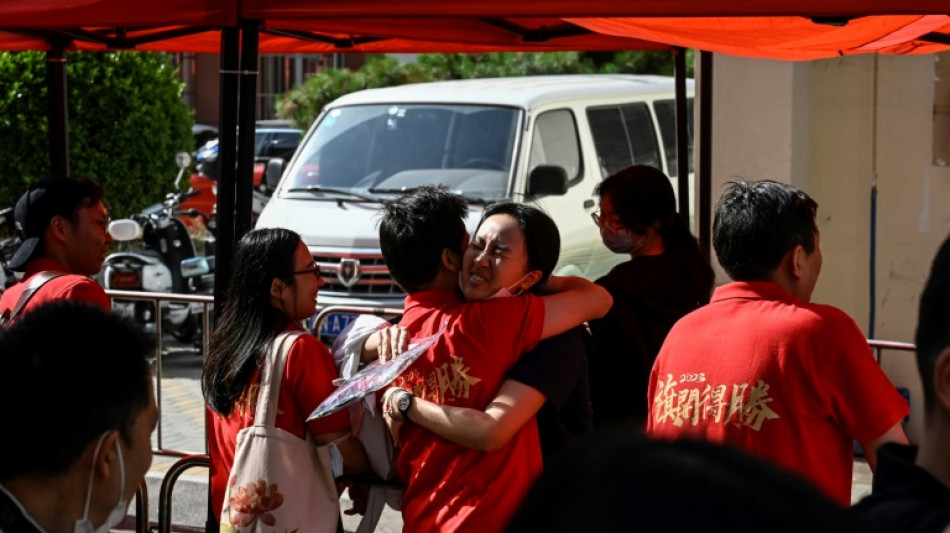
Millions of Chinese students sit gruelling college entrance exams / Photo: Jade Gao - AFP

 Hotel Blacklist Launches New Accommodation Industry Risk Assessment Tool

 Bangladesh nuclear plant draws hope -- and worry

 US beat Canada 1-0 to wrap up four-win international break

 Turkey, Australia's joint COP31 leadership raises doubts

 For Turkish NGOs, COP31 offers rare space for action

 Sleep, appetite, gene-editing experts contend for Nobel chemistry prize

 Nobel Peace Prize haunted by the 'spectre' of Trump

 Africa launches own credit agency in bid for cheaper borrowing

 US, China, EU: three paths to regulating AI

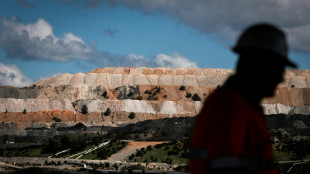 Australia's High Court rules against coal mine in landmark climate case

 Australia touts new funds for Pacific infrastructure at Fiji 'pre-COP'

 Eva Marie Saint, Oscar winner of Hollywood classics, dies at 102

 Australia probes app used in cheap smart glasses over privacy fears

 England needed to 'move on' from World Cup pain, says Tuchel

 O'Neill to stay at Celtic after period of "reflection"

 Kane marks 125th England cap with Wembley Nations League double

 Quebec's incoming separatist leader wants to block Crown from swearing-in

 Emmys gala will now stream its premier television awards

 Paramount completes Warner Bros takeover, creating Skydance
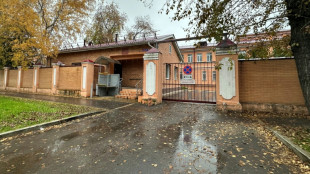
 Trump blames France unrest on Islam, migration

 Apple's Cook praises EU over efforts to protect children online

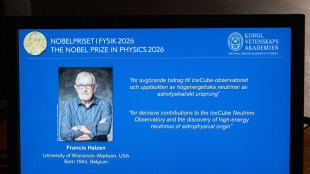 Nobel winner Halzen says years of October 'misery' finally over

 Quebec separatist win rattles Carney's unity push

 'Itching' for change: Shiffrin cuts back slaloms this season

 'Gen Z has risen up': Tens of thousands mass for tense France school protests
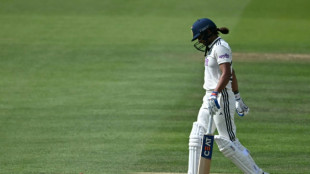
Millions of Chinese students sit for notoriously tough college entrance exams on Wednesday, the first since the country lifted zero-Covid rules that forced classes online for months on end.
China's education ministry says a record nearly 13 million students are registered to take the exams -- known as "gaokao" -- this year.
"I've been waking up at 4 am every day, except on Sundays, to study for the past four years," Jesse Rao, a 17-year-old high school senior in Shenzhen, told AFP.
"I've done everything I can, but I still feel a bit nervous."
In Beijing, nervous parents gathered around exam halls as their children knuckled down, many wearing red for good luck.
Zhang Jing, a mother in her forties, compared herself to Bai Suzhen, a character in Chinese folklore who is locked in a tower until her son passes an important test.
"My son is quite relaxed, I think I am more nervous than him," Jing, sporting a red qipao, a traditional Chinese dress, told AFP.
"I have been accompanying my son and instructing his study from the first grade of elementary school to the first year of high school," she explained.
"After the exam, I'll be completely relaxed."
- 'I struggled' -
Testing high school students on their Chinese, English, mathematics and other science or humanities subjects of their choice, the exams are critical to landing coveted spots at China's top universities.
Many parents shell out hundreds of dollars a month on cram schools or hire graduate students to sit with their children while they study late into the night.
Adding to the stress, this year's exam-takers have spent the bulk of their high school years under pandemic restrictions, which abruptly ended in December.
"I struggled to follow online lessons last year," Katherina Wang, a high school student from Shanghai who has been through two snap lockdowns in the past two years, told AFP.
"Our teachers held extra classes in the evenings and on weekends and helped us to catch up!"
The high stakes have led to elaborate attempts at cheating, from parents hiring graduate students to take the test on behalf of their children to exam-takers carrying electronic devices to communicate with experts outside.
Several provinces this year have installed scanners with facial-recognition capabilities to ensure that candidates do not hire proxies to take the test on their behalf, the state-run Global Times reported.
The scanners will also detect "electronic equipment such as (hidden) cell phones, earpieces and electronic watches" that can be used for cheating, the newspaper said.
- 'I will try again' -
Exams can last up to four days, depending on the province, taking between 60 to 150 minutes per subject.
The maximum score is 750, with over 600 required for a place at the country's top-tier universities -- for years a ticket to personal and professional success in China.
Very few make the cut: Last year, only three percent of exam-takers in the country's most populous province of Guangdong scored over 600.
And for students with more modest ambitions, scores still play a critical role in securing spots in universities and what subjects can be taken.
For those that do not get the results they need, there is always next year -- in 2021, 17 percent of students nationwide retook their gaokao.
"If I don't get the results I want, I will try again," Benjamin Zhu, a high school senior from Guangzhou, told AFP.
A.AlHaj--SF-PST