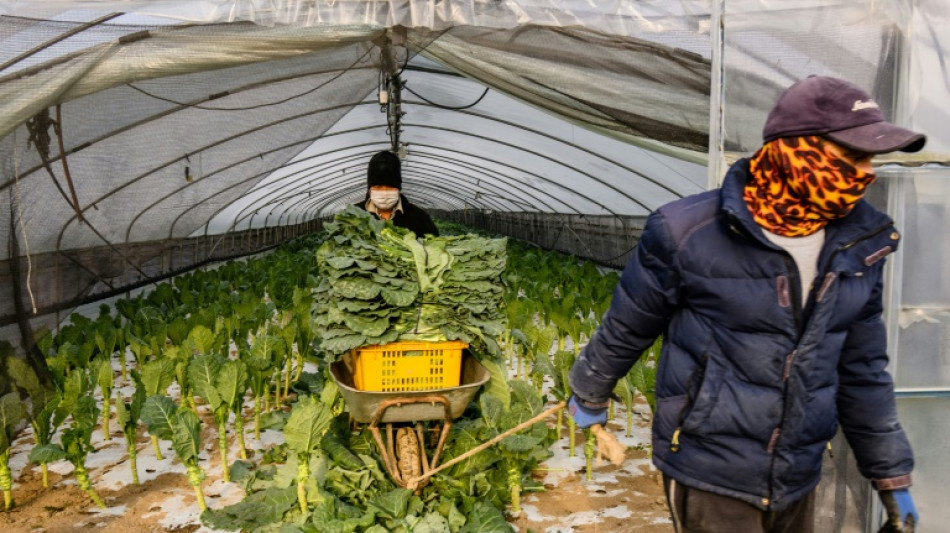
Frustrated foodies gobble up South Korean grocery unicorn / Photo: Anthony WALLACE - AFP

 German union slams Audi boss's appearance at Trump rally

 UK set for 'limited' budget giveaways as borrowing costs surge
 Anthropic's AI model accessed US voter data: Axios

 Malaysia's Johor reopens schools as haze eases

 Carragher says Fernandes benching was intended as public punishment

 Mother renews anti-bullying appeal a decade after son’s death

 'Historic victory': Leftist leaders in the Americas celebrate Lula's re-election
 African players in Europe: Jackson brace ends City's perfect record

 طرق دبي تفتتح الجمعة الجسر الأخير في مشروع دوار المركز التجاري
 نقل رالي دكار 2027 من السعودية في قرار استثنائي

 Mother dies after rescuing sons from riptide in the Bahamas

 James Blunt reportedly sought extra underwear during Celebrity Traitors filming

 Manchester United stand-in captain calls for change after Bournemouth loss

 Body recovered after ferry passenger reported overboard

 Police urge home-security checks as darker evenings return

 Dance in the Dark brings an immersive family adventure to Birmingham MAC

 China's Communist Party elite hold key talks on governance

 جمارك دبي تنجز 1.36 مليون طلب لاسترداد التأمينات في ستة أشهر

 Chiefs and 49ers suffer first losses of NFL season, Vikings stay unbeaten

 حرة مطار الشارقة تجذب استثمارات دولية جديدة في الصناعات الغذائية

 مقاطع الذكاء الاصطناعي تدخل قلب الحملات الانتخابية الأميركية

 Brewers erase four-run deficit as Rays lose World Series Game 2

 Shadab century and record last-wicket stand carry Pakistan past England

 Brazil's Lula clinches poll victory, Bolsonaro seeks to annul election

 Doncic dominates for Lakers as James' Sixers fall to Pistons

When Sophie Kim moved home to South Korea after 15 years in the United States, she couldn't find anywhere to buy kale for her green juice. So she found a farmer, then built an app to help others seek out top-quality produce.
The next-day grocery delivery service Market Kurly that 38-year-old Kim founded is now one of South Korea's most important startup unicorns, last valued at $3 billion and set for an initial public offering by February.
Kim, a self-professed "foodie", came up with the idea after she got tired of endlessly going from shop to shop to find the high-quality groceries she wanted in Seoul's supermarkets.
But she knew the products were out there and began driving to South Korea's agricultural heartlands to find them, for example visiting the famous meat market in Majang-dong to procure half a cow's worth of beef, which she would then split with her co-workers.
"While I was trying to figure out why it was so difficult to have access to great quality, fresh food in Korea, I got to know some farmers and fishermen, and they had exactly the same issue of not being able to find customers," she told AFP.
Korean farmers "are proud of the fact that they can produce such nice quality products, but it is extremely difficult for them to get to the consumer", she said.
At first, Kim said she thought about setting up a farmers market, before abandoning the idea as too unwieldy and -- more importantly -- unhelpful for producers, who don't have the time to travel to Seoul.
- Lightbulb moment -
It was a lightbulb moment when Kim realised "if we can make this work for both consumers and producers, it would probably be a breakthrough for the entire industry".
Kurly customers -- initially urban working women but now a diverse cross section of society -- can order rare beef, hand-made bread, or pick one of more than a dozen varieties of local, hard-to-find apples by 11pm and be guaranteed delivery by 7am the next morning.
As with companies from Amazon to Uber Eats, the rapid-fast shipments rely largely on gig economy drivers, and Kurly has not been immune to the global industry-wide complaints of overwork and poor conditions.
But consumer convenience has proved key to the app's success -- even though Kim says she's most proud of how the complex data-driven logistics network she's built supports South Korea's beleaguered farmers.
Kim launched Market Kurly with 30 products, including her beloved kale, which was supplied by farmer Hwang Han-soo, who has been growing organic vegetables for 30 years at his farm in Gyeonggi province.
Hwang told AFP that his kale was originally popular only with cancer patients for its perceived health benefits. He sold so little of it he considered switching crops, but the pleas of one of his terminally-ill customers in Busan convinced him to keep going.
Farming is tough in South Korea, Hwang said, owing to thin profit margins and a reliance on hard-to-find overseas workers amid dwindling interest in the industry from young South Koreans.
But working with Kurly has helped.
"In the early days of Kurly, we sold around 20 to 30 bags each day (but now) our average daily sales is around 800 bags" of kale, he said.
Part of the growth can be attributed to changing consumer trends, with kale now popular with young women who see it as a trendy health food, Hwang said, but Kurly's next-day cold-chain logistics network also plays a key role.
- Social costs -
"It takes less than a day to go from harvesting to the consumer's doorstep," he said, adding that before Kurly came along it would take two or three days for his kale to make it to stores.
Next-day delivery services are "very helpful because it is a system that goes directly from the farm to the consumers", while Kurly also handled all the promotion and marketing, he said.
"I can focus on farming," he added.
Hwang also said reading reviews of his products on Kurly's app allowed him to feel more connected to the people who eat what he grows.
South Korea's next-day delivery apps including Kurly and rival Coupang Fresh have been criticised for the strain they put on delivery drivers, with local media reporting on occasional deaths from extreme overwork, as workers make scores of deliveries each night.
The rise of such services has also sucked gig workers from other crucial sectors including city taxis, where the supply crunch is so severe that the Seoul government recently hiked basic fares in a bid to entice more drivers to provide late-night services.
It is important for South Korea's unicorns like Market Kurly to take into account the social costs of their business models, said Minister for Small and Medium Enterprises and Start-ups Lee Young.
"It's very possible for these platform companies to contribute to society," she said.
"Market Kurly is a very good example because it has created a very innovative idea and they have gone through multiple struggles until they achieved current success."
I.Matar--SF-PST