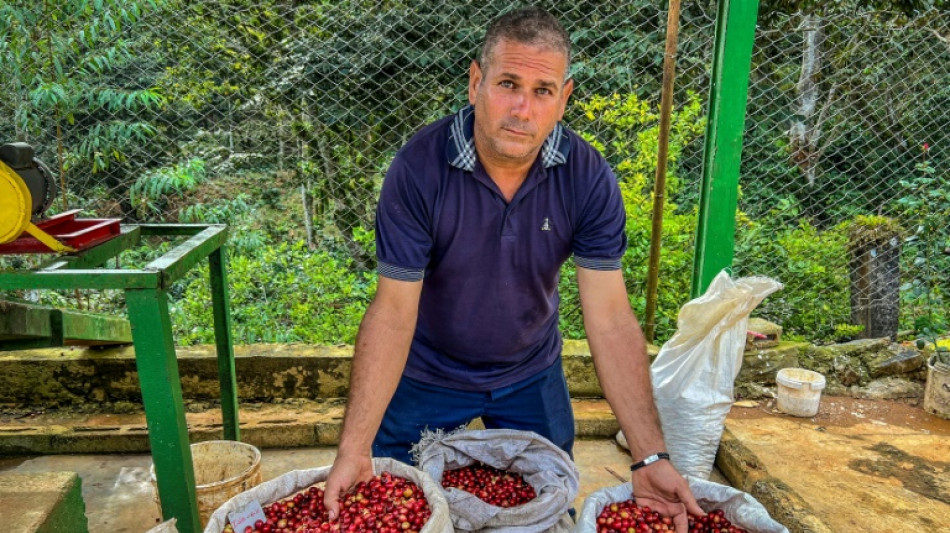
Cuba bets on specialty coffee to boost industry / Photo: ADALBERTO ROQUE - AFP

 German union slams Audi boss's appearance at Trump rally

 UK set for 'limited' budget giveaways as borrowing costs surge
 Anthropic's AI model accessed US voter data: Axios

 Malaysia's Johor reopens schools as haze eases

 Carragher says Fernandes benching was intended as public punishment

 Mother renews anti-bullying appeal a decade after son’s death

 'Historic victory': Leftist leaders in the Americas celebrate Lula's re-election
 African players in Europe: Jackson brace ends City's perfect record

 طرق دبي تفتتح الجمعة الجسر الأخير في مشروع دوار المركز التجاري

 نقل رالي دكار 2027 من السعودية في قرار استثنائي
 Mother dies after rescuing sons from riptide in the Bahamas

 James Blunt reportedly sought extra underwear during Celebrity Traitors filming

 Manchester United stand-in captain calls for change after Bournemouth loss

 Body recovered after ferry passenger reported overboard

 Police urge home-security checks as darker evenings return

 Dance in the Dark brings an immersive family adventure to Birmingham MAC

 China's Communist Party elite hold key talks on governance

 جمارك دبي تنجز 1.36 مليون طلب لاسترداد التأمينات في ستة أشهر

 Chiefs and 49ers suffer first losses of NFL season, Vikings stay unbeaten

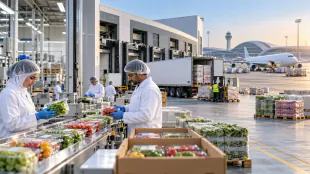 حرة مطار الشارقة تجذب استثمارات دولية جديدة في الصناعات الغذائية

 مقاطع الذكاء الاصطناعي تدخل قلب الحملات الانتخابية الأميركية

 Brewers erase four-run deficit as Rays lose World Series Game 2

 Shadab century and record last-wicket stand carry Pakistan past England

 Brazil's Lula clinches poll victory, Bolsonaro seeks to annul election

 Doncic dominates for Lakers as James' Sixers fall to Pistons

In the lush, fertile mountains of Cuba, farmer Jesus Chaviano dreams of adding his arabica beans to a list of specialty coffees the country hopes will lift an industry in decline.
It's harvest time on Chaviano's eight-hectare (20-acre) plantation in the central Guamuaya mountain range, and his 42,000 coffee plants burst with ripe reddish fruit in the shadow of avocado and banana trees.
At 800 meters (2,600 feet) altitude, conditions are ideal for the eight varieties of high-quality arabica coffee beans he planted with his "own hands."
While Cuba has been growing coffee for almost 300 years, it has never produced the specialty coffees beloved worldwide for their unique flavor profiles that come from careful cultivation in a specific terroir.
In the past two decades, the appeal of high-end coffee has soared, and so has its price on the international market.
"I think that needs to be the path we take: going after specialty coffees. Not large quantities... small batches that we can sell well," said Chaviano, 46.
As the island catches on to the appeal of high-end coffee, the first five specialty coffees will be unveiled in December at the first-ever Cuba-Cafe producers fair, which is being held in the eastern city of Santiago de Cuba.
The name and origins of the chosen coffees are being kept secret.
"We are taking the first concrete steps to add value to this coffee," said Ramon Ramos, the scientific director of Cuba's National Institute for Agroforestry Research. He added that "with the same production, the same yield, it will be sold at a much higher price."
-'It's the future'-
According to Ramos, the price for 1,000 kilograms of commercial coffee varies between $4,000 and $5,000. Meanwhile, a kilogram of specialty coffee can sell for "up to $10,000."
According to the Specialty Coffee Association (SCA) a coffee must score above 80 points on a 100-point scale to reach the required standard, after being evaluated by "a certified coffee taster."
The final score will influence the price at which it is sold.
"It's the future," says Chaviano, who built his house in the middle of his plantation, in the style of the French colonists who fled Haiti in the 18th century and brought the culture of coffee cultivation to Cuba.
In 1960, Cuba produced more than 60,000 tonnes of coffee. Last year, this figure stood at only 11,500 tonnes, less than half of what is consumed locally.
According to official figures, only 1,365 tonnes were exported.
Experts say climate change -- drastically reducing coffee-growing areas worldwide -- is partly to blame for the drop in production.
In Cuba, the emigration of plantation workers has also impacted the industry.
"Why did the country once produce a lot of coffee, but now it can't produce coffee?" asked Chaviano.
"I'm focused on doing it right and demonstrating that it's possible to produce coffee, and quality coffee," but "you have to put your heart into it," he added.
In 2021, his yield was one tonne of coffee per hectare, four times the national average.
- 'We can do it'-
Some 25 kilometers from his farm, researchers at the Jibacoa Agroforestry Research Station, have been tasked with training and providing technology to producers to improve their yields.
Director Ciro Sanchez, said the goal is to produce 30,000 tonnes of coffee by 2030.
To achieve this, the aim is to recover some plantations in areas affected by climate change, by planting more resistant varieties of coffee. Sanchez also wants to prioritize the growth of "high-quality arabica" in mountainous areas.
Chaviano is optimistic that one day his coffee will be one of the feted specialty brands being exported from Cuba.
"We can do it. We just need to work!" he said.
O.Mousa--SF-PST