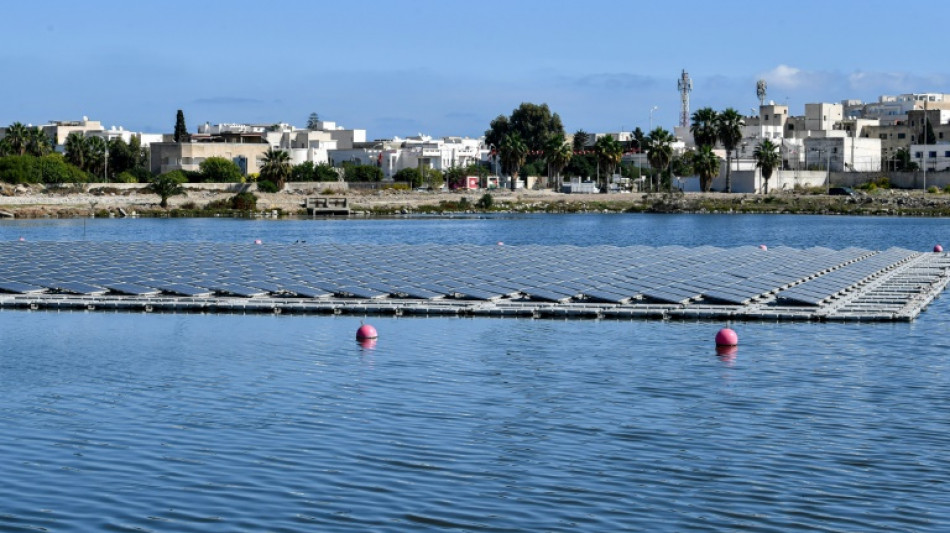
Sun-soaked North Africa pushes for cheap energy / Photo: FETHI BELAID - AFP

 US singer Chris Brown avoids jail over UK nightclub brawl
 Man Utd crisis deepens as Carrick faces axe
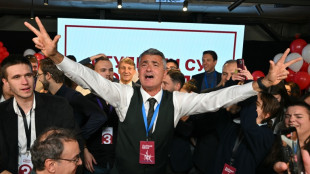 Serbian student movement eyes power after resounding snap poll victory
 Eala breezes past world number 411 in Tokyo opener
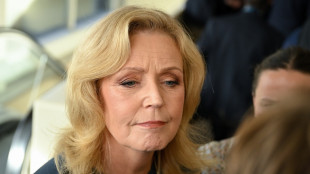 Swedish Centre Party leader says government coalition talks failed
 Barca's big-game defeats pose familiar questions
 Russia says open to mini Ukraine ceasefires, but no let up in war
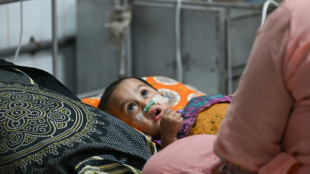 Bangladesh measles crisis 'warning sign' of other outbreaks: report
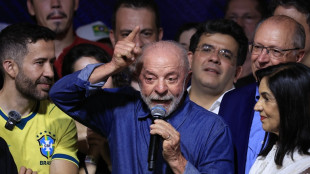 'Historic victory': World leaders celebrate Lula's re-election
 Stock markets mixed ahead of tech earnings, central bank decisions

 الظفرة يطلب كشف تفاصيل قرار ركلة الإقصاء أمام خورفكان

 Canada-EU summit seeks deepened alliance as US ties fray
 Senegal to host Youth Games, Africa's first ever Olympics

 ITV drama Adultery examines temptation, class and family consequences
 Argentine police arrest stepfather after pregnant 10-year-old reaches hospital
 New levy on non-EU parcels kicks in November 1
 Saudi coalition says struck Houthi missile facilities after Riyadh airport attack

 مهرجان الظفرة الرابع يختتم منافسات الهجن بتتويج الفائزين

 Trump says Canada trade deal coming 'soon'

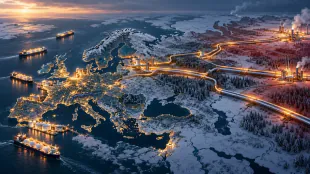 بوتين يؤكد استمرار واردات أوروبا من الطاقة الروسية
 العاصفة «بويلو» تعطل الكهرباء والرحلات الجوية في بريطانيا

 Kane primed to pip Yamal, Mbappe to Ballon d'Or glory
 UK households advised to prepare for three days without essential services

 Redditch Santa fun run to return to Arrow Valley Park

 Obama links Trump trade policy to higher costs in Detroit speech
Solar panels glint in the sun on a Tunisian lagoon, part of a long-delayed drive to harness the North African country's vast renewable energy potential.
While industry insiders complain of red tape, fossil fuel prices that soared after Russia's February invasion of Ukraine created a powerful incentive for such investments across the Maghreb region.
"Algeria, Tunisia and Morocco, each have an abundance of solar energy resources as well as ample wind energy resources," said Michael Tanchum, an expert on the sector.
"Extreme price pressures on natural gas, especially in Europe, have changed the calculus for investments in renewable energy."
Omar Bey, of French-based renewables developer Qair, hopes the firm's 200-kilowatt floating solar station on a lake next to a Tunis industrial park can be a prototype for bigger projects nationwide.
"Tunisia doesn't have any choice but to go for renewables, given the situation around hydrocarbons and particularly gas," he said, adding that innovations like floating solar stations could help.
Being on reservoirs or lakes helps cool the panels, making them more efficient, and "means we can use water instead of taking up land that can be used for other things like farming or homes," Bey said.
It also helps reduce evaporation, another benefit in the water-stressed region, he said.
Tunisia, on the sun-drenched Mediterranean Sea, is well-placed to produce clean energy both for domestic use and for export to energy-hungry Europe.
In 2015 the country set ambitious targets for renewables.
But last year green sources accounted for only 2.8 percent of the country's energy mix and the rest came from natural gas, according to the state Tunisian Company of Electricity and Gas (STEG).
Tanchum, a non-resident scholar at Washington's Middle East Institute, said "political paralysis" was holding the sector back.
Tunisia has suffered more than a decade of turmoil since its 2011 revolution. Ideological wrangling has often taken precedence over transforming the economy, which depends heavily on food and energy imports.
The state's fuel subsidies bill soared 370 percent in the first half of this year compared to the same period of 2021, official figures show.
Yet, despite incentives to push for renewables, such efforts have been held back by legal and administrative obstacles, according to Ali Kanzari, president of an association representing solar firms.
"Sometimes (imported solar panels) sit for a month or more in customs," he said.
"We need more flexible laws. Everything needs to be sped up."
- Morocco leads -
One major solar station in the desert near Tataouine was finally connected to the grid in October, two years after its completion. Project head Abdelmomen Ferchichi blamed difficulties in getting permits, and the station's distance from the grid.
Bey said "misunderstandings" among some union members within STEG, wary of attempts to privatise the sector by stealth, had also delayed development.
"Today, all that's behind us," he said.
Tanchum told AFP that despite the renewables potential of the entire Maghreb, "only Morocco has emerged as a regional leader".
Morocco decided in 2009 to boost renewables to 52 percent of its energy mix by 2030 and it currently produces around a fifth of its electricity from clean sources, according to the government.
Its energy ministry says "this vision has started bearing fruit, with 111 renewable energy projects completed or under development".
They include a solar and wind facility to generate more than 10 gigawatts of power and send it to the United Kingdom via a 3,800-kilometre (2,360-mile) undersea cable.
Tunisia dreams of doing something similar.
In October, it applied for a European Union grant for an 800-million euro ($828 million) cable to Italy covering 200 kilometres, to go online by 2027.
For Kanzari, the association president, the link can't come soon enough.
"They're going to have a cold winter" in Europe, he said. "If we'd had a cable that was ready, and four or five gigawatt solar power stations in the desert, we'd be selling electricity and earning hard cash."
Tanchum said that although Maghreb countries could benefit from this type of project, much of the energy should be for domestic use, so they "don't become the green battery of Europe".
- Algeria's ambitious target -
Neighbouring Algeria, Africa's top natural gas producer, has set the ambitious target of 15,000 megawatts from solar by 2035.
The first part of a 1,000-megawatt project is set to come online by late next year, but for now the country generates just three percent of its electricity from the sun.
Intissar Fakir, head of the North Africa and Sahel Programme at the Middle East Institute, said Algeria's cash glut from gas exports is going to upgrade the fossil fuel infrastructure, not to renewables.
There are also "big hurdles for foreign investment in the sector -- not least Algeria's notorious bureaucracy," she added.
S.AbuJamous--SF-PST