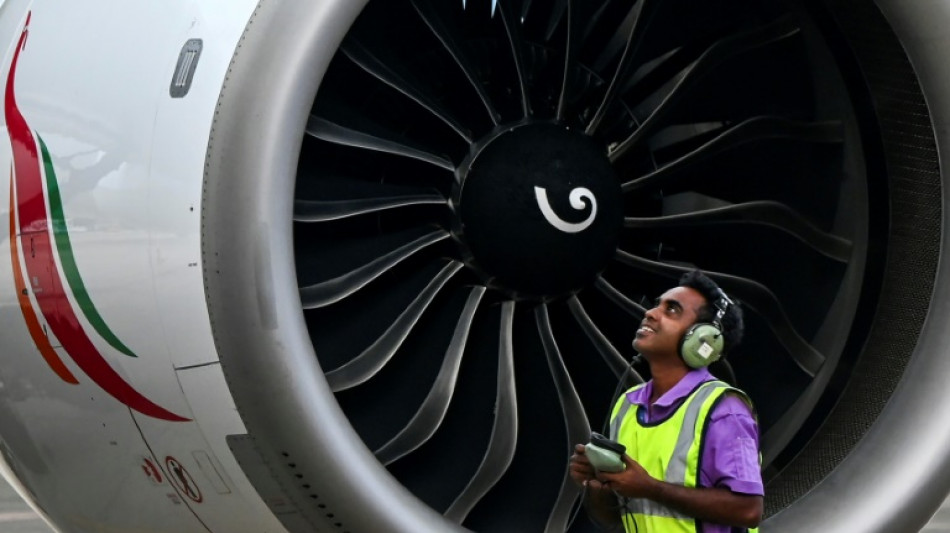
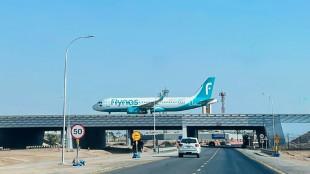
Turbulence ahead: Airline on the block in Sri Lanka reforms / Photo: Ishara S. KODIKARA - AFP

 France's Macron accuses social media of sowing discord ahead of election
 Anthropic unveils IPO filing showing soaring sales and AI risks

 US singer Chris Brown avoids jail over London nightclub brawl
 US singer Chris Brown avoids jail over UK nightclub brawl
 Man Utd crisis deepens as Carrick faces axe
 Serbian student movement eyes power after resounding snap poll victory
 Eala breezes past world number 411 in Tokyo opener
 Swedish Centre Party leader says government coalition talks failed
 Barca's big-game defeats pose familiar questions
 Russia says open to mini Ukraine ceasefires, but no let up in war
 Bangladesh measles crisis 'warning sign' of other outbreaks: report

 'Historic victory': World leaders celebrate Lula's re-election
 Stock markets mixed ahead of tech earnings, central bank decisions

 الظفرة يطلب كشف تفاصيل قرار ركلة الإقصاء أمام خورفكان

 Canada-EU summit seeks deepened alliance as US ties fray

 Senegal to host Youth Games, Africa's first ever Olympics

 ITV drama Adultery examines temptation, class and family consequences
 Argentine police arrest stepfather after pregnant 10-year-old reaches hospital

 New levy on non-EU parcels kicks in November 1

 Saudi coalition says struck Houthi missile facilities after Riyadh airport attack

 مهرجان الظفرة الرابع يختتم منافسات الهجن بتتويج الفائزين

 Trump says Canada trade deal coming 'soon'

 بوتين يؤكد استمرار واردات أوروبا من الطاقة الروسية

 العاصفة «بويلو» تعطل الكهرباء والرحلات الجوية في بريطانيا

 Kane primed to pip Yamal, Mbappe to Ballon d'Or glory
Dozens of state-owned Sri Lankan companies employing tens of thousands of people could be restructured or closed as part of an IMF bailout of the bankrupt country, with the country's airline top of the list for reform.
With nearly 6,000 staff, SriLankan Airlines is the biggest and most expensive of the cash-haemorrhaging, sclerotic companies that have drained the budget and compounded the worst financial crisis in national history.
According to treasury figures, the carrier was losing $4.50 for every dollar it earned at the start of this year. It has not turned a profit since 2008, when its chief executive was sacked for offending the country's then-leader.
"Even those who have never stepped into a Sri Lankan aircraft are paying to subsidise the airline," government spokesman Manusha Nanayakkara told reporters this month.
"We can't continue like this."
Sri Lanka defaulted on its $51 billion foreign debt in April and is now neck-deep in the arduous process of renegotiating its obligations with creditors.
Its 22 million people suffered through months of food and fuel shortages, and at the peak of the crisis, a furious mob stormed government buildings and chased Sri Lanka's former president into exile.
The International Monetary Fund (IMF) has given preliminary approval to a $2.9 billion bailout, and the government hopes to be able to access the first tranche by the end of the year.
Terms of the deal have yet to be released, but IMF cash is usually conditional on painful reforms, such as tax hikes, removing consumer subsidies, and privatising or closing underperforming state firms.
The country has more than 300 state enterprises, ranging from nut farms to fuel retailers, and the top 52 firms lost nearly $2.4 billion between January and April -- around $140 million a week.
SriLankan Airline's future is the most urgent priority, and the government last month instructed the finance ministry to begin its restructuring, ideally by attracting outside investment.
But finding a company willing to pour money into the airline will be immensely challenging, analysts say, given its history of interference, mismanagement and turbulent partnerships.
- 'It's even more difficult now' -
In 1998, Emirates bought a minority stake in the carrier and took over its management.
It stayed in the black for most of the next decade, although one of its most profitable years was -- ironically -- 2001, when the Tamil Tigers separatist movement attacked the country's main international airport.
Several of the airline's planes were destroyed in the July attack, but insurance payouts and the removal of excess capacity offset a downturn in ticket sales.
But the partnership was terminated and the chief executive sacked by then-president Mahinda Rajapaksa in 2008 after the carrier refused to bump fare-paying passengers to make room for members of his family returning from a jaunt in London.
The leader packed SriLankan's management with relatives and loyalists, several of whom now face corruption charges, and the airline has bled cash since.
Rajapaksa even started a rival state-owned airline named after himself, a colossal failure that was eventually merged into SriLankan -- along with its accumulated losses.
Authorities tried to sell a 49 percent stake in SriLankan back in 2017 when the island nation's tourism market was booming, but even then private equity firm TPG eventually withdrew its bid after deciding it was not a viable operation.
Airlines are "generally not that attractive" to investors, Singapore-based aviation analyst Brendan Sobie told AFP, "particularly airlines that are government owned and have a lot of legacy issues, have a lot of debt, like SriLankan does".
"There's not many foreign airlines, particularly in this post-Covid environment, that are even looking or considering buying stakes in airlines overseas," he added, and the track record for strategic investments in the sector was "very bad".
"It's very difficult," he said.
- 'We are a bankrupt country' -
SriLankan chairman Ashok Pathirage acknowledges the airline's current balance sheet is not an attractive proposition.
"If you try to privatise the whole thing, people will come and ask the government to take half of the debt," Pathirage told AFP.
But he said SriLankan could settle about half of its liabilities by splitting off and selling profitable business arms, including its virtual monopoly on catering and ground handling at Colombo airport.
Trade union leaders and employees support a restructuring along those lines, on the condition that no jobs are cut.
"The airline is losing money not because of the staff, but expensive leases and poor financial structures," a cabin crew member, who requested anonymity, told AFP.
But selling off the airline's profitable divisions would leave the rump operations generating even bigger losses for the government.
Former state finance minister Eran Wickramaratne told AFP that if authorities could not find an investor, the airline should be grounded permanently before it could burden the public further.
"We are a bankrupt country," he said. "We have not been able to service our debt and that reality has struck home."
I.Yassin--SF-PST