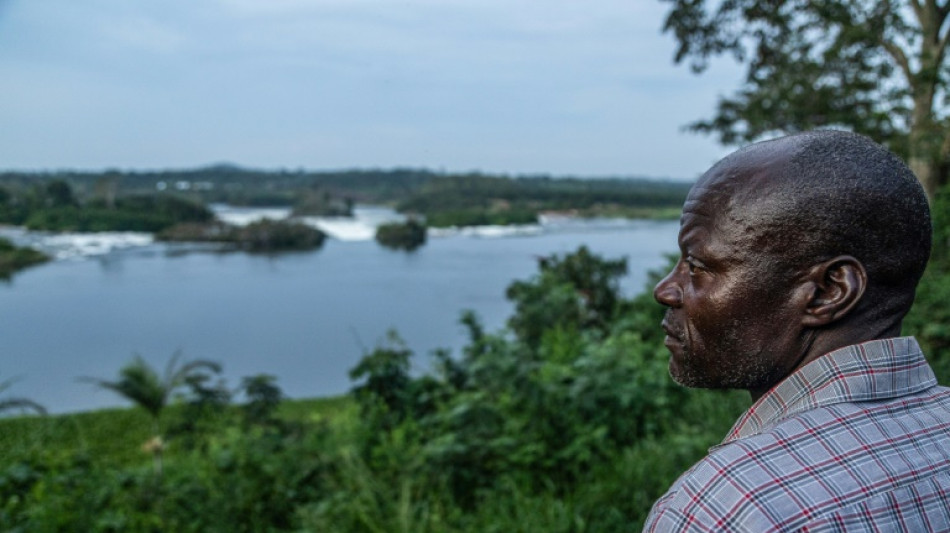
Choking on factory waste: the Nile's rising scourge / Photo: BADRU KATUMBA - AFP

 French court adjourns trial over 2020 death of delivery driver

 Serbian student movement eyes power after election triumph

 Machado ready to meet Venezuela leader after shock return

 Lula celebrates election win as Brazil markets tumble
 France's Macron accuses social media of sowing discord ahead of election
 Anthropic unveils IPO filing showing soaring sales and AI risks

 US singer Chris Brown avoids jail over London nightclub brawl
 US singer Chris Brown avoids jail over UK nightclub brawl
 Man Utd crisis deepens as Carrick faces axe

 Serbian student movement eyes power after resounding snap poll victory

 Eala breezes past world number 411 in Tokyo opener

 Swedish Centre Party leader says government coalition talks failed
 Barca's big-game defeats pose familiar questions

 Russia says open to mini Ukraine ceasefires, but no let up in war

 Bangladesh measles crisis 'warning sign' of other outbreaks: report
 'Historic victory': World leaders celebrate Lula's re-election
 Stock markets mixed ahead of tech earnings, central bank decisions

 الظفرة يطلب كشف تفاصيل قرار ركلة الإقصاء أمام خورفكان

 Canada-EU summit seeks deepened alliance as US ties fray

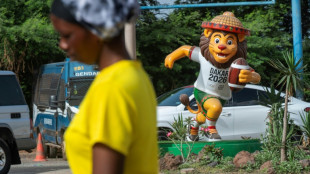 Senegal to host Youth Games, Africa's first ever Olympics

 ITV drama Adultery examines temptation, class and family consequences
 Argentine police arrest stepfather after pregnant 10-year-old reaches hospital
 New levy on non-EU parcels kicks in November 1

 Saudi coalition says struck Houthi missile facilities after Riyadh airport attack

 مهرجان الظفرة الرابع يختتم منافسات الهجن بتتويج الفائزين

As tourists pose for selfies on the shores of Lake Victoria in Uganda, factories within spitting distance of the source of the Nile dump their waste directly into Africa's longest river.
AFP journalists watched as staff at a tannery shovelled garbage into the river, while dirty water flowed into the Nile through plastic pipes leaving a brown sheen, in a vivid illustration of the mounting scourge.
The town of Jinja, where the Nile begins its 6,500-kilometre (4,000-mile) journey to the Mediterranean, is a jumble of small houses squeezed between textile and fish processing factories, boatbuilders, maize millers, brewers and coffee processors.
Smoke billows from a factory chimney as fishermen nearby land meagre catches from their small boats.
Rising industrial pollution in the area set off alarm bells last year, with a report by the 10-nation Nile Basin Initiative (NBI) warning that "the rich natural resources and outstanding biodiversity in the Nile Basin face unprecedented threats".
It blamed population growth, urbanisation and water contamination, saying the "discharge of untreated wastewater and sludge, fertiliser and pesticides from farming and sediments from land degradation comprise the prime pollutants".
- 'The fish die' -
Young men and women take turns to swim in the waters of the Nile, oblivious to its dangers.
But fishermen like Stanley Ojakol know the changes wrought by pollution all too well.
"We have seen fish stocks disappear... This is largely because of the chemicals the factories pour into the river," the father of 12 told AFP.
"At times the fish die in the water," he added.
Jowali Kitagenda, 40, has been fishing the river since childhood, and has endured many beatings from soldiers assigned to guard restricted areas of the Nile.
"The government sent the army to stop us from fishing in the deep section of the Nile... but they let the factories pour tonnes of chemicals into the water and the fish die," Kitagenda told AFP.
"When we try to search for fish, we only get a few."
With drinking water also polluted, anger at the authorities and the factory owners is rising around Jinja, a town of an estimated 300,000 people, where many households have more than 10 members.
"We were advised by the ministry of health to stop fetching the water from the Nile. It got polluted," said 50-year-old Ali Tabo, a member of the local council executive committee.
"It started itching our skin. The government said it was not good for the kids and domestic use. They sank boreholes and we now draw water from the boreholes, not the river," he added.
- 'Dirty water' -
Based in the Ugandan town of Entebbe, the Nile Basin intergovernmental partnership brings together 10 nations in the Nile basin to discuss ways to best manage their shared water resources.
"When you have a problem of water quality without the systems to clean it, it becomes complicated," NBI's executive director Sylvester Anthony Mutemu told AFP.
Climate change may pose a serious threat to the Nile's levels, but pollution is increasingly emerging as "a bigger issue" in Uganda, said Callist Tindimugaya of the country's ministry of water and environment.
"Pollution is a very big issue with growing population and industries," Tindimugaya told AFP.
Under a Ugandan environmental law adopted in 2000, factories must be no closer than 100 metres from a river's highest watermark, but many are much closer, often hugging the banks.
"We have laws but implementation is a different issue. (The factories) need water treatment plants but some discharge dirty water at night," he added.
Tindimugaya said the government had come up with a very direct way to show businesses the environmental consequences of their actions. They want factories to release their treated wastewater into the same section of the Nile from which they draw their own supplies.
That way "they are the first to suffer if they pollute", he said.
A.AlHaj--SF-PST