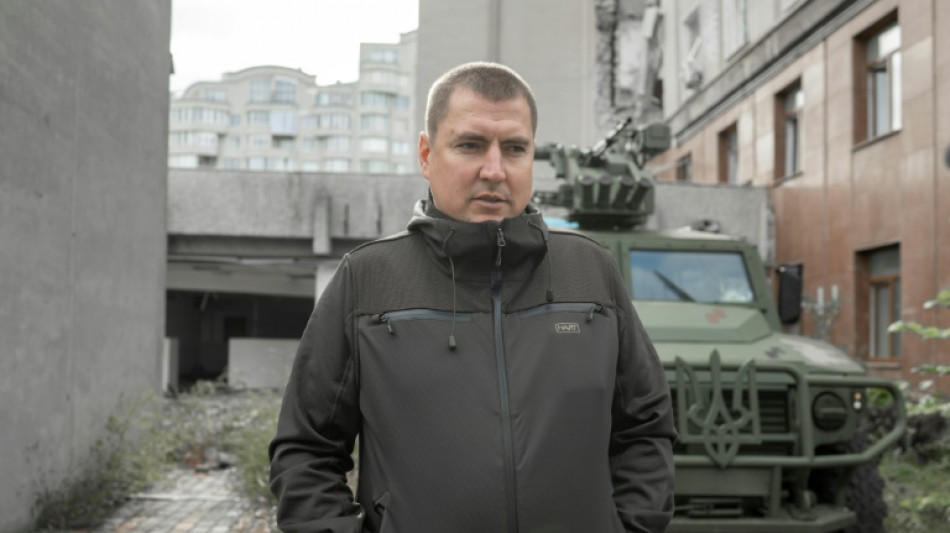
'No trust': Clandestine world of Ukraine prisoner swaps / Photo: BULENT KILIC - AFP

 Netanyahu, rivals trade attacks over Iran as clock counts down to Israel vote
 Townsend urges Scotland to use Nations Championship as World Cup springboard

 Microsoft offers voluntary exit packages to 60,000 staff
 S.Africa ambassador calls for talks with US over 'tense' ties
 'Smells of freedom': Serbians hopeful after landmark election
 South Africa select 'enforcer' Coetzee for Australia decider
 Botanists comb Gabon's rich rainforests with nature on the line
 New levy on non-EU parcels kicks in Sunday
 Stocks climb ahead of tech earnings, central bank calls

 Part of London's Oxford Street pedestrianised 'forever'

 Canadian youth seek climate action in landmark trial
 Trump blasts Norway over Nobel Peace Prize snub
 Japan PM vows swift response to wave of cyberattacks
 Stocks mostly rise before tech earnings, central bank calls
 France's Macron to visit Marseille after protest violence
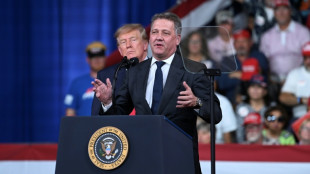 German union slams Audi boss's appearance at Trump rally
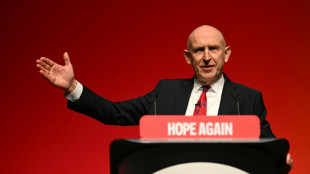 UK set for 'limited' budget giveaways as borrowing costs surge
 Anthropic's AI model accessed US voter data: Axios
 Malaysia's Johor reopens schools as haze eases

 Carragher says Fernandes benching was intended as public punishment
 Mother renews anti-bullying appeal a decade after son’s death
 'Historic victory': Leftist leaders in the Americas celebrate Lula's re-election
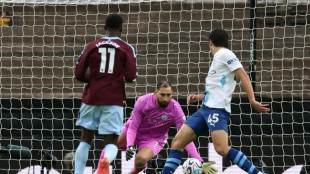 African players in Europe: Jackson brace ends City's perfect record
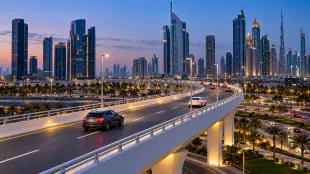 طرق دبي تفتتح الجمعة الجسر الأخير في مشروع دوار المركز التجاري

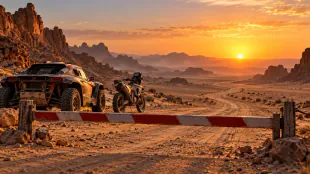 نقل رالي دكار 2027 من السعودية في قرار استثنائي
The five captured Russian soldiers stumbled out of the Ukrainian van with their heads covered in black balaclavas.
Vitaliy Danila's hand was trembling by the time he filmed himself a few tense moments later with the dazed faces of five Ukrainian captives whose release he had just secured in return.
It was the 16th prisoner swap the regional traffic police chief had safely concluded along the southern front of the war Russia started in Ukraine eight months ago.
Each one of them could have ended in a bloodbath.
"When there is a battle and you see tanks firing and you are standing in a field conducting an exchange..." Danila said before trailing off.
The swap he filmed had occurred a day earlier and was just about to be formally announced by Ukrainian President Volodymyr Zelensky's office.
But the towering policeman was still living the moment -- and realising again how close to death he had come while bringing his total of recovered captives to 170.
"The first few times I did this, I thought this was my one-way ticket to the grave. We didn't know who we would be meeting or if it was a trap," he recalled at a secret location in the war-ravaged southern port of Mykolaiv.
"There is simply no trust between us at all," he said of the soldiers conducting the actual swaps on the battlefield.
- 'Anything can go wrong' -
World headlines occasionally light up with news of mammoth Russian-Ukrainian exchanges that often involve high-value captives.
These have included 200 fighters who survived the Russian siege of the Azovstal steel plant in Mariupol and more than 100 women who returned from Russian captivity last week.
Less noticed are the more routine swaps of just a few prisoners -- many of them gravely wounded -- that the sides have been able to arrange behind the scenes.
How these occur in the middle of a war zone between two foes are a slight mystery, even to Danila himself.
"Anything can go wrong," he said. "We just have to avoid opening fire at each other. Everyone has to come out alive."
- Secret operation -
Danila said the first swaps were conducted in March, without formal state approval and in complete secrecy.
The Russians had just been thwarted in their attempt to seize Mykolaiv and were regrouping at a rear base.
The fighting was falling into a deadly rhythm and the captives were piling up on both sides.
The Russians made the first move.
"We got word that their side is not against an exchange. They established contact with us about a few prisoners," he said.
"At this point, it was impossible to go through official channels. Very few people knew about it."
He said the exchange lists are now approved by Ukraine's GUR military intelligence directorate and the SBU security service.
But the first ones were done without any pauses in fighting at an agreed location in the very middle of the front.
"I looked at my men, we all agreed we should do this, and drove off," Danila said.
- 'All a lie' -
Danila said his biggest challenge was talking to the enemy without losing his cool.
"We talk to them on the spot. We discuss the details of the exchange. All sorts of things can happen," Danila said.
But he does not believe a word the Russians tell him and treats each exchange like a military mission.
"The way they act, pretending like they want to help and things like that -- that is all a lie," he said.
This mistrust stems in large part from the repeated targeting of civilians who were allowed to flee the war zone along established routes in the first weeks of war.
Those routes were secured along back channels similar to the ones Danila uses today.
"You have to keep your cool. No emotions," said Danila of his mindset during the exchanges.
"Emotions can ruin everything. So everyone who takes part -– these are my guys that I know won't take out their guns and open fire. I trust each of them with my life."
Z.AbuSaud--SF-PST