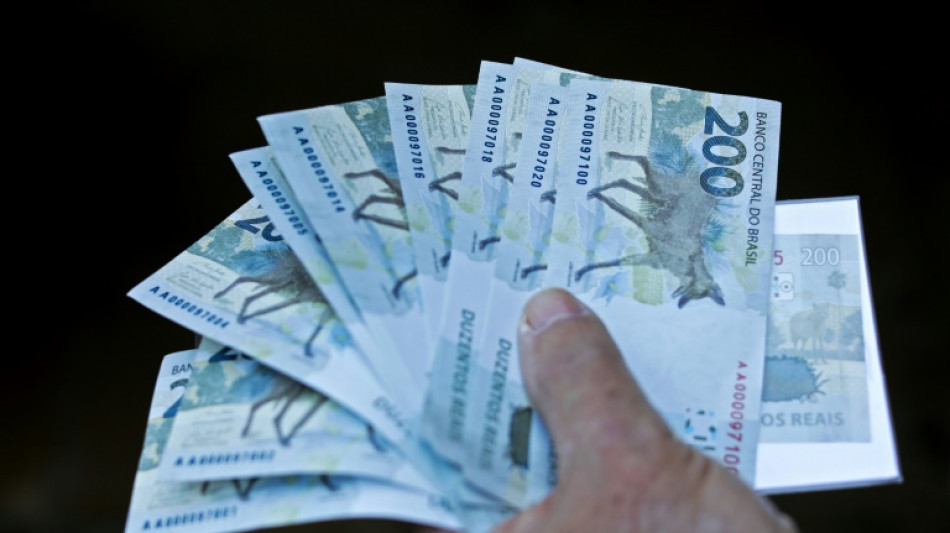
Brazil's central bank holds 13.75% interest rate amid 'high' inflation / Photo: Sergio Lima - AFP/File

 Netanyahu, rivals trade attacks over Iran as clock counts down to Israel vote

 Townsend urges Scotland to use Nations Championship as World Cup springboard

 Microsoft offers voluntary exit packages to 60,000 staff

 S.Africa ambassador calls for talks with US over 'tense' ties

 'Smells of freedom': Serbians hopeful after landmark election

 South Africa select 'enforcer' Coetzee for Australia decider

 Botanists comb Gabon's rich rainforests with nature on the line

 New levy on non-EU parcels kicks in Sunday

 Stocks climb ahead of tech earnings, central bank calls

 Part of London's Oxford Street pedestrianised 'forever'

 Canadian youth seek climate action in landmark trial
 Trump blasts Norway over Nobel Peace Prize snub

 Japan PM vows swift response to wave of cyberattacks

 Stocks mostly rise before tech earnings, central bank calls
 France's Macron to visit Marseille after protest violence

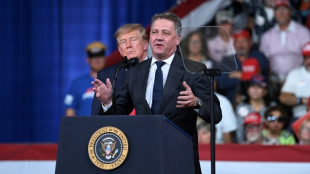 German union slams Audi boss's appearance at Trump rally
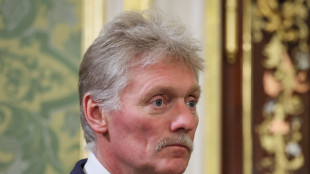
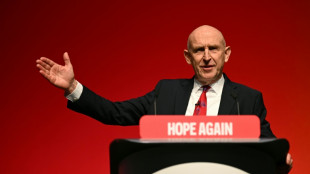 UK set for 'limited' budget giveaways as borrowing costs surge

 Anthropic's AI model accessed US voter data: Axios

 Malaysia's Johor reopens schools as haze eases

 Carragher says Fernandes benching was intended as public punishment

 Mother renews anti-bullying appeal a decade after son’s death
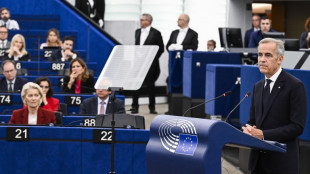
 'Historic victory': Leftist leaders in the Americas celebrate Lula's re-election
 African players in Europe: Jackson brace ends City's perfect record

 طرق دبي تفتتح الجمعة الجسر الأخير في مشروع دوار المركز التجاري

 نقل رالي دكار 2027 من السعودية في قرار استثنائي

Brazil's central bank held its benchmark interest rate at 13.75% on Wednesday, remarking that inflation "remains high" despite receding for three months in a row, just four days before a presidential election.
It is the second meeting in a row that the bank's monetary policy committee left the Selic interest rate unchanged after putting the brakes on 12 straight increases.
In a statement, the monetary committee said it remained "vigilant" and that the high interest rate level would be maintained "as long as it takes to control inflation."
The committee did not rule out a "resumption of the cycle of increases" if prices do not lower "as expected." For now, "inflation remains high" despite dropping for several months.
The decision comes as the country braces for a divisive second-round presidential election between far-right President Jair Bolsonaro and leftist former leader Luiz Inacio Lula da Silva on Sunday.
The interest rate decision was in line with market forecasts, which were reflected in a survey of more than a hundred consultants and financial institutions by the Valor economic newspaper.
The benchmark interest rate has remained at the same level since August, when the committee applied the last increase of half a percentage point.
Haunted by a history of hyperinflation, Brazil was among the first countries to start raising interest rates after the monetary easing of the coronavirus pandemic when the Selic stood at a record low of two percent.
Since March 2021, the central bank had rapidly raised its key rate from an all-time low of two percent, including three whopping hikes of 1.5 percentage points from October 2021 to February 2022.
The long period of high inflation in Latin America's largest economy has been fueled by rising global food and oil prices spurred on by the war between Russia and Ukraine.
- Slowing inflation -
This trend has slowed in recent months.
The consumer price index was negative in July (-0.68 percent), August (-0.36 percent) and September (-0.29 percent).
Annual inflation stood at 7.17 percent in September, prior to the first round of the presidential elections on October 2.
The successive declines reduced market forecasts, and inflation is now expected to lower to 5.60 percent by the end of the year, almost half of what was initially projected, according to a survey released by the central bank (BCB) this week.
Bolsonaro has highlighted the "unprecedented deflation" during his campaign.
He is currently polling 45 percent to Lula's 49 percent ahead of the second round, according to Datafolha polling data published Friday.
Economists warn, however, that the negative trend is not yet established and that price increases are still a latent threat.
By keeping the Selic at the current high level, the monetary committee hopes that 2023 inflation will lower to the 3.25 percent target set by the central bank.
Only then can they begin cutting rates, analysts say.
Analysts have warned about the impact of high interest rates on GDP, which is projected to grow 2.76 percent by the end of this year, far from the stagnation that was expected in early 2022, according to the BCB Focus survey.
Brazil is easing up on its interest rate as the US Federal Reserve and European Central Bank have shifted into full-on tightening to curb inflation.
O.Salim--SF-PST