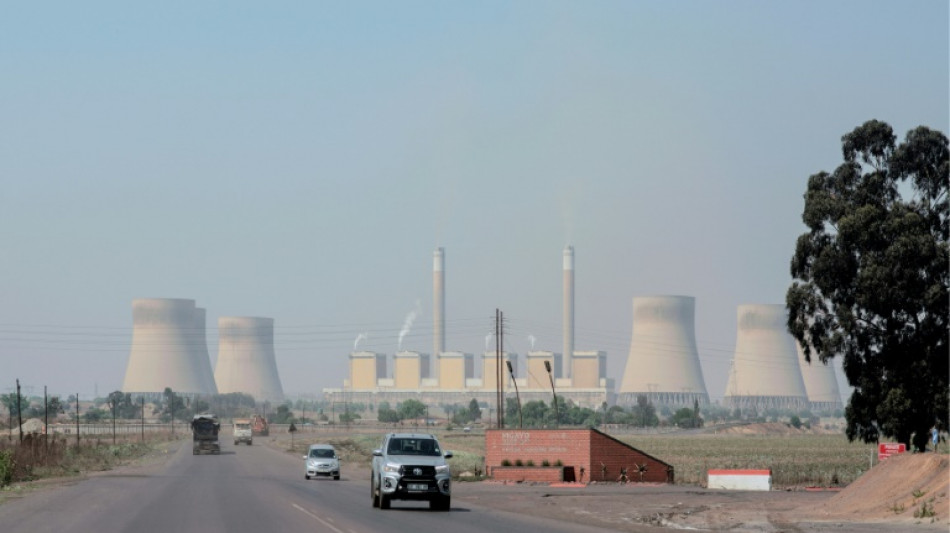
S.Africa to swallow part of Eskom's debt to keep it afloat / Photo: Luca Sola - AFP/File

 Netanyahu, rivals trade attacks over Iran as clock counts down to Israel vote

 Townsend urges Scotland to use Nations Championship as World Cup springboard

 Microsoft offers voluntary exit packages to 60,000 staff

 S.Africa ambassador calls for talks with US over 'tense' ties

 'Smells of freedom': Serbians hopeful after landmark election

 South Africa select 'enforcer' Coetzee for Australia decider

 Botanists comb Gabon's rich rainforests with nature on the line

 New levy on non-EU parcels kicks in Sunday
 Stocks climb ahead of tech earnings, central bank calls

 Part of London's Oxford Street pedestrianised 'forever'

 Canadian youth seek climate action in landmark trial

 Trump blasts Norway over Nobel Peace Prize snub

 Japan PM vows swift response to wave of cyberattacks

 Stocks mostly rise before tech earnings, central bank calls
 France's Macron to visit Marseille after protest violence

 German union slams Audi boss's appearance at Trump rally
 UK set for 'limited' budget giveaways as borrowing costs surge

 Anthropic's AI model accessed US voter data: Axios

 Malaysia's Johor reopens schools as haze eases

 Carragher says Fernandes benching was intended as public punishment

 Mother renews anti-bullying appeal a decade after son’s death
 'Historic victory': Leftist leaders in the Americas celebrate Lula's re-election

 African players in Europe: Jackson brace ends City's perfect record

 طرق دبي تفتتح الجمعة الجسر الأخير في مشروع دوار المركز التجاري

 نقل رالي دكار 2027 من السعودية في قرار استثنائي
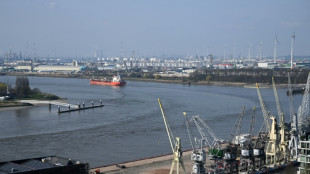
South Africa's treasury vowed Wednesday to take over more than half of Eskom's multi-billion-dollar debt to ensure the embattled energy utility's viability and curb the energy crisis that has put a break on growth.
In a mini budget statement, Finance Minister Enoch Godongwana said government has decided to give Eskom 225 billion rand ($12.4 billion) towards debt for the period 2019 to 2026.
"The programme will allow Eskom to focus on plant performance and capital investment," the minister said before parliament, adding the debt takeover will ensure the company no longer relies on government bailouts.
Eskom, which he labelled the biggest risk to the economy, is bucking under a 400-billion-rand debt.
"The debt takeover, once finalised, together with other reforms will ensure that Eskom is financially sustainable," he said.
The government has for more than a decade poured billions of rands into Eskom, "with limited improvements in the reliability of the electricity supply or the financial health of the company," he said.
Sweeping power outages, caused by failures at ageing and poorly maintained infrastructure at Eskom -- which provides almost all of South Africa's electricity -- have worsened in recent months.
Projected economic growth for this year is 1.9 percent, falling from 4.9 percent in 2021.
- 'Disastrous' -
"The intensity of load shedding is having a disastrous effect on our economy," said the minister.
Economists have welcomed the government's move on Eskom, but said more needs to be done.
"Transferring between one-third and two-thirds of Eskom's debt to the government will support the corporation's financial sustainability," said Aurelien Mali, of Moody's Investors Service.
"But will not alone resolve its maintenance and operational challenges, which continue to be a drag on the South African economy," added Mali.
For Godongwana, constraints in transport industries have also severely impacted economic activity.
In October workers at Transnet, state rail and port logistics firm, went on a weeks long strike that crippled South Africa's economy and stranded mineral and fresh fruit exports.
The strike cost mining firms $45 million in exports a day, according to the Minerals Council South Africa, an industry group.
Looming labour strikes by public service workers demanding wage hikes further threaten the nation's prospects of cleaning up its economy.
In addition to recurring power cuts economic recovery has also been hampered by a series of shocks.
These include massive damage caused by riots, which broke out in July 2021 following former president Jacob Zuma's jailing and left more than 350 dead.
Unprecedented floods that swept through the third largest city of Durban, killing hundreds, also put a damper on growth.
President Cyril Ramaphosa's Sunday promises to crack down on graft, following a probe into state corruption under his predecessor Zuma, saw the finance minister state the government would act against implicated individuals and companies.
He also targeted reducing inflation to 5.1 percent in 2023, following a peak of 7.8 percent last July -- the highest level in 13 years.
Soaring fuel prices triggered by the Russia-Ukraine war, as well as food inflation have been "a key source of inflationary pressure" in South Africa, the minister added.
X.Habash--SF-PST