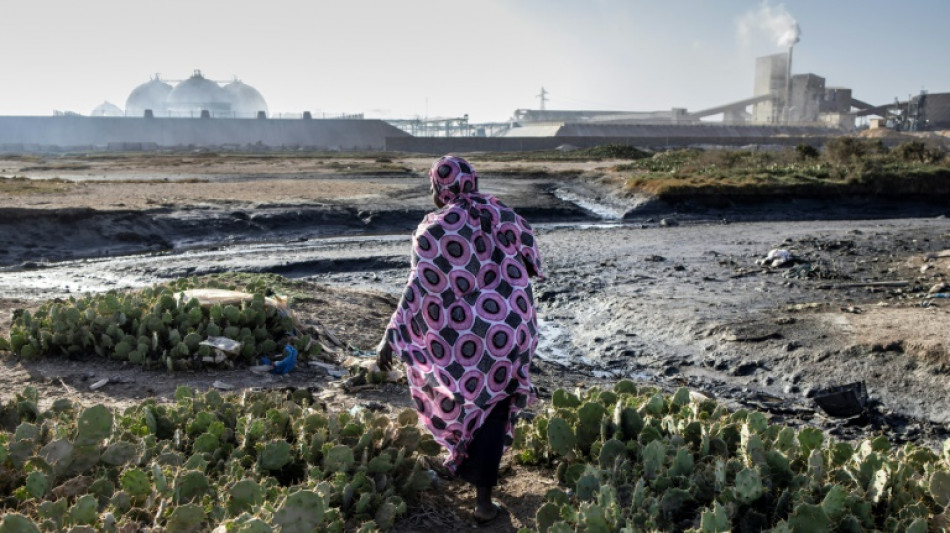
Force firms to reveal their impact on nature: major businesses / Photo: JOHN WESSELS - AFP/File

 Netanyahu, rivals trade attacks over Iran as clock counts down to Israel vote

 Townsend urges Scotland to use Nations Championship as World Cup springboard

 Microsoft offers voluntary exit packages to 60,000 staff

 S.Africa ambassador calls for talks with US over 'tense' ties

 'Smells of freedom': Serbians hopeful after landmark election

 South Africa select 'enforcer' Coetzee for Australia decider

 Botanists comb Gabon's rich rainforests with nature on the line

 New levy on non-EU parcels kicks in Sunday

 Stocks climb ahead of tech earnings, central bank calls

 Part of London's Oxford Street pedestrianised 'forever'

 Canadian youth seek climate action in landmark trial

 Trump blasts Norway over Nobel Peace Prize snub

 Japan PM vows swift response to wave of cyberattacks

 Stocks mostly rise before tech earnings, central bank calls
 France's Macron to visit Marseille after protest violence

 German union slams Audi boss's appearance at Trump rally
 UK set for 'limited' budget giveaways as borrowing costs surge

 Anthropic's AI model accessed US voter data: Axios

 Malaysia's Johor reopens schools as haze eases

 Carragher says Fernandes benching was intended as public punishment

 Mother renews anti-bullying appeal a decade after son’s death
 'Historic victory': Leftist leaders in the Americas celebrate Lula's re-election

 African players in Europe: Jackson brace ends City's perfect record

 طرق دبي تفتتح الجمعة الجسر الأخير في مشروع دوار المركز التجاري

 نقل رالي دكار 2027 من السعودية في قرار استثنائي
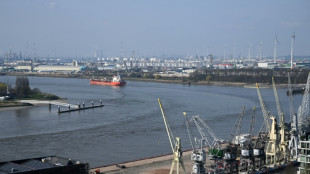
Businesses must be compelled to reveal their impact on nature, more than 300 firms said in an open letter to world leaders published on Wednesday ahead of crunch United Nations negotiations to halt catastrophic biodiversity loss.
Consumer goods group Unilever, furniture maker IKEA and India's Tata Steel were among a slew of high profile corporations calling for stricter measures to impel firms to act, amid growing alarm over the devastation being wrought upon the natural world.
"We need governments globally to transform the rules of the economic game and require business to act now," the Business for Nature coalition said.
It said its open letter had been signed by some 330 companies with combined revenues of more than $1.5 trillion.
International efforts to protect the world's natural life support systems -- including air, food and water -- are set to conclude in Canada in December. Negotiators are hammering out a global framework to "live in harmony with nature" by 2050, with key benchmarks in 2030.
While businesses are beginning to report on their carbon emissions and climate impacts -- albeit with some facing accusations of "greenwashing" -- few firms give details on biodiversity.
The businesses that signed on to the statement said they wanted clarity from policymakers.
"This statement shows the extensive support from major businesses for an ambitious global deal for nature, with clear goals to drive collective business and finance action," said Andre Hoffmann, the vice-chairman of Roche Holdings.
"The political certainty will accelerate the necessary changes to our business models. We stand ready to do everything in our power to shift to a society where nature, people and business thrive."
In March, a report by central banks found that financial institutions and businesses were underestimating the risks of biodiversity loss and destroying the natural assets they depend on.
The new statement calls on heads of state to sign up to a target of mandatory requirements for large firms to assess and disclose their impacts and dependency on biodiversity by the end of this decade.
The task "won't be easy but it must happen" the firms said, urging measures to ensure that the UN targets aim to both reduce negative impacts and encourage positive ones.
"The current rate of global economic activity is more than the planet can cope with," said Steve Waygood, the chief responsible investment officer at Aviva Investors, which also signed the Business for Nature statement.
"If nature was a current account, then we would be heavily overdrawn. This is bad for the environment and bad for long term growth."
Many hope the UN deal, when finalised, will be as ambitious in its goals to protect life on Earth as the Paris Agreement was for climate change -- even if the United States is not a party to UN efforts to conserve nature.
One landmark proposal on the table is the protection of 30 percent of wild land and oceans by 2030.
Another key focus of negotiations are harmful subsidies for things like fossil fuels, agriculture and fishing that can result in environmental destruction and encourage unsustainable levels of production and consumption.
These amount to as much as $1.8 trillion every year, or two percent of global gross domestic product, Business for Nature has estimated.
The world failed to meet almost all of a previous set of targets on nature in the decade to 2020.
E.Qaddoumi--SF-PST