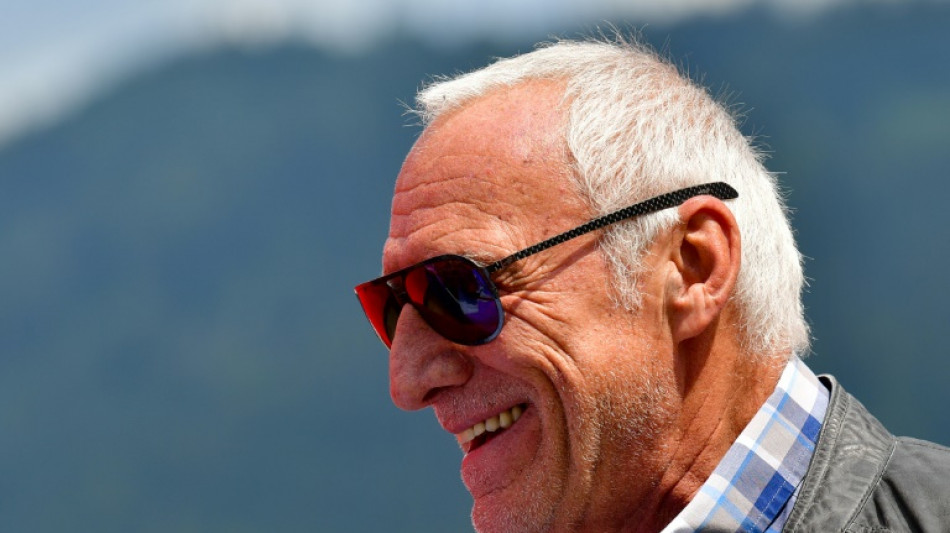
Dietrich Mateschitz: Low-profile Austrian behind Red Bull empire / Photo: ANDREJ ISAKOVIC - AFP/File

 Venezuela leader criticizes Machado over dramatic return from exile
 Brazil markets battered after Lula win, AI in focus elsewhere
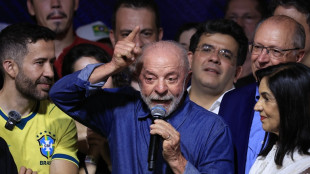
 Lula savors Brazil win as Bolsonaro rejects result, markets tumble
 Canadian youths ask court to impose binding climate protections
 Walter Koenig, who played original Chekov on 'Star Trek,' dies at 90
 Netanyahu, rivals trade attacks over Iran as clock counts down to Israel vote
 Townsend urges Scotland to use Nations Championship as World Cup springboard

 Microsoft offers voluntary exit packages to 60,000 staff
 S.Africa ambassador calls for talks with US over 'tense' ties
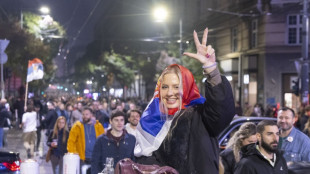 'Smells of freedom': Serbians hopeful after landmark election
 South Africa select 'enforcer' Coetzee for Australia decider
 Botanists comb Gabon's rich rainforests with nature on the line
 New levy on non-EU parcels kicks in Sunday
 Stocks climb ahead of tech earnings, central bank calls

 Part of London's Oxford Street pedestrianised 'forever'

 Canadian youth seek climate action in landmark trial
 Trump blasts Norway over Nobel Peace Prize snub
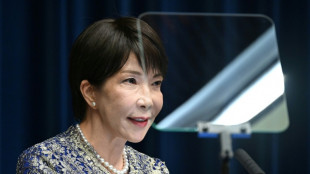 Japan PM vows swift response to wave of cyberattacks
 Stocks mostly rise before tech earnings, central bank calls
 France's Macron to visit Marseille after protest violence
 German union slams Audi boss's appearance at Trump rally
 UK set for 'limited' budget giveaways as borrowing costs surge

 Anthropic's AI model accessed US voter data: Axios
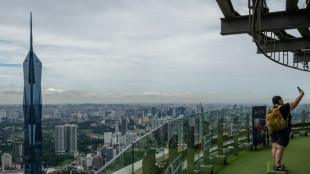 Malaysia's Johor reopens schools as haze eases
 Carragher says Fernandes benching was intended as public punishment
Austrian billionaire Dietrich Mateschitz, who died Saturday at the age of 78, built a sports and media empire around his Red Bull energy drink, ensuring its global fame and wide-reaching legacy.
Mateschitz achieved huge wealth by taking a drink already popular in Asia and adapting it to Western tastes.
He was named as the Alpine EU member's richest person by Forbes in 2022 with an estimated net worth of $27.4 billion.
- From cans to riches -
Born in 1944 in the southern province of Styria into a family of teachers, "Didi" studied economics in Vienna.
After his studies, he started out as a salesman marketing detergents for Unilever, but quickly achieved success in business and later became the marketing director of German cosmetics company Blendax.
His legacy -- the Red Bull energy drink -- was born during one of his many business trips when at a luxury hotel bar in Hong Kong he was served a sweet beverage common in Asia.
Immediately fond of it -- and with the drink reportedly helping him overcome his jet lag -- he decided to partner up with the beverage's developer Thai businessman Chaleo Yoovidhya.
The two men founded Red Bull in 1984. Based in Fuschl-am-See in a verdant Alpine valley, the brand slowly but surely conquered Western taste buds.
Today Red Bull employs more than 13,000 people in 172 countries and sells nearly 10 billion cans a year, creating a turnover of around 8 billion euros.
As a marketing whizz, Mateschitz was obsessed with his brand's image, massively investing into it and seeking to boost it by sponsoring extreme sports, driving its commercial success.
Red Bull did not leave any opportunities unexploited: Besides forays into music and aviation, the company sponsors athletes, including Austrian record-setting skydiver Felix Baumgartner, and has gradually penetrated the world of mainstream sports.
Besides its involvement in Formula One, Red Bull bought the football club of the Austrian city of Salzburg in 2005 followed by Leipzig in Germany, which has become one of the Bundesliga's leading clubs thanks to the company's investment.
In his drive to create the event, but control the message, Mateschitz also founded Media House in Austria in 2007, providing various digital entertainment and thousands of hours of images to interested broadcasters.
He used his riches to buy the paradise island of Laucala in Fiji besides several other properties in his native Austria.
- Behind the scenes -
For all its public events, Red Bull itself has blocked scrutiny.
In 2021, Austrian magazine Dossier published an investigation on Red Bull lobbying that aimed to dampen down criticism that energy drinks when consumed too much can be harmful to health.
Very little is also known about Mateschitz's private life.
Known for dressing casually -- preferably in jeans and sunglasses -- he hardly ever gave interviews to journalists and managed to keep a low profile throughout his life.
In a rare interview with the Austrian daily Kleine Zeitung in 2017, the billionaire criticised the lack of control over migration in Europe, sparking a backlash from those advocating open borders.
His media, notably his Servus TV, has also been criticised for biased reporting, particularly for trivialising the Covid-19 pandemic.
He never married. His son, Mark Mateschitz, was born in 1993.
B.AbuZeid--SF-PST