'Too late': Escape routes close on Ukraine's new front / Photo: BULENT KILIC - AFP

 Venezuela leader criticizes Machado over dramatic return from exile

 Brazil markets battered after Lula win, AI in focus elsewhere
 Lula savors Brazil win as Bolsonaro rejects result, markets tumble

 Canadian youths ask court to impose binding climate protections

 Walter Koenig, who played original Chekov on 'Star Trek,' dies at 90

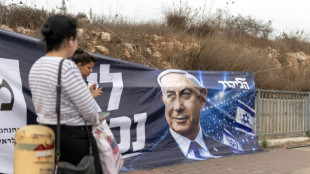 Netanyahu, rivals trade attacks over Iran as clock counts down to Israel vote
 Townsend urges Scotland to use Nations Championship as World Cup springboard

 Microsoft offers voluntary exit packages to 60,000 staff
 S.Africa ambassador calls for talks with US over 'tense' ties
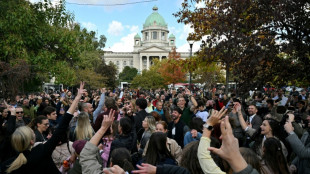
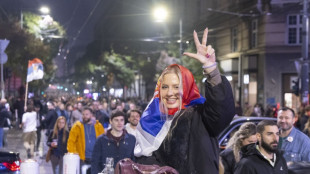 'Smells of freedom': Serbians hopeful after landmark election

 South Africa select 'enforcer' Coetzee for Australia decider

 Botanists comb Gabon's rich rainforests with nature on the line
 New levy on non-EU parcels kicks in Sunday
 Stocks climb ahead of tech earnings, central bank calls

 Part of London's Oxford Street pedestrianised 'forever'

 Canadian youth seek climate action in landmark trial

 Trump blasts Norway over Nobel Peace Prize snub
 Japan PM vows swift response to wave of cyberattacks
 Stocks mostly rise before tech earnings, central bank calls
 France's Macron to visit Marseille after protest violence

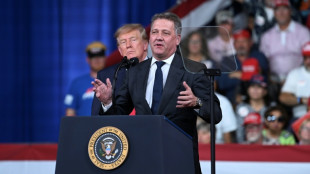 German union slams Audi boss's appearance at Trump rally
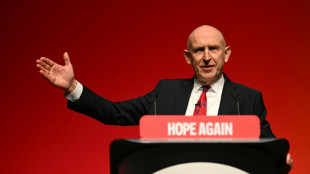 UK set for 'limited' budget giveaways as borrowing costs surge
 Anthropic's AI model accessed US voter data: Axios

 Malaysia's Johor reopens schools as haze eases

 Carragher says Fernandes benching was intended as public punishment
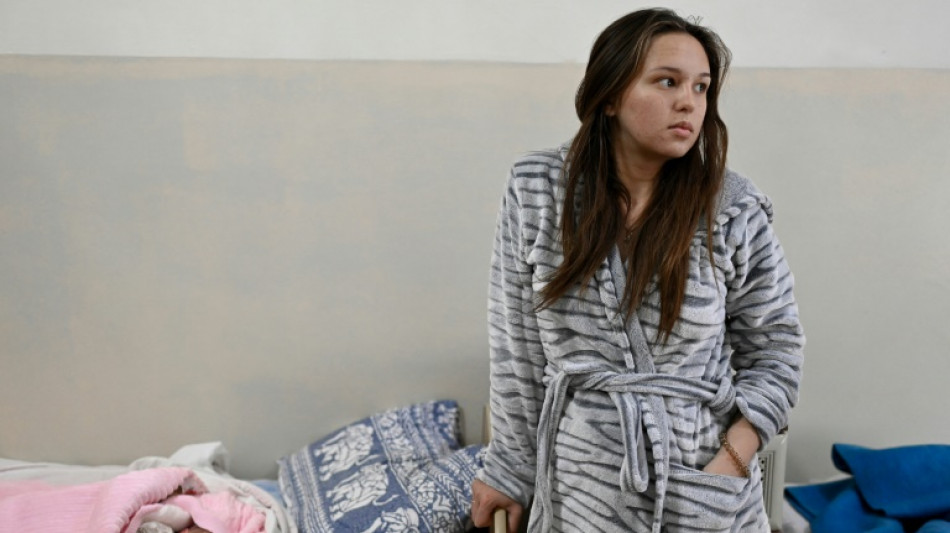
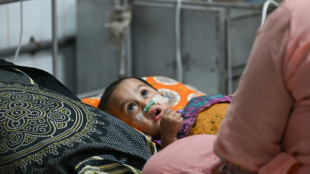
The newborn peeking out of a pink blanket in a hospital on the north bank of Ukraine's Dnieper river may never see her grandparents back home in the Russian-occupied south.
Her mother fled for the relative safety of government-held Zaporizhzhia to make sure the baby was born a citizen of the country the Russians invaded eight months ago.
But her grandparents stayed behind and out of reach on the opposite side of the shore.
"It may be too late for them to get out," 19-year-old Anastasia Skachko lamented while stealing glances at her still-nameless girl.
"I don't even want them to try. The roads are all either mined or getting shelled."
A Ukrainian counteroffensive that saw the Russians give up most of the land they grabbed in the north of the vast war zone has reached the strategically vital south.
And the great Dnieper river running across the battle-engulfed country is forming a natural new front that is splitting families and stalling the Ukrainian advance.
- Clinging on -
Russia's dispirited forces are clinging on to the southern Kherson region -– a land bridge giving the Kremlin access to the annexed Crimea peninsula -– and shelling the advancing Ukrainians with renewed might.
The fighting is obliterating riverside towns and sealing off escape routes that families had somehow still managed to use in the first stages of the war.
Skachko said she was able to get through to her mother on WhatsApp to tell her that she was now a grandmother.
But the phone she reached started with the Russian international dial code +7 instead of the Ukrainian +38.
The Russians have disconnected existing lines from the Ukrainian system to cement their authority and cut off the flow of news.
"It is hard to say how she will ever see the little one," said Skachko.
"We both understand this. But neither of us wanted to talk about it over the phone."
- Open prison -
The martial law imposed by the Kremlin's retreating forces across lands Russia still claims at its own makes daily life even more unpredictable.
Russia has effectively sealed the last southern checkpoint to keep people from fleeing to government-held lands.
Some are being bused further from the front to areas under firmer Russian control -- a process Ukrainians compare to a forced deportation.
The handful of people who managed to talk their way past the soldiers and reach the city of Zaporizhzhia described life back home resembling an open prison.
Reporters can only visit the region in scripted Kremlin tours.
"There are soldiers with dogs and machine guns on every corner," said occupied Melitopol native Oleksandra Boyko after managing to escape with her own baby girl.
"Most of them are Chechens."
The Kremlin has relied on Chechen strongman Ramzan Kadyrov's personally-trained army to run some of the captured land.
Those who fled described them as the most lawless of all the invading forces they had met.
"The guys from (neighbouring) Dagestan are a little bit nicer but Kadyrov's men are just brutal," said occupied Berdyansk native Natalia Voloshyna.
- Psychological pressure -
Yet many described the psychological pressures of the invasion being even more painful than the acute security fears.
All the women AFP spoke with said the Kremlin-installed rulers only hire or help people who renounce their Ukrainian citizenship and apply for a Russian one.
"They tell you, you either work with us, or you get nothing. I immediately told them no," said Voloshyna.
"They don't necessarily touch you. But then you end up living without a salary, without any assistance."
Boyko said her family was offered "huge payments" if it registered her four-month-old as a Russian citizen.
"I said no out of principle. I am Ukrainian. She should be Ukrainian," the Melitopol native said.
"But there are people who agree because there is almost no work and they will not hire you without a Russian passport," she said.
"If there is nothing to eat, what else can you do?"
Y.Shaath--SF-PST