Most Salvadorans think making Bitcoin legal tender was 'failure' / Photo: Marvin RECINOS - AFP

 Venezuela leader criticizes Machado over dramatic return from exile

 Brazil markets battered after Lula win, AI in focus elsewhere
 Lula savors Brazil win as Bolsonaro rejects result, markets tumble

 Canadian youths ask court to impose binding climate protections

 Walter Koenig, who played original Chekov on 'Star Trek,' dies at 90
 Netanyahu, rivals trade attacks over Iran as clock counts down to Israel vote

 Townsend urges Scotland to use Nations Championship as World Cup springboard

 Microsoft offers voluntary exit packages to 60,000 staff
 S.Africa ambassador calls for talks with US over 'tense' ties
 'Smells of freedom': Serbians hopeful after landmark election

 South Africa select 'enforcer' Coetzee for Australia decider

 Botanists comb Gabon's rich rainforests with nature on the line

 New levy on non-EU parcels kicks in Sunday
 Stocks climb ahead of tech earnings, central bank calls

 Part of London's Oxford Street pedestrianised 'forever'

 Canadian youth seek climate action in landmark trial

 Trump blasts Norway over Nobel Peace Prize snub

 Japan PM vows swift response to wave of cyberattacks

 Stocks mostly rise before tech earnings, central bank calls
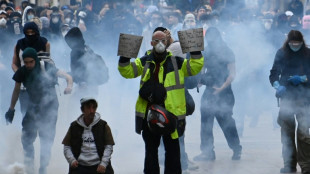 France's Macron to visit Marseille after protest violence

 German union slams Audi boss's appearance at Trump rally
 UK set for 'limited' budget giveaways as borrowing costs surge

 Anthropic's AI model accessed US voter data: Axios

 Malaysia's Johor reopens schools as haze eases

 Carragher says Fernandes benching was intended as public punishment
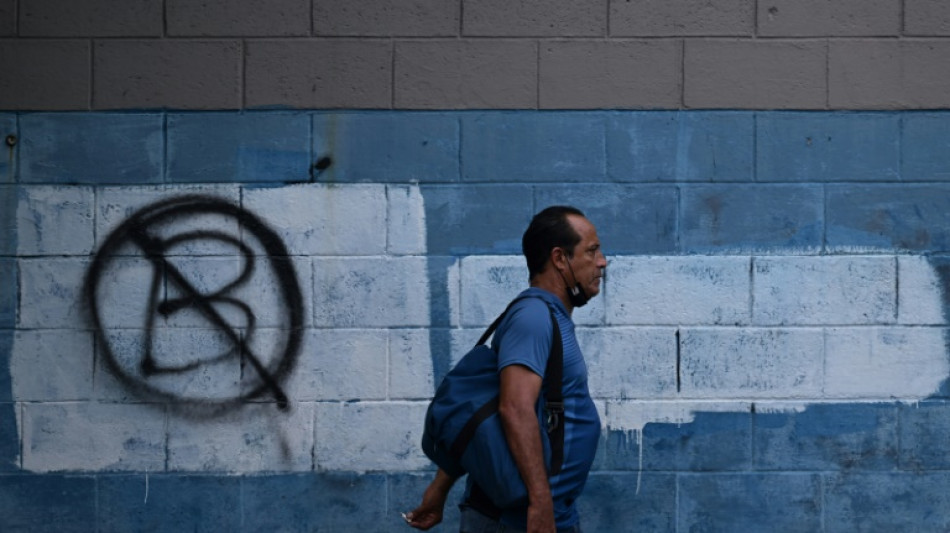
More than a year after Bitcoin became legal tender in El Salvador, a new poll Tuesday showed most people in the country consider the controversial move by President Nayib Bukele as a "failure."
According to the poll by the University of Central America (UCA), 75.6 percent of respondents said they never used cryptocurrency in 2022, and 77 percent consider its adoption 14 months ago as legal tender, alongside the dollar, "to have been a failure."
Bitcoin, whose value has tumbled over the past year, "is the government's most unpopular measure, the most criticized and the most frowned upon," said UCA rector Andreu Oliva, commenting on the results of the study.
Bukele's idea was to promote crypto money transfers from some three million Salvadorans living overseas, mainly in the United States, to their relatives back home, thereby saving on bank charges.
The president's decision was a strategic one, given that these remittances make up more than a quarter of El Salvador's gross domestic product.
But according to data from the Salvadoran Central Bank in early September, a year after the introduction of Bitcoin, "less than two percent" of remittances from emigrants were made using the cryptocurrency.
In September 2021, Bitcoin was hovering around $45,000. By November it soared to $68,000, but after a steep drop it is currently trading below $20,000.
Taking advantage of the plummeting prices, Bukele bought 80 Bitcoin with public funds in July, bringing El Salvador's total reserves to 2,381 units.
According to the UCA study, 77 percent of Salvadorans believe their president "should not continue to spend public money to buy Bitcoin."
The survey also looked into an emergency regime in place since March as part of the "war" on gangs decreed by Bukele, which led to the arrest of 55,000 suspected members of criminal gangs, the dreaded "maras."
The population still overwhelmingly approves of it, at 75.9 percent, but that figure was down nine points from May, when it was 84.8 percent.
S.Barghouti--SF-PST