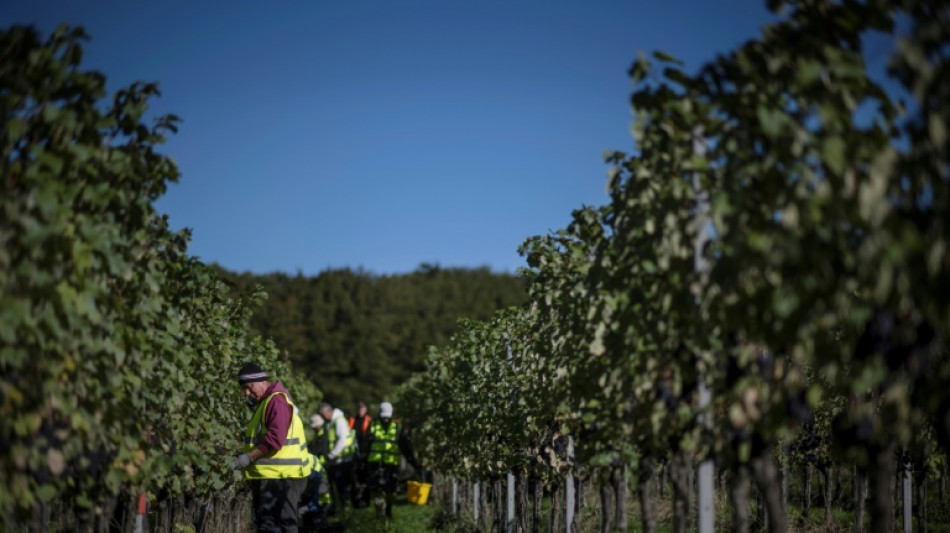
English winemakers toast summer heatwaves / Photo: Ben Stansall - AFP

 No envy, no secrets: How Spain's Gipuzkoa became football coaching hotbed

 South Korea economy grows three times faster than expected in Q3

 Al-Thawadi urges technology to deepen human connection through shared experiences

 Ballon d'Or: Harry Kane's crowning moment

 Harry Kane wins men's Ballon d'Or

 إطلاق صندوق استثماري متخصص في الغاز الطبيعي المسال

 مساكن دبي تدعو المقيمين إلى المشاركة في تحدي المليار خطوة

 دراسة تقرّب العلماء من تفسير دور الشمال في العصور الجليدية

 سباعيات دبي للرجبي تضيف منافسات الدرجة الثالثة من سلسلة HSBC SVNS

 تحدي القراءة العربي يوسع أثره ويعزز المشاركة المعرفية

 تمويل مشروع دندرة للطاقة الشمسية بقيمة 650 مليون دولار

 عز العرب السويدي تقدم سيارات جايكو إلى السوق المصرية

 مسؤولون إماراتيون: الشراكة مع بنين تفتح فرصاً للتجارة والاستثمار

 أردوغان يتمسك باتفاق ترسيم الحدود البحرية مع ليبيا ويدعو إلى الحوار

 بيروت تكرّم نجاح سلام بإطلاق اسمها على شارع في المصيطبة

 مقتل ممرضة في الكونغو خلال عملها لمواجهة تفشي الإيبولا

 زيلينسكي ينتقد تأخر الموافقة الأميركية على صواريخ الدفاع الجوي

 حسام بدران يستعيد أثر فتحي الشقاقي في الذكرى الحادية والثلاثين لاغتياله

 رصد 13 اعتداء على موسم الزيتون في أربع محافظات فلسطينية

 رادع تشيد بمواجهة مجموعات مسلحة غرب رفح

 500 مليون جنيه لتطوير 322 معملاً للرقابة على الصادرات في مصر

 الأردن يعلن قصف مواقع مرتبطة بهجوم كنيسة الكرك في جنوب سورية

 كمال النونو أول سفير لاتحاد الجامعات الدولي في فلسطين

 حماس تؤكد للوسطاء التزامها التهدئة وتنفي التخطيط لهجمات جديدة

 Ballon d'Or crowns Putellas's return to top of women's game

Under a blue sky, seasonal workers ran their secateurs along long rows of grapevines, harvesting a variety of pinot noir grown during the summer heatwave.
This was not a village in France, however, but Appledore in Kent in southern England, where high temperatures needed to grow the grape variety are no longer rare.
"At the moment, I think we have similar growing conditions to Champagne in the (19)70s and 80s," said Charlie Holland, head winemaker and chief executive at Gusbourne Estate.
"We're seeing the same sort of growth conditions, the same ripening period" in England as back then in France, he added.
That is good news for Britain's embryonic viticulture which is now able to produce a wide variety of still and sparkling wines from grape varieties including pinot noir, chardonnay and riesling that are traditionally more accustomed to France and Germany.
"It's not so often that you see a new wine region appearing on the map," said Holland.
"In England, now we can make an exceptional sparkling wine, we have a perfect climate, we have a very long growing season."
- 'Quite frightening' -
At Gusbourne Estate, tractors were transporting baskets full of grapes to the winery. The fruit was immediately destemmed and pressed to begin the fermentation process.
During the harvest period, the estate is a beehive of 200 workers, more than half of them seasonal.
Holland was everywhere, darting between presses, vats and oak barrels as he inspected and tasted the produce.
Climate change may be helping England's vineyards for now but the fast pace of transition risks major planning difficulties, warned Alistair Nesbitt, co-author of an outlook study on the country's winemaking industry.
"That's a really quite frighteningly short period of time to have such a transition of varietals suitability, and that really shows the pace of change that certain areas of the UK are starting to see as a result of climate change," he noted.
"Hopefully the world will get (its) act together and we won't see that continuing increase for too much longer, because that's threatening to everyone, including producers in the UK," added Nesbitt, who is chief executive of consultancy Vinescapes.
Nesbitt forecasts that beyond 2040, England's vineyards could be working with grape varieties found further south in France, such as merlot and cabernet sauvignon.
This assumes that climate change continues on its expected path amid global reductions in carbon emissions.
- 'Niche producer' -
Britain's wine growers are planting grapes in droves to meet booming demand at home and abroad.
The surface area of vineyards in the country has doubled in eight years, according to industry organisation WineGB.
UK vineyards are however dwarfed on the international stage, covering a total of 3,800 hectares -- or about one tenth of France's champagne-producing region.
Britain "will likely remain a niche wine producer", said Daniel Mettyear, research director at consultancy IWSR Drinks Market Analysis.
Despite the relatively high price -- £45 ($50) for one of Gusbourne's sparkling wines -- demand is growing both in Britain and abroad for the drink.
"Quality has improved significantly in recent years," added Mettyear, noting strong interest from North American and Nordic countries, as well as from Australia.
Gusbourne exports about one third of its wine to 28 nations worldwide, mostly to Norway but also to France.
P.Tamimi--SF-PST