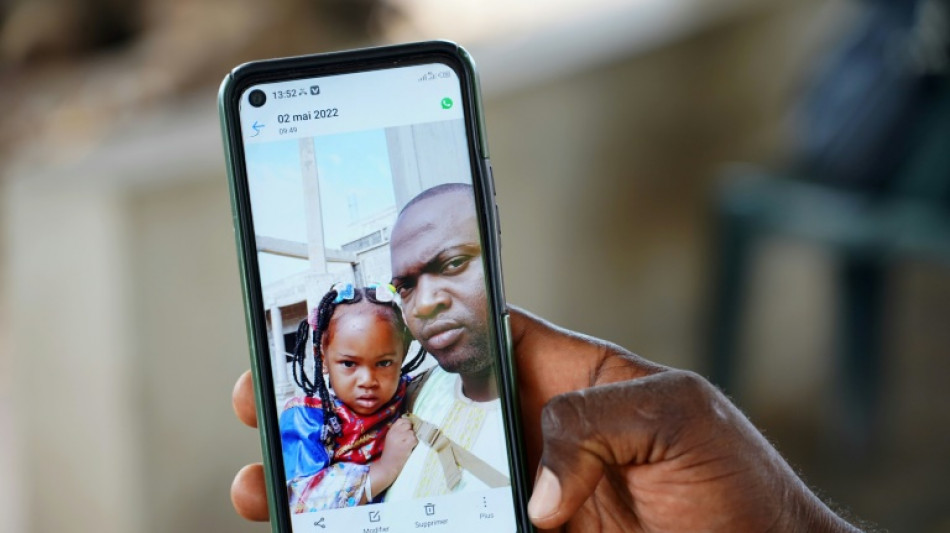
Grief and outrage in Gambia over cough syrup deaths / Photo: MILAN BERCKMANS - AFP

 No envy, no secrets: How Spain's Gipuzkoa became football coaching hotbed

 South Korea economy grows three times faster than expected in Q3

 Al-Thawadi urges technology to deepen human connection through shared experiences

 Ballon d'Or: Harry Kane's crowning moment

 Harry Kane wins men's Ballon d'Or

 إطلاق صندوق استثماري متخصص في الغاز الطبيعي المسال

 مساكن دبي تدعو المقيمين إلى المشاركة في تحدي المليار خطوة

 دراسة تقرّب العلماء من تفسير دور الشمال في العصور الجليدية

 سباعيات دبي للرجبي تضيف منافسات الدرجة الثالثة من سلسلة HSBC SVNS

 تحدي القراءة العربي يوسع أثره ويعزز المشاركة المعرفية

 تمويل مشروع دندرة للطاقة الشمسية بقيمة 650 مليون دولار

 عز العرب السويدي تقدم سيارات جايكو إلى السوق المصرية

 مسؤولون إماراتيون: الشراكة مع بنين تفتح فرصاً للتجارة والاستثمار

 أردوغان يتمسك باتفاق ترسيم الحدود البحرية مع ليبيا ويدعو إلى الحوار

 بيروت تكرّم نجاح سلام بإطلاق اسمها على شارع في المصيطبة

 مقتل ممرضة في الكونغو خلال عملها لمواجهة تفشي الإيبولا

 زيلينسكي ينتقد تأخر الموافقة الأميركية على صواريخ الدفاع الجوي

 حسام بدران يستعيد أثر فتحي الشقاقي في الذكرى الحادية والثلاثين لاغتياله

 رصد 13 اعتداء على موسم الزيتون في أربع محافظات فلسطينية

 رادع تشيد بمواجهة مجموعات مسلحة غرب رفح

 500 مليون جنيه لتطوير 322 معملاً للرقابة على الصادرات في مصر
 الأردن يعلن قصف مواقع مرتبطة بهجوم كنيسة الكرك في جنوب سورية

 كمال النونو أول سفير لاتحاد الجامعات الدولي في فلسطين

 حماس تؤكد للوسطاء التزامها التهدئة وتنفي التخطيط لهجمات جديدة

 Ballon d'Or crowns Putellas's return to top of women's game

When Wuri Bailo Keita's two-year-old daughter Fatoumatta developed a fever, he took her to hospital where she was diagnosed with malaria and sent home with a prescription for a paracetamol syrup.
Less than a week later she was dead.
The infant is just one of 69 Gambian children to die of acute kidney failure since July in a series of cases linked to four Indian-made cough syrups.
The widening scandal has highlighted flaws in the tiny West African nation's healthcare system, in turn raising questions about potential loopholes in world pharmaceutical trade.
"She could not eat anything and she was oozing blood from her mouth and nose", Keita, a 33-year-old carwash attendant, told AFP, recounting his daughter's suffering.
"At some point, I was praying for God to take her life."
President Adama Barrow made a nationwide address on Saturday after the police launched an inquiry and health authorities were told to suspend the import licence of a suspected company.
Barrow also promised to update drugs-related laws and praised the work of the health ministry in preventing further deaths.
But fear and anger are mounting, and the death toll is still rising.
"President Barrow should sack the health minister, but instead of sacking him, he was praising the minister," said Keita, the grieving father.
"We want justice for these children."
Social media has been swamped by criticism of the healthcare system and by photos of the children who have died, most of whom were aged under five.
"It's time for the government to step up and stop these products," Mariama Kuyateh, a 30-year-old mother who lost her son Musa in September, told AFP.
"If they don't, and other syrups enter the country, it will be terrible."
- No test lab -
The deaths were catapulted to global prominence last Wednesday when the UN's World Health Organization (WHO) issued an alert over four syrups made by Maiden Pharmaceuticals of India.
Lab tests found "unacceptable amounts" of diethylene glycol and ethylene glycol, the WHO said.
The toxic impact from these substances includes "acute kidney injury which may lead to death," the agency said.
The Gambian health authorities, after launching their own investigation in July, on September 23 ordered a recall of all medicines containing paracetamol or promethazine syrup.
They have cited E.coli bacteria as a possible cause of the deaths.
India's health ministry said late Thursday it had been informed of the WHO's findings last month and was awaiting the results of its own lab tests on the four drugs.
Maiden Pharmaceuticals was not licensed to distribute the four products in India and had only manufactured and exported them to The Gambia, it said.
"It is a usual practice that the importing country tests these imported products on quality parameters, and satisfies itself as to the quality of the products," the ministry said.
But The Gambia has no national laboratory to test for drug quality and food safety -- a lack that Barrow on Saturday vowed to redress.
Maiden Pharmaceuticals did not respond to AFP requests for comment after the WHO alert.
- 'Failed miserably' -
Domestic critics accuse Barrow of having failed to protect the public and standing by watchdogs who should have been sacked.
The opposition United Democratic Party (UDP) criticised Barrow's "five-minute address" to a "traumatised nation left to wonder what other pharmaceuticals are on the market that may be fake or unsafe for use."
Nancy Jallow, of an NGO called Global Bridges, said she was appalled that top officials such as Health Minister Ahmadou Lamin Samateh and the head of the Medicines Control Agency, Markieu Janneh Kaira, were still in their jobs.
"We signed a social contract with Adama Barrow and his number one role is to protect the most vulnerable, and he has failed miserably," she told AFP.
She also called for a total halt to pharmaceutical imports "until Gambia's government can build a facility that can test medications."
Others voices, including the Gambia Bar Association, have insisted that the inquiry be conducted by independent experts.
- Weak healthcare -
Behind the political row is the reality of a country deep in poverty lacking many of the safeguards that elsewhere are taken for granted.
The Gambia is the smallest country in continental Africa, and nearly half of its population lives below the poverty line, according to the World Bank.
The country ranks a mere 174th out of 191 countries on the UN Human Development Index.
Its already weak health institutions were hit hard by Covid, with a 2020 UN assessment saying the pandemic had "exposed the shortcomings in the nation's healthcare system".
The UN flagged limited expertise, a shortage of basic equipment and a chronic lack of health professionals.
According to World Bank data, The Gambia in 2019 had just 0.1 physicians per 1,000 people -- less than a twentieth of the numbers in Canada.
The Gambia's under-five mortality rate is 49.4 deaths per 1,000 live births, according to UNICEF, compared to 3.7 deaths in Germany and 4.4 in France.
F.AbuShamala--SF-PST