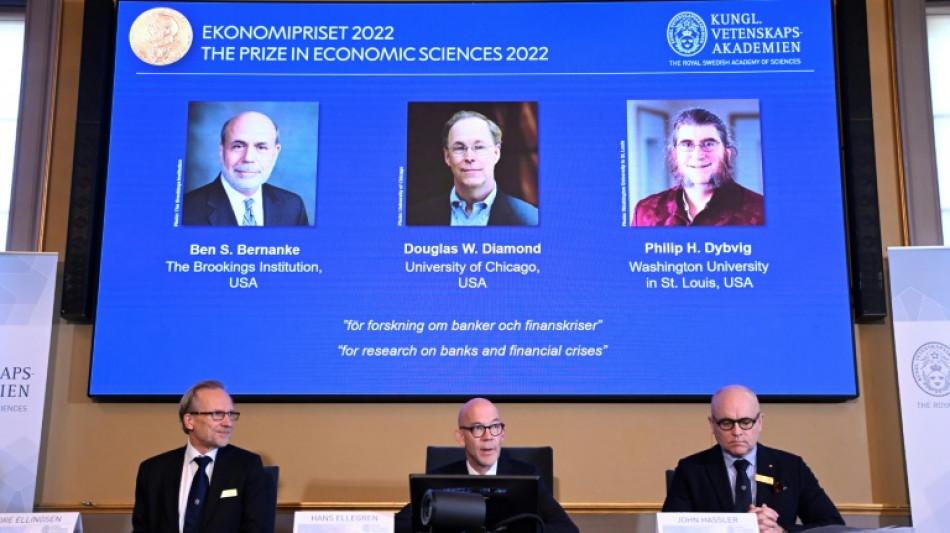
US trio, including ex-Fed chief Bernanke, win economics Nobel / Photo: Anders WIKLUND - TT NEWS AGENCY/AFP

 Jay-Z to perform at Super Bowl LXI halftime show: NFL

 Climate-threatened Fijian utopia rejects calls to relocate

 Israel to give verdict on Netanyahu in pivotal election

 $1m bounties, dawn arrests: Trump presses voter fraud campaign
 Gasping for air: Borneo residents struggle as island burns

 Doha exhibition charts a millennium of Chinese maritime ceramics trade

 New Zealand ex-PM Ardern to teach leadership in Sydney

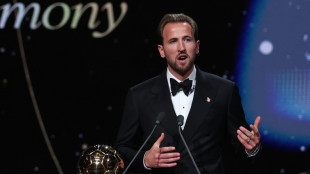 Ballon d'Or 'beyond wildest dreams' but Kane has plenty more to prove

 No envy, no secrets: How Spain's Gipuzkoa became football coaching hotbed

 South Korea economy grows three times faster than expected in Q3

 Al-Thawadi urges technology to deepen human connection through shared experiences

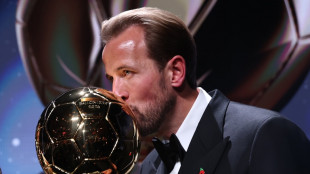 Ballon d'Or: Harry Kane's crowning moment
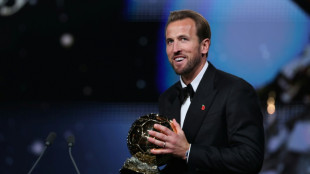
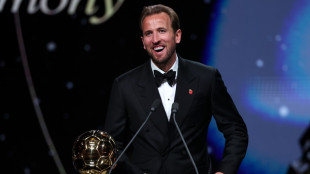 Harry Kane wins men's Ballon d'Or

 مسؤولون إماراتيون: الشراكة مع بنين تفتح فرصاً للتجارة والاستثمار

 المعاشات الإماراتية: اكتمال التغطية التأمينية للقطاع الخاص

 الإمارات تعرض تجربتها في توظيف الذكاء الاصطناعي حكومياً

 شراكة إماراتية لدعم سينما ومحتوى الأطفال والشباب

 الأردن ينفذ ضربات على أهداف في سورية بعد توقيف منفذي هجوم الكنيسة

 دراكنميلر: تحركات الأسواق تحمل إشارات ينبغي الإصغاء إليها

 وزير الصناعة المصري: القطاع الخاص يقود مسار التنمية الصناعية

 تقدير احتياجات 420 مصنعاً متعثراً بنحو أربعة مليارات جنيه

 افتتاح فرع جديد للمرشدي مارتس في التجمع الخامس

 مصر والدنمارك تبحثان توسيع التعاون في الطاقة المتجددة

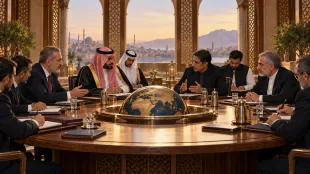 تركيا والسعودية وباكستان وإيران تواصل مشاوراتها الإقليمية

 كريستو بوبوف يرسخ حضوره بين نجوم الريشة الطائرة العالمية

A US trio on Monday won the Nobel Economics Prize for research on banking's role in the economy, especially on the importance of avoiding collapses during financial crises.
Ben Bernanke, the former head of the US Federal Reserve, together with Douglas Diamond and Philip Dybvig were honoured for having "significantly improved our understanding of the role of banks in the economy, particularly during financial crises, as well as how to regulate financial markets," the jury said.
"Their analyses have been of great practical importance in regulating financial markets and dealing with financial crises," it added.
Bernanke, 68, the chair of the US Federal Reserve between 2006 and 2014, was highlighted for his analysis of "the worst economic crisis in modern history" -- the Great Depression in the 1930s.
Diamond, a professor at the University of Chicago born in 1953, and Dybvig, 67, a professor at Washington University in St. Louis, were in turn honoured for showing how "banks offer an optimal solution" for channelling savings to investments by acting as an intermediary.
The pair also showed how these institutions were vulnerable to so called banks runs.
"If a large number of savers simultaneously run to the bank to withdraw their money, the rumour may become a self-fulfilling prophecy –- a bank run occurs and the bank collapses," the Nobel Committee said.
The committee added that this dangerous dynamic can be avoided by governments providing deposit insurance and giving banks a life-line by becoming a lender of last resort.
"The laureates' insights have improved our ability to avoid both serious crises and expensive bailouts," Tore Ellingsen, chair of the Committee for the Prize in Economic Sciences, said.
"In a nutshell, the theory says that banks can be tremendously useful but they are only guaranteed to be stable if they are properly regulated", he added.
Of all the Nobels, the economics prize has the fewest number of female winners, just two since it was first awarded in 1969 -- Elinor Ostrom in 2009 and Esther Duflo in 2019.
- 'False Nobel' -
The economics prize, set up by the Swedish central bank, was the only award absent from the original five created by scientist Alfred Nobel, sometimes earning it the moniker of "false Nobel".
But like the other prizes it comes with a medal and an award sum of 10 million Swedish kronor (around $900,000).
The winners will receive the prize from King Carl XVI Gustaf at a formal ceremony in Stockholm on December 10, the anniversary of the 1896 death of scientist Alfred Nobel who created the prizes in his last will and testament.
Last year, the honour went jointly to Canada's David Card, Israeli-American Joshua Angrist and Dutch-American Guido Imbens for research that "revolutionised" empirical work in their field and brought better understanding of how labour markets work.
On Thursday the literature nod went to French author Annie Ernaux.
The Medicine Prize kicked off the season, going to Swedish paleogeneticist Svante Paabo, who discovered Neanderthal DNA and the previously unknown Denisova hominin.
The Physics Prize then honoured Alain Aspect of France, Austria's Anton Zeilinger and John Clauser of the United States for their discoveries in the field of quantum entanglement.
Another trio, Carolyn Bertozzi and Barry Sharpless of the United States together with Morten Meldal of Denmark won the Chemistry Prize, for their work on so called click chemistry.
W.Mansour--SF-PST