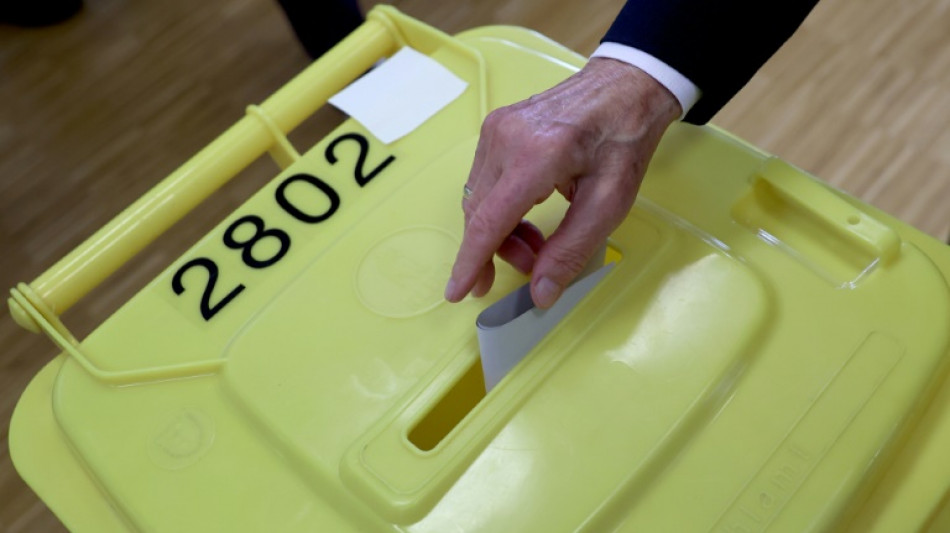
German state vote tests public mood as energy crisis bites / Photo: Ronny Hartmann - AFP

 Jay-Z to perform at Super Bowl LXI halftime show: NFL

 Climate-threatened Fijian utopia rejects calls to relocate

 Israel to give verdict on Netanyahu in pivotal election

 $1m bounties, dawn arrests: Trump presses voter fraud campaign
 Gasping for air: Borneo residents struggle as island burns
 Doha exhibition charts a millennium of Chinese maritime ceramics trade
 New Zealand ex-PM Ardern to teach leadership in Sydney

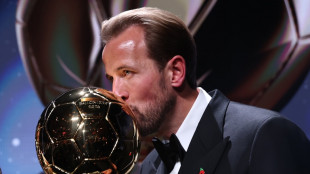
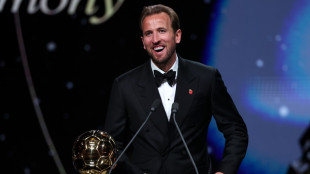
 Ballon d'Or 'beyond wildest dreams' but Kane has plenty more to prove
 No envy, no secrets: How Spain's Gipuzkoa became football coaching hotbed
 South Korea economy grows three times faster than expected in Q3

 Al-Thawadi urges technology to deepen human connection through shared experiences

 Ballon d'Or: Harry Kane's crowning moment

 Harry Kane wins men's Ballon d'Or

 مسؤولون إماراتيون: الشراكة مع بنين تفتح فرصاً للتجارة والاستثمار

 المعاشات الإماراتية: اكتمال التغطية التأمينية للقطاع الخاص

 الإمارات تعرض تجربتها في توظيف الذكاء الاصطناعي حكومياً

 شراكة إماراتية لدعم سينما ومحتوى الأطفال والشباب

 الأردن ينفذ ضربات على أهداف في سورية بعد توقيف منفذي هجوم الكنيسة

 دراكنميلر: تحركات الأسواق تحمل إشارات ينبغي الإصغاء إليها

 وزير الصناعة المصري: القطاع الخاص يقود مسار التنمية الصناعية

 تقدير احتياجات 420 مصنعاً متعثراً بنحو أربعة مليارات جنيه

 افتتاح فرع جديد للمرشدي مارتس في التجمع الخامس

 مصر والدنمارك تبحثان توسيع التعاون في الطاقة المتجددة

 تركيا والسعودية وباكستان وإيران تواصل مشاوراتها الإقليمية
 كريستو بوبوف يرسخ حضوره بين نجوم الريشة الطائرة العالمية
Germans in the coastal state of Lower Saxony headed to the polls Sunday in a closely-watched regional election seen as a test for Chancellor Olaf Scholz's Social Democrats amid an acute energy crisis.
Voting stations will close at 6:00 pm (1600 GMT), with latest surveys putting Scholz's centre-left SPD slightly ahead of the conservative CDU party of former chancellor Angela Merkel.
Anxiety about sky-rocketing energy bills has dominated the race in the northwestern region on the North Sea, reflecting the national mood.
Russia's war in Ukraine has sent energy costs soaring, pushing German inflation to a record-high of 10 percent in September and fuelling fears of a looming recession in Europe's top economy.
Lower Saxony's popular premier Stephan Weil from the SPD, eyeing a third term, said the election contest had been "the most difficult of my life".
"Never have I seen so many question marks and worries on citizens' faces," he told WirtschaftsWoche magazine.
Weil, 63, has cast himself as a safe pair of hands in uncertain times and wants Lower Saxony -- home to auto giant Volkswagen as well as most of Germany's wind turbines -- to play a leading role in the green energy transition.
He has also welcomed a controversial 200-billion-euro ($198-billion) energy fund newly unveiled by Scholz to shield German consumers from price shocks.
Weil's main rival, state economy minister Bernd Althusmann from the CDU, says the massive support package lacks clarity.
He has accused the federal government of being slow to take decisive action as Germans brace for a grim winter.
The 55-year-old challenger has billed Sunday's vote as a verdict on Scholz's coalition in Berlin of the SPD, the Greens and the liberal FDP.
"If the CDU becomes the strongest party in Lower Saxony, which is realistic, it will be a serious blow to the already divided federal government," he told the Rheinische Post.
By 12:30 pm, turnout stood at 24.6 percent, according to the regional election administration in Hanover, compared with nearly 27 percent by that time five years ago.
- Nuclear plant row -
Opinion polls put the SPD at 31-33 percent in Lower Saxony, followed by the CDU on 27-28 percent.
A win would be a boost for Scholz's SPD after it lost the last two state polls to the CDU, in North Rhine-Westphalia and Schleswig-Holstein, where voters punished his handling of the Ukraine crisis.
The Greens are tipped to win 16 percent, which would be their best showing yet in the state of 6.1 million voters.
The far-right AfD is polling at around 11 percent, nearly double what it scored in 2017.
A strong showing by the AfD, a party riven by infighting, "would be a protest vote that until a few months ago few would have expected" in Lower Saxony, political scientist Ursula Muench told AFP.
The FDP meanwhile is hovering at five percent, the threshold needed to enter into the regional parliament.
A major bone of contention between the leading candidates has been the fate of Lower Saxony's Emsland nuclear power plant -- one of only three still operational in Germany.
Althusmann has responded angrily to Berlin's decision to proceed with Emsland's planned shutdown this year, despite the need for energy diversification as the country weans itself off Russian gas and oil.
German Economy Minister Robert Habeck, from the traditionally anti-nuclear Greens, recently announced the other two plants will be kept on standby until April 2023, in a landmark U-turn.
Weil has backed Berlin's stance, saying Emsland was not needed to secure Lower Saxony's energy supply -- though he conceded that other regions may struggle when the colder weather hits.
Although the SPD and CDU currently govern together in Lower Saxony, Weil has ruled out a repeat coalition, instead preferring to team up next with the Greens.
Z.AlNajjar--SF-PST