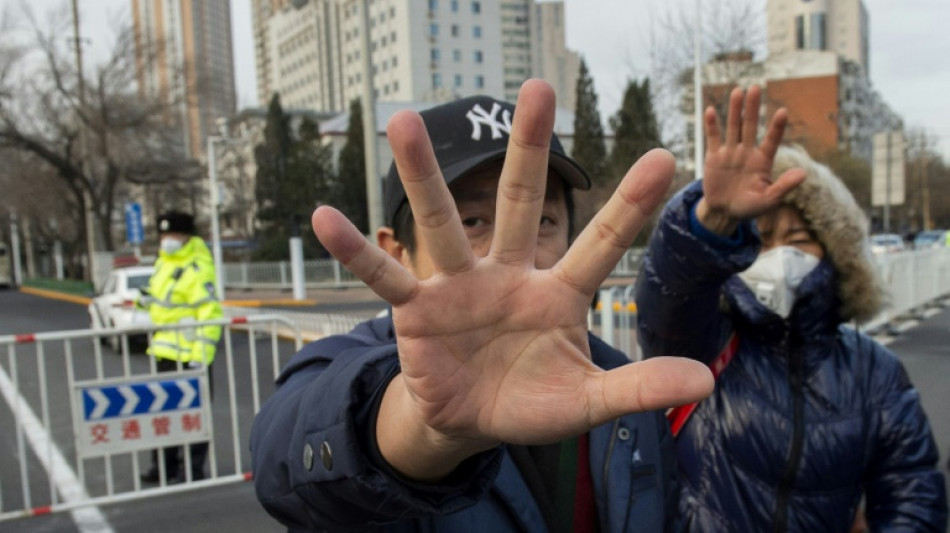
How China's civil society collapsed under Xi / Photo: Nicolas ASFOURI - AFP/File

 Vikas Satija says steady SIP flows shielded Indian equities from deeper losses

 Brewers rout Rays to reach brink of World Series sweep

 Mbappe dropped by Chinese brands for 'offending national sentiments'
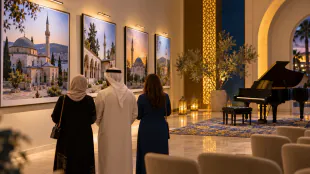 Kuwait exhibition presents Ukraine’s Islamic heritage and cultural ties

 Tech firms track Wall St rally on mixed day for Asian markets
 Jay-Z to perform at Super Bowl LXI halftime show: NFL

 Climate-threatened Fijian utopia rejects calls to relocate
 Israel to give verdict on Netanyahu in pivotal election
 $1m bounties, dawn arrests: Trump presses voter fraud campaign
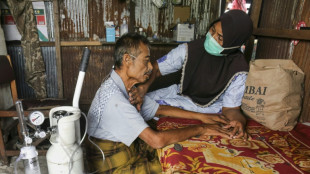 Gasping for air: Borneo residents struggle as island burns
 Doha exhibition charts a millennium of Chinese maritime ceramics trade
 New Zealand ex-PM Ardern to teach leadership in Sydney

 Ballon d'Or 'beyond wildest dreams' but Kane has plenty more to prove
 No envy, no secrets: How Spain's Gipuzkoa became football coaching hotbed
 South Korea economy grows three times faster than expected in Q3

 Al-Thawadi urges technology to deepen human connection through shared experiences
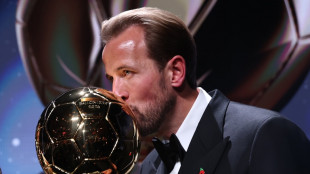 Ballon d'Or: Harry Kane's crowning moment

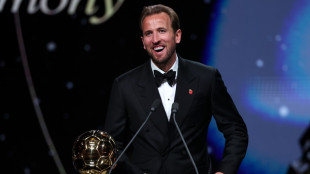 Harry Kane wins men's Ballon d'Or

 مسؤولون إماراتيون: الشراكة مع بنين تفتح فرصاً للتجارة والاستثمار
 عز العرب السويدي تقدم سيارات جايكو إلى السوق المصرية

 تمويل مشروع دندرة للطاقة الشمسية بقيمة 650 مليون دولار
 تحدي القراءة العربي يوسع أثره ويعزز المشاركة المعرفية
 شراكة إماراتية لدعم سينما ومحتوى الأطفال والشباب

 إطلاق صندوق استثماري متخصص في الغاز الطبيعي المسال

 دراسة تقرّب العلماء من تفسير دور الشمال في العصور الجليدية

Human rights activist Charles remembers a time when civil society was blossoming in China, and he could dedicate his time to helping improve the lives of people struggling in blue-collar jobs.
Now, 10 years into President Xi Jinping's rule, community organisations such as Charles's have been dismantled and hopes of a rebirth crushed.
Charles has fled China and several of his activist friends are in jail.
"After 2015, the whole of civil society began to collapse and become fragmented," he told AFP, using a pseudonym for safety reasons.
Xi, on the brink of securing a third term at the apex of the world's most populous country, has overseen a decade in which civil society movements, an emergent independent media and academic freedoms have been all but destroyed.
As Xi sought to eliminate any threats to the Communist Party, many non-governmental organisation workers, rights lawyers and activists were threatened, jailed or exiled.
AFP interviewed eight Chinese activists and intellectuals who described the collapse of civil society under Xi, though a few remain determined to keep working despite the risks.
Some face harassment from security officers who summon them weekly for questioning, while others cannot publish under their own names.
"My colleagues and I have frequently experienced interrogations lasting over 24 hours," an LGBTQ rights NGO worker told AFP on condition of anonymity, adding that psychological trauma from the repeated questioning has compounded his woes.
"We've become more and more incapable, regardless of whether it's from a financial or operational perspective, or on a personal level."
- '709 crackdown' -
The collapse of China's civil society has been a long process riddled with obstacles for activists.
In 2015, more than 300 lawyers and rights defenders were arrested in a sweep named the "709 crackdown" after the date it was launched -- July 9.
Many lawyers remained behind bars or under surveillance for years, while others were disbarred, according to rights groups.
Another watershed moment was the adoption in 2016 of the so-called foreign NGO law, which imposed restrictions and gave police wide-ranging powers over overseas NGOs operating in the country.
"In 2014, we could unfurl protest banners, conduct scientific fieldwork and collaborate with Chinese media to expose environmental abuses," an environmental NGO worker told AFP on condition of anonymity for fear of reprisal.
"Now we must report to the police before we do anything. Each project must be in cooperation with a government department that feels more like a supervisory committee."
- Zero-tolerance -
Today's landscape is markedly different from even a few years ago, when civil society groups were able to operate in the relatively permissive climate that started under previous president Hu Jintao.
"At universities, several LGBTQ and gender-focused groups sprung up around 2015," said Carl, an LGBTQ youth group member, although he felt a "tightening pressure".
By 2018, the government's zero-tolerance of activism came to a head with the authorities suppressing a budding #MeToo feminist movement and arresting dozens of student activists.
"Activities quietly permitted before were banned, while ideological work like political education classes ramped up", said Carl.
In July 2022, Beijing's prestigious Tsinghua University handed two students official warnings for distributing rainbow flags, while dozens of LGBTQ student groups' social media pages were blocked.
- 'Like grains of corn' -
Another harbinger of regression was a 2013 internal Party communique that banned advocating what was described as Western liberal values, such as constitutional democracy and press freedom.
"It treated these ideologies as hostile, whereas in the 1980s we could discuss them and publish books about them," said Gao Yu, a Beijing-based independent journalist who was either in prison or under house arrest between 2014 and 2020 for allegedly leaking the document.
"In a normal society, intellectuals can question the government's mistakes. Otherwise... isn't this the same as in the Mao era?" he asked, referring to Communist China's founder Mao Zedong.
Now, 78-year-old Gao endures social media surveillance, has virtually no income and is blocked from overseas calls or gathering with friends.
"We are all like grains of corn ground down by the village millstone," she said.
Replacing Gao and her peers are celebrity academics who parrot hawkish nationalist ideology, while others have been forced out of their positions or endure classroom surveillance from students.
"A kind of tattle-tale culture has flourished in China's intellectual realm over the past decade," said Wu Qiang, a former Tsinghua political science professor and Party critic.
"Students have become censors reviewing their professor's every sentence, instead of learning through mutual discussion."
- 'Unwinnable war' -
Faced with the increasingly harsh climate, many activists have either fled China or put their work on hold.
Only a handful persevere, despite growing hostility including online bullying.
"Perhaps right now we are at the bottom of a valley... but people are still tirelessly speaking out," said Feng Yuan, founder of gender rights group Equity.
For others, like the environmental organisation worker, it is an "unwinnable war" against nationalist trolls who claim all NGO staff are "anti-China and brainwashed by the West".
"It makes me feel like all my efforts have been wasted," they said.
Charles's friends, #MeToo advocate Huang Xueqin and labour activist Wang Jianbing, have been detained without trial for over a year on subversion charges.
He believes authorities viewed their gatherings of young activists as a threat -- and the threshold for prosecution is getting lower.
"The government is now targeting individuals who do small-scale, subtle, low-key activism," he said.
"They have made sure there is no new generation of activists."
A.AbuSaada--SF-PST