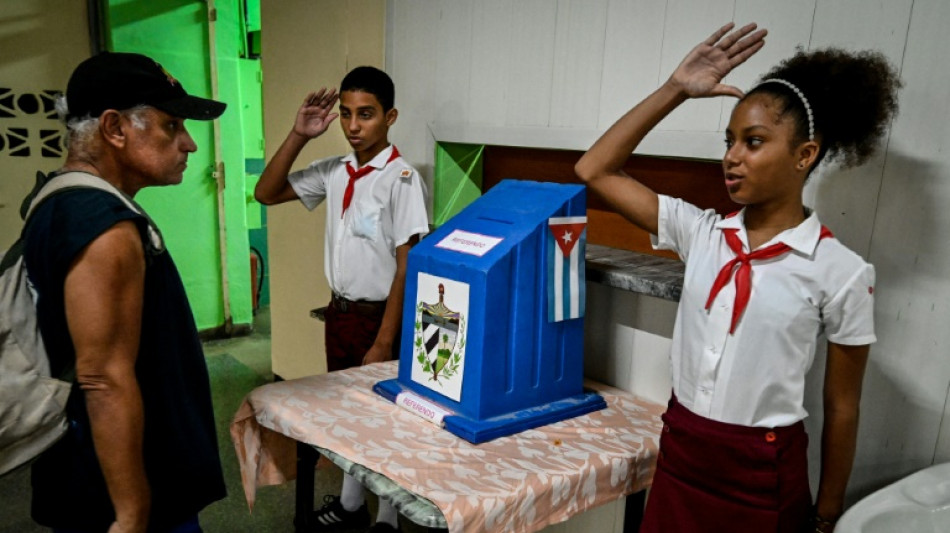
Cubans vote on a landmark liberalization of family code / Photo: ADALBERTO ROQUE - AFP

 Pakistan's last antique restorers give old treasures new life
 India braces for Cyclone Arnab with evacuations

 Steel Strips Wheels gains 36% in two sessions on growth outlook

 Cavs edge T'Wolves in overtime despite superb Edwards

 Prescott fires Cowboys to 38-21 win over plummeting Eagles
 Kuwait padel chief hails national showing at Premier Padel Major

 Britain prepares constrained budget as debt and defence pressures mount

 Valkyries beat Dream to reach brink of WNBA title
 Benjamin Netanyahu: Israel's longest-serving PM fighting for survival
 Kuwait receives invitation to 2026 UN Water Conference in Abu Dhabi
 Arab World Institute president outlines plans for stronger Kuwait-France cultural links
 Bolsonaro's party says it recognizes Lula's election win in Brazil
 Meghan on TV menu for 'Junior MasterChef Australia'
 South Korea's chip boom fuels forecast-beating third-quarter growth

 US-brokered truce begins in Ukraine city occupied by Russia
 Qatar launches Fashion and Crafts Council to connect talent with global markets
 Jordan strikes militant groups in Syria after church attack

 FIA chief praises Middle East motorsport volunteers and officials
 Australia warns of 'unprecedented' AI threat
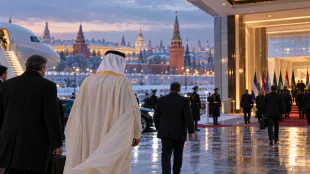 Qatar Amir arrives in Moscow for eighth GECF summit
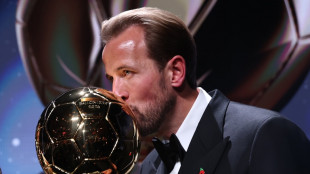
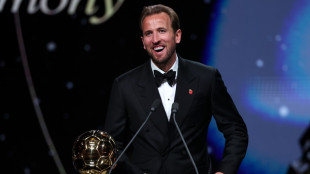
 Kane beats Yamal and Mbappe to taste Ballon d'Or glory
 عمار بن حميد يوجّه بتطوير الخدمات للمواطنين والمقيمين وقطاع الأعمال
 تمويل مشروع دندرة للطاقة الشمسية بقيمة 650 مليون دولار

 دراكنميلر: تحركات الأسواق تحمل إشارات ينبغي الإصغاء إليها

 عز العرب السويدي تقدم سيارات جايكو إلى السوق المصرية

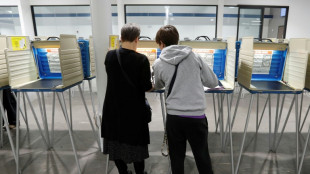
Cubans voted Sunday in a landmark referendum on whether to legalize same-sex marriage and adoption, allow surrogate pregnancies and give greater rights to non-biological parents.
President Miguel Diaz-Canel and his wife cast their ballots early at a Havana polling station for what he said is a needed revision of the country's 1975 Family Code.
The new code, he told reporters, "is a fair, necessary, up-to-date, modern norm that gives rights and guarantees to all people, to the full diversity of families, of people and of creeds."
Most polling stations throughout the island nation closed at 6:00 pm (2200 GMT). By 4:00 pm, 54.8 percent of Cuba's 8.4 million eligible voters had gone to the polls, according to the National Electoral Council.
AFP journalists observed voters arriving in a slow trickle at polling stations in Havana.
"If we compare it to other elections, it's different, we don't see any enthusiasm," one voter, Eduardo, 57, told AFP.
Cubans aged 16 and over are being asked to vote simply "Yes" or "No" on the question: "Do you agree with the Family Code?"
The updated code would represent a major shift in a country where machismo is strong and where the authorities, in the 1960s and 1970s, sent homosexuals to militarized labor camps.
Official attitudes have since evolved, and the government has conducted an intense media campaign in favor of the new code.
But the referendum comes amid the country's worst economic crisis in 30 years and could provide an opportunity for some voters to voice opposition to the government.
The law needs more than 50 percent of the vote to be adopted, and dissidents have called on citizens to reject the code or to abstain from voting.
If approved, the new code would permit surrogate pregnancies, as long as no money changes hands, while boosting the rights of children, the elderly and the disabled.
Significantly, it would define marriage as the union between two people, rather than that of a man and a woman.
"We are not voting 'Yes' with the PCC (Cuban Communist Party)," Maykel Gonzalez, a gay activist, insisted on Twitter. "It is the PCC which is voting 'Yes' with us."
- 'I'm Christian, I have other ideas'-
Several Latin American countries -- Argentina, Brazil, Chile, Colombia, Costa Rica and Ecuador, as well as some Mexican states -- now recognize same-sex marriages.
An effort by Havana in 2019 to join that group failed amid strong criticism from church leaders.
This month, the Cuban Conference of Catholic Bishops announced its stand against several points in the new code, including surrogate pregnancies and adoption by same-sex couples.
But many Cubans say they now support such ideas.
"A few years ago I would not have accepted this code," 78-year-old Elio Gomez, a former teacher of Marxism, told AFP at a Havana polling station. "But one has to keep up. This is a very human code, totally inclusive."
Others disagreed.
"I'm Christian, I have other ideas, I don't accept this," said Zulika Corso, 65, a teacher.
- 'More important subjects' -
The code's sweeping reach, including nearly 500 articles, fed doubts among some who said they agreed, for example, with same-sex marriages but not with surrogate pregnancies.
The code was the subject of months of intense debate across Cuba.
Still, political scientist Rafael Hernandez called it the "most important human rights legislation" there since the 1959 revolution.
Cuba today is experiencing a grave economic crisis -- with shortages of food, fuel and medicine -- aggravated by US sanctions and a tourism collapse due to the coronavirus pandemic.
Experts say voters could use this occasion to express their broad disapproval of the government.
"There are many other subjects that are more important than the Family Code, like the fact there is no food, that many people are hungry," concierge Julio Cesar Vazquez told AFP.
One voter, Jose Antonio Callejas, voted against the change for this very reason.
"I think I was one of the first to say 'no,'" the 47-year-old told AFP as he left a polling station in Havana. "There is no food, no hygiene products. We are surviving, in the midst of power cuts. I see no reason to say 'yes.'"
burs/to/wd
J.AbuShaban--SF-PST