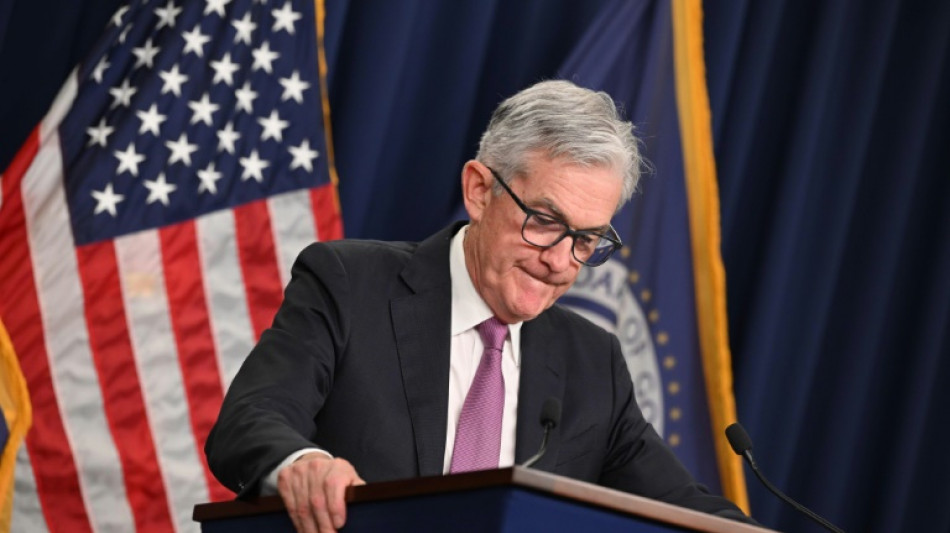
Steep Fed rate hike seen as certainty after ugly inflation data / Photo: MANDEL NGAN - AFP/File

 Critical coal inventories affect nearly half of India’s domestic power plants

 FCNR(B) deposit drive puts sharper margin pressure on private banks

 Noel Tata requests records of September 17 Tata Sons board meeting

 Reparations calls to dog King Charles's tough Caribbean trip

 Global rates and foreign outflows remain key risks for Indian markets
 Neha Nagar says ₹3 crore can fund retirement with disciplined planning

 Vikas Satija says steady SIP flows shielded Indian equities from deeper losses

 Brewers rout Rays to reach brink of World Series sweep

 Mbappe dropped by Chinese brands for 'offending national sentiments'
 Kuwait exhibition presents Ukraine’s Islamic heritage and cultural ties

 Tech firms track Wall St rally on mixed day for Asian markets

 Jay-Z to perform at Super Bowl LXI halftime show: NFL

 Climate-threatened Fijian utopia rejects calls to relocate

 Israel to give verdict on Netanyahu in pivotal election

 $1m bounties, dawn arrests: Trump presses voter fraud campaign

 Gasping for air: Borneo residents struggle as island burns

 Doha exhibition charts a millennium of Chinese maritime ceramics trade

 New Zealand ex-PM Ardern to teach leadership in Sydney

 Ballon d'Or 'beyond wildest dreams' but Kane has plenty more to prove

 No envy, no secrets: How Spain's Gipuzkoa became football coaching hotbed

 South Korea economy grows three times faster than expected in Q3

 Al-Thawadi urges technology to deepen human connection through shared experiences

 Ballon d'Or: Harry Kane's crowning moment

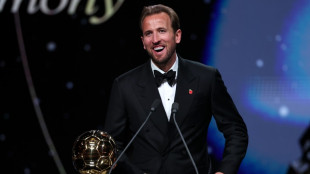 Harry Kane wins men's Ballon d'Or

 تحدي القراءة العربي يوسع أثره ويعزز المشاركة المعرفية

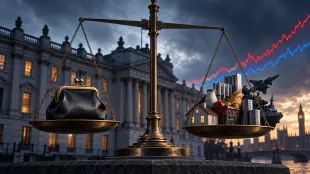
The Federal Reserve is poised to unleash another massive interest rate increase this week after the latest data showed a worrying US inflation picture, which confirmed the need for the central bank to continue to act aggressively.
Soaring prices have pushed annual inflation to a 40-year high, inflicting pain on American consumers and businesses, despite the welcome drop in gasoline prices at the pump in recent weeks.
The disappointing consumer price report for August, released last week, showed housing, food and medical costs continued to rise. And when volatile food and energy prices are stripped out, so-called core inflation accelerated.
Families have been struggling with rising prices sparked initially by high demand as the world's largest economy emerged from the pandemic amid supply chain snarls. The situation has been exacerbated by Covid lockdowns in China and surging energy and food prices due to Russia's war in Ukraine.
It is not just current high inflation that concerns policymakers, but the fear that consumers and businesses begin to expect rising prices will become a permanent feature, which could set off a dangerous spiral and a phenomenon called stagflation.
That fear has driven the Fed to front-load its rate hikes, rather than pursuing the more customary course of small, gradual steps over a longer period.
The US central bank has cranked up the benchmark lending rate four times this year, including two straight three-quarter-point hikes in June and July.
The aim is to raise the cost of borrowing and cool demand -- and it is having an impact: home mortgage rates have now topped six percent for the first time since 2008.
A third massive increase is expected Wednesday at the conclusion of the Fed's two-day policy meeting. And some people are raising the possibility the US central bank could take an even bigger step.
But concerns are rising that the aggressive action could tip the US economy into recession, which would reverberate around the globe.
"The sizzling-hot, core inflation figures that came out this week for August have upped the pressure on the Federal Reserve to raise rates a full percentage point instead of 0.75% at the upcoming meeting," Diane Swonk, chief economist at KPMG US, said in an analysis.
"This will be one of the hardest and most politically charged of decisions. It marks the Federal Reserve's first move toward an actual recession."
- Avoiding a repeat of the 1970s -
Fed Chair Jerome Powell has made it clear that a recession is a risk he is willing to take. In fact, it is a risk the central bank must take to avoid an even more dire outcome: a repeat of the damaging, runaway inflation of the 1970s and early 1980s.
"We need to act now forthrightly, strongly as we have been doing and we need to keep at it until the job is done," Powell said in his last public comments before the policy meeting.
Powell's predecessor from the last high-inflation era, Paul Volcker, had to take extreme measures after rising prices became entrenched, resurging and surpassing the peak of the mid-1970s after repeated failed efforts to tame them.
That led to a deep recession and unemployment over 10 percent.
The Fed's aim is to avoid "the kind of very high social costs" of the Volcker era, and maintain public confidence in the central bank's commitment to fighting inflation.
"The clock is ticking," Powell warned.
While the latest data showed US annual inflation slowed slightly to 8.3 percent in August -- from a peak of 9.1 percent in June -- prices actually accelerated slightly in the month, reflecting widespread price increases.
Central bankers have the luxury of a strong job market, low unemployment and a resilient US consumer, but many economists now see a recession as likely.
Former US Treasury secretary Lawrence Summers is among those warning that joblessness will have to rise to get inflation under control.
He also favors more aggressive Fed action.
"If I had to choose between 100 basis points in September and 50 basis points, I would choose a 100 basis points move to reinforce credibility," Summers said in a recent tweet.
Z.Ramadan--SF-PST