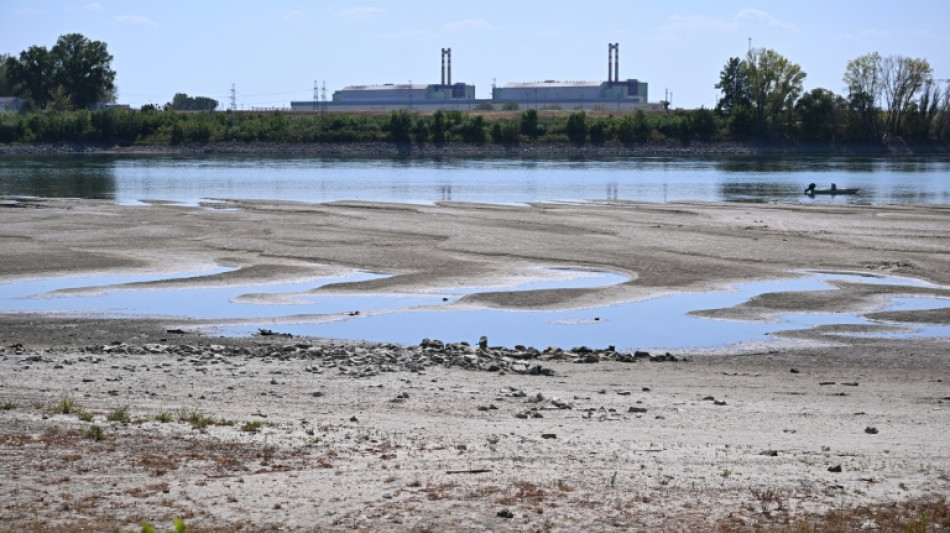
Hungary to shut nuclear plant as heatwave hits central Europe / Photo: Attila KISBENEDEK - AFP

 NFL Chiefs' Kelce among investors bilked in Ponzi scheme

 Trump threatens EU over 'hostile' Canada association plan

 Argentine judge orders suspension of Falklands oil project

 Carrick takes the blame as troubled Man Utd suffer League Cup misery

 Barcelona hit seven in Racing Santander rout

 Amorim's Milan beaten by Benfica, Sunderland make dream European return

 US stocks fall, dollar gains after Fed lifts interest rates

 Seahawks rule out Darnold for Sunday game at Arizona

 Mbappe explains Ceuta shirt stance after criticism

 Improving Atletico cruise to comfortable win over Osasuna

 Candidate for UN chief calls for AI regulation akin to nuclear weapons

 O'Neill expects Celtic recovery after Old Firm misery

 Man City midfield trio backed to emulate Rodri and Silva

 'We're losing control,' AI pioneer Yoshua Bengio tells AFP

 WHO eyes 'encouraging' signs in DRCongo fight against Ebola

 Liga boss criticises Real Madrid trio for Ceuta shirt incident

 WTA Finals moved to Charlotte from 2027

 Almost 8,000 excess deaths in France's scorched summer: statistics

 Ex-president's lengthy war crimes sentence shocks Kosovo

 US House faces test on sweeping Russia sanctions bill

 British PM says to make 'difficult decisions' as inflation rises

 TotalEnergies pumps up controversy in France with cut-price gas

 Global fuel price demos: a round-up

 Leverate Launches MCP for Traders to Connect AI Assistants With Trading Platforms

 MEXC Launches $1M "Discover Your Wall Street DNA" Campaign to Help Traders Find Their Market Fit
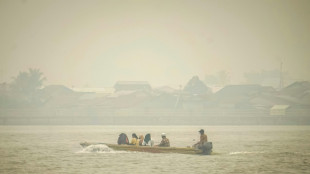
Hungary's sole nuclear power plant will be shut down next week because of low water levels in the river Danube, Prime Minister Peter Magyar said Friday as central Europe slogs through the latest in a series of heatwaves.
The nuclear plant in Paks, south of Budapest, provides around 40 percent of Hungary's annual electricity generation.
The operator of the plant, whose four reactors built with Soviet-era technology are cooled by water pumped from the Danube, warned earlier that a shutdown was "unavoidable".
"According to current calculations... this could happen on Tuesday or Wednesday," Magyar told a press conference at the plant, which has already reduced output in recent days.
The Danube has dropped to record low levels in some parts because of prolonged rain shortages and successive heatwaves since May.
Romania has already shut one of its nuclear reactors for the same reason and has announced it would close the second.
The shutdowns are just one effect of an already record-breaking spell of hot weather, with several countries taking steps to reduce the risk of fires and ease pressure on water and energy networks.
- 'Unbearable' -
Hungary's government has called on businesses to use less electricity, banned outdoor fires and ordered decorative lighting on state buildings to be switched off to save energy.
Kata Serfozo, 36, a designer on maternity leave in Budapest, said she was spending "a lot of time outdoors in the shade" because it feels better than staying at home with "the curtains drawn, the blinds down, and the shades closed".
In the town of Szentendre north of Budapest, where about 7,000 residents face cuts to their water supply, Janos Keresztes, 75, a retired translator, said the heat and lack of water were "really, really taking a toll".
The regional water company has sent water carts to provide emergency supplies, but "even though I can get enough water from the water cart to drink, (it is) not enough to wash up", he said.
In Hungary's northern neighbour Slovakia, local authorities in the capital Bratislava have set up more than 30 cooling stations offering air-conditioned spaces and drinking water.
Darina Justusova, 33, pregnant and on maternity leave, said the heat was making her "much more tired" and forcing her to "take more breaks" during the day.
"I have a daughter -- we don't go outside until it cools down a bit, because the current temperatures are unbearable," she said.
- Austrian record -
Forecasters in Slovenia, meanwhile, have said the western part of the country is facing an "extremely high" fire risk.
The authorities have banned activities that could spark fires in the area.
"This heat wave will be extraordinary due to its length, not only the high temperatures," climatologist Gregor Vrtacnik said in a press conference hosted by meteorological agency ARSO.
Sea temperature off Slovenia's the Adriatic coast could beat the all-time record of 30.4C set in 2010, according to marine experts.
Austria recorded its highest ever July temperature on Friday at 40.3C in the town of Wieselburg west of Vienna.
The country is already experiencing an "extreme" drought, according to the Geosphere Austria national weather agency.
"Since the beginning of the year, precipitation has been around 30 percent below normal levels," the agency said in a statement on Wednesday.
R.AbuNasser--SF-PST