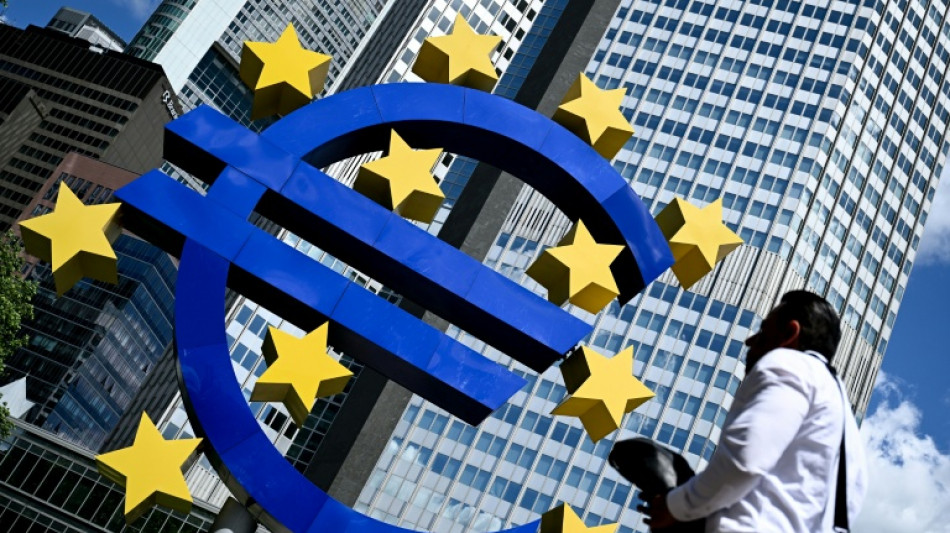
ECB holds rates as Iran war flare-up threatens to drive prices higher / Photo: Kirill KUDRYAVTSEV - AFP

 Kennedy Center: future unclear for iconic Washington arts hub
 Trump claims 'infinite' Greenland security deal with Denmark

 Helicopters battle wildfire threatening Ecuador's capital

 Brentford batter Chelsea to undo Alonso's promising start
 Kane hits Bundesliga century as Bayern rout Union
 Trump says CNN, MS NOW, Politico banned from White House
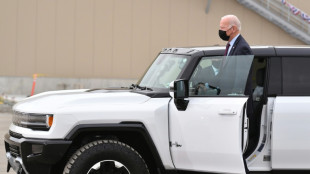 Hushing and hedging: US companies retreat on climate

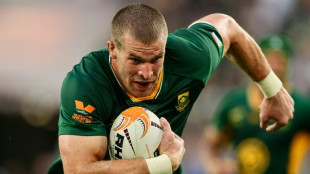 Springboks to face Fiji before 2027 Rugby World Cup
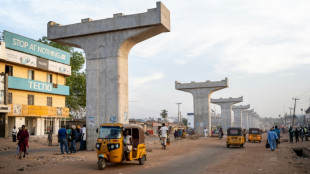 Nigeria miners struggled to breathe in cell before 37 died: survivors

 McIlroy on the charge at PGA Championship as Reed withdraws
 McIlroy on the charge at PGA Championship

 Crisis-wracked Volkswagen warns of 10-bn-euro hit to profits
 Costa Rica's Grynspan tops third informal poll for UN chief: diplomat

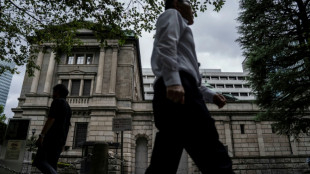 Stock markets retreat after central bank rate hikes
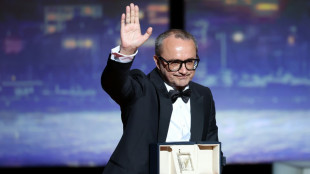 Russia labels director of Cannes Grand Prix winner a 'foreign agent'

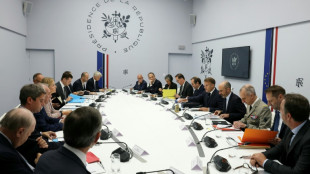 Macron warns of Russian 'hybrid' threat after meeting presidential hopefuls
 UN holds third informal poll for new chief
 Kulusevski return can spark Spurs: De Zerbi

 Shakira to cap off world tour with Madrid 12-gig run

 Isolated Syrian-Druze city blames Damascus for shortages
 Isolated Syrian-Druze city shortages

 Dutch drop Depay for Germany match in Xavi's first pick

 Ronaldo named in Portugal squad for Nations League
 Stock markets diverge after central bank rate hikes

 Anti-Assad music star makes triumphant return to Syria

The European Central Bank on Thursday kept its key deposit rate unchanged at 2.25 percent and said it was "closely monitoring" the inflationary impact of the Middle East war amid fresh fighting.
"Uncertainty remains high and the full inflationary impact of the energy shock has yet to play out," the lender of last resort for the 21 countries that use the euro said. "The Governing Council is therefore closely monitoring the intensity and duration of the shock."
Fresh fighting in the Middle East and rising oil prices had put the ECB on alert ahead of its rate-setting meeting.
Two weeks of renewed conflict between Iran and the United States have once again slowed traffic through the Strait of Hormuz to a trickle, restricting energy exports on a waterway that in peacetime carries about a fifth of the world's oil and natural gas.
The ECB in June became the first major central bank to raise rates after the near total closure of the strait, putting rates up a quarter of a percentage point to 2.25 percent.
The memorandum of understanding signed last month by Washington and Tehran raised hopes of a durable solution to the conflict but the resumption in fighting has sparked fears that eurozone inflation -- which in June eased to 2.8 percent -- might pick up again.
A barrel of Brent crude oil now trades at over $98, the highest level since the end of May, and Iran-aligned Houthi rebels on Thursday said they had struck two Saudi oil tankers in the Red Sea.
"Energy prices have reversed the decline that followed the signing of the memorandum of understanding between the US and Iran, making the benign inflation data for June an 'old' piece of information," UniCredit analysts said Monday.
"The looming risk of military escalation, oil inventories substantially below pre-war levels and intensifying pressure on natural gas prices imply with near certainty that the Governing Council will continue to view risks to price stability as skewed to the upside," they added.
- Wait-and-see -
Rising energy prices can give rise to so-called stagflation, a nightmare combination for central banks of stagnant growth and high inflation.
If central banks cut interest rates to boost growth during a period of stagflation they run the risk of further aggravating inflation.
But if they raise interest rates to tame inflation they risk slowing growth further.
Some economists had criticised the ECB's move in June as heavy-handed, drawing parallels with rate-hikes in 2011 that some blame for choking off a nascent eurozone recovery after the Great Recession.
Most observers had expected the ECB to keep its powder dry on Thursday and pause for now whilst it waits to see the outcome and duration of the latest fighting.
Investors will now be watching for any clues from ECB President Christine Lagarde in her post rate-call press conference about the path ahead for rates, although she is typically tight-lipped.
Heavily dependent on imported oil and gas, Europe can expect inflation to lift off if energy prices soar -- leaving eurozone monetary policy largely at the mercy of fast-moving geopolitical events.
"I do not know what we will have to do in our July meeting," German Governing Council member Joachim Nagel said earlier this month.
"Is there a probability that we will have to hike more? Maybe. Is there a probability that we have to stay where we are? Maybe, or maybe we have to do other things."
I.Saadi--SF-PST