Countries move to ban social media for children / Photo: Nicolas TUCAT - AFP

 Denmark hails 'binding' Greenland deal with Trump

 We don't want Games host Japan losing money, says Asian Olympic official

 Ed Sheeran returns to stage after Palestinian controversy

 Asian Games to open in Japan after troubled build-up

 Drone owners rush to offload devices ahead of Beijing ban
 Trump's beef policies irk Texas ranchers, testing their loyalty

 Nvidia, OpenAI CEOs to attend Xi dinner at White House
 Anthropic picks Accenture for in-house AI safety evaluation

 Balogun returns as Monaco beat Lens to continue strong Ligue 1 start

 'Pause' on overt repression in Venezuela, but reforms still needed: HRW

 Global stocks mixed as yen falls despite Bank of Japan rate hike
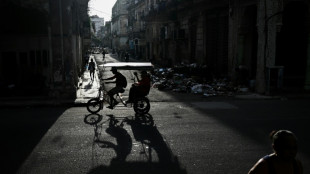 Cuba hit with seventh major blackout of the year

 Murray out with concussion so Wentz will start for Vikings

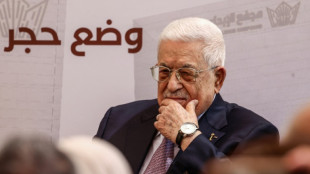 UN chief 'deeply regrets' US visa refusal to Abbas for annual meeting
 England quick Carse to face no charges over alleged nightclub assault

 Mancini brings nine newcomers into the first squad of his Italy comeback

 Czechs level Davis Cup tie against USA as South Korea eye Finals

 New France boss Zidane confirms Mbappe as captain after naming first squad
 California governor signs order to explore AI 'kill switch'
 Head leads run spree as Australia win Zimbabwe ODI series
 In-form Raphinha wants to finish career at Barcelona
 Warren Buffett steps down as Berkshire Hathaway chairman
 Carrick confident Man Utd can 'work through' tough time

 Mbappe ends Nike partnership to join Swiss brand On

 Liverpool boss Iraola puts Bournemouth love affair on hold

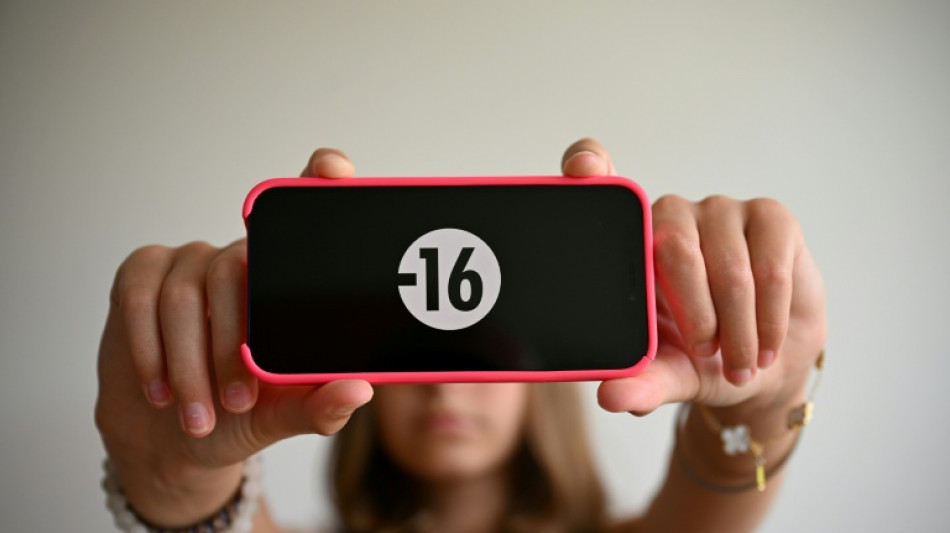
Lawmakers in France are scheduled to vote on Tuesday to ban social media for under-15s -- one of 20 countries worldwide to have proposed or introduced such measures.
Five of those countries have restrictions already in force, according to an AFP tally.
Here are facts about the measures in different countries.
- Restrictions in place -
Social media has been banned for under-16s in Australia since December 2025.
Brazil introduced a law in March requiring platforms to link the accounts of users aged under-16 to those of their parents, while also requiring platforms to verify users' ages.
In China, where the internet is tightly regulated by the state, minors' access to social media has been restricted progressively since 2019.
Initial measures imposed time limits and curfews on online gaming, before similar restrictions were extended in 2023 to social media and streaming platforms.
Indonesia has banned social media for under-16s since March.
Malaysia has taken a similar approach, with legislation coming into force in June excluding under-16s from major platforms.
Turkey is set to join the list after passing legislation to bar under-15s from social media in April. The law is expected to take effect in late 2026.
The United Arab Emirates announced a ban on social media for under-15s last month, with implementation set for around a year's time.
- Restrictions announced -
Across the 27-nation EU, the European Commission plans to propose measures later this year for a total ban for under-13s and progressive access for those aged 13 to 18.
Within the bloc, the Greek government announced in early April that it intends to ban social media access for under-15s from January 1, 2027.
Austria and Slovenia are also preparing legislation to prohibit access for under-14s and under-15s, respectively.
In Germany, where Chancellor Friedrich Merz supports restricting or even banning social media for children, an expert commission has proposed two options: a ban graded by age or platform-specific restrictions.
A similar debate is under way in Sweden, where a government commission has proposed banning social media for under-15s by early 2028.
In Denmark, the government announced in October 2025 that it would propose banning "several social media platforms" for under-15s.
The Irish government has warned that it is considering legislating in the absence of an EU decision.
Outside the EU, the Norwegian government will present a bill by the end of the year to ban access for those under 16.
The UK is looking to ban social media for under-16s by early 2027 under a measure planned by its former prime minister Keir Starmer.
Canada also wants to set the minimum age for social media use at 16.
Several states in India are considering restrictions for children, and the government said it is holding discussions with platforms over potential measures.
- Bills in parliament -
A proposal to ban social media for children under 15 is due to be voted on by France's parliament on Tuesday after deputies and senators reached a compromise agreement.
The lower house approved the bill at first reading in January but the Senate later amended it to target only the most harmful platforms, prompting concern in Brussels.
The government hopes it can come into force in September. Digital Minister Anne Le Henanff said it would make France the first country in Europe to establish a "digital legal age".
Portugal is considering a bill that would set the age for independent access to platforms, services, games and applications at 16.
Spain has proposed raising the minimum age for registering on a social media platform from 14 to 16.
In Italy, parliament is considering legislation that would ban social media use for children under the age of 15.
R.Halabi--SF-PST