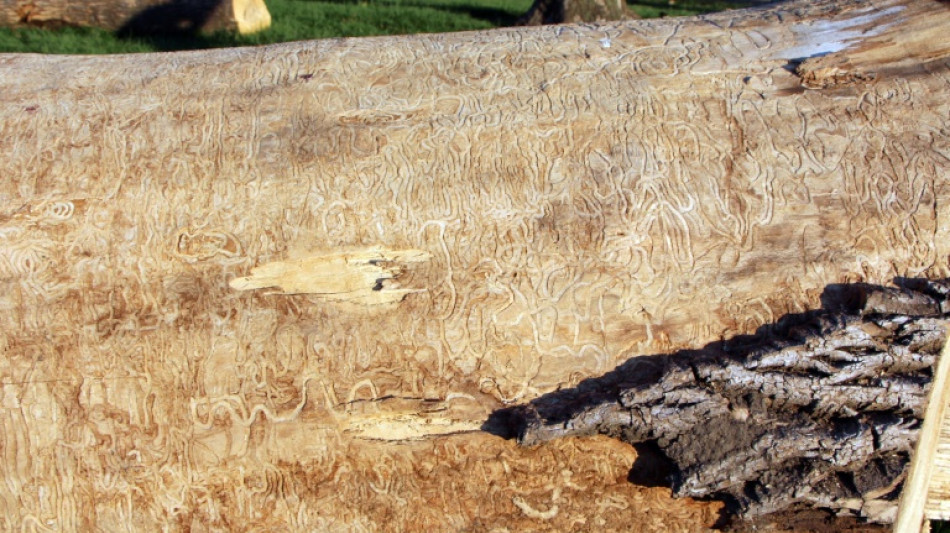
Devastating Asian beetle detected in EU for first time / Photo: Nova SAFO - AFP

 MTN’s Telkom Acquisition: Consolidation, Competition, and Regulatory Conditions

 فلسطين تحصد جائزتي "أفضل أثر عالمي" وريادة الأعمال في مسابقة إنجاز العرب

 Kubayi Warns Residents to Vacate Hijacked Buildings as State Prepares Seizures

 Van Gogh’s ‘Châtaigniers en Fleurs’ Sets $285m Record at Sotheby’s

 محكمة الاحتلال تمدد اعتقال مدير مستشفى كمال عدوان دون تهمة
A tiny Asia-origin beetle that has devastated ash forests in North America has been detected in the European Union for the first time in Hungary and Slovakia, authorities said.
Slovakia's Agricultural Central Control and Testing Institute (UKSUP), based in Bratislava, said that 18 feared emerald ash borers were found this month in the Streda nad Bodrogom district in the east of the country.
Two adult emerald ash borers were found in June in a trap in the Beregsurany forest, near Hungary's frontier with Ukraine, Hungary's NEBIH food safety office said in a statement.
The office said the emerald ash borer was "one of the most serious pests affecting ash trees" and "has already caused significant ash tree mortality in North America and Eastern Europe".
Hungarian authorities have ordered more traps to be laid and better monitoring to assess the spread of the beetle, which can grow up to 1.4 centimetres (0.5 inches) when an adult.
NEBIH has called on the public to report any trees with suspicious symptoms.
The beetle has killed tens of thousands of ash trees in the United States and Canada and many European countries say they have emergency plans ready in case it is detected on the continent.
Hungary has called for the presence of the beetle to put on the agenda of the next EU agriculture ministers' meeting.
"We are aware of the gravity of the situation and are doing everything possible to prevent this pest from becoming permanently established in Hungary or turning into a plant health issue for the whole European Union," Hungary's Agriculture Minister Szabolcs Bona told the Agroinform.hu farm news website.
M.Qasim--SF-PST