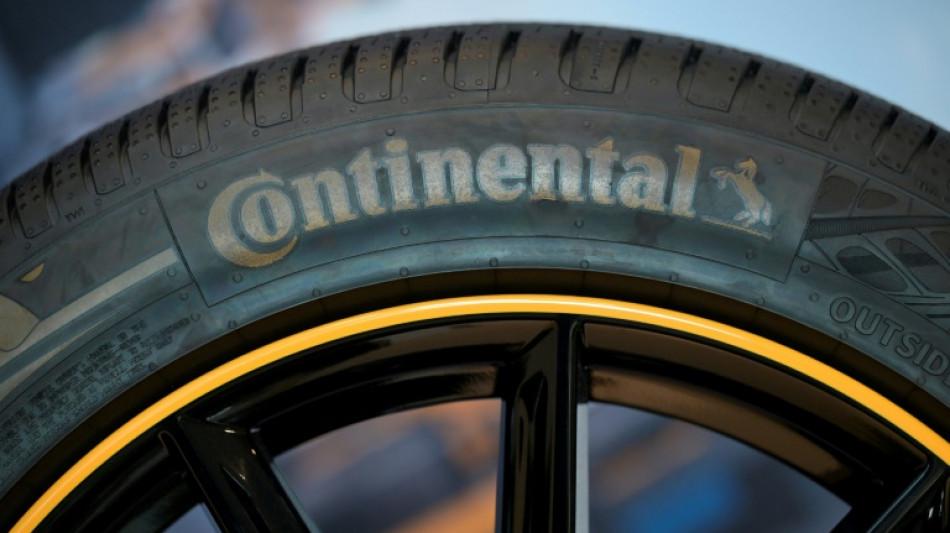
Struggling German auto supplier Continental to sell unit / Photo: FABIAN BIMMER - AFP

 MTN’s Telkom Acquisition: Consolidation, Competition, and Regulatory Conditions

 فلسطين تحصد جائزتي "أفضل أثر عالمي" وريادة الأعمال في مسابقة إنجاز العرب

 Kubayi Warns Residents to Vacate Hijacked Buildings as State Prepares Seizures

 Van Gogh’s ‘Châtaigniers en Fleurs’ Sets $285m Record at Sotheby’s

 محكمة الاحتلال تمدد اعتقال مدير مستشفى كمال عدوان دون تهمة
German auto supplier Continental announced Saturday a four-billion-euro ($4.6-billion) deal to sell a division to a US investment group, the latest move in a major restructuring.
Continental, which has been struggling amid a crisis in the wider European auto sector, has been slimming down its operations to focus on its traditional tyre business.
The group has signed an agreement to sell its ContiTech division, which makes plastic and rubber products for industrial clients, to private equity firm Lone Star Funds, according to a statement.
As well as the four-billion-euro sale price, Continental could receive up to 250 million euros more in coming years, depending on the business's performance.
"With the planned sale of ContiTech, Continental is completing its strategic realignment," it said.
The deal should be finalised by the end of 2026.
Some of the funds from the sale will be used to pay down debt, while around 2.5 billion euros will be distributed to shareholders, it added.
Continental last year spun off a division focused on car components including braking systems and sensors as a separate entity, called Aumovio.
The group has also announced thousands of job cuts in recent years, along with other auto suppliers and manufacturers in Germany.
The sector is facing fierce Chinese competition, weak demand in key markets and a troubled shift to electric vehicles.
R.Halabi--SF-PST