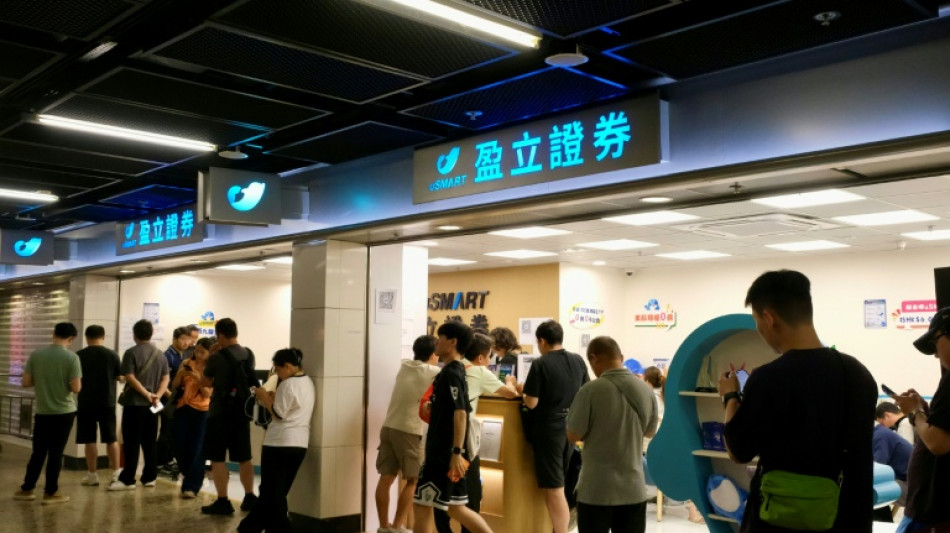
Chinese investors flock to Hong Kong as trading curbs tighten / Photo: Tommy WANG - AFP

 Iran proposes Hormuz plan, Trump reportedly refuses
 El Nino rewrites the menu in the world's top restaurants
 Pope to hold giant mass on Champs-Elysees

 TikTok to pay Alabama $100 mn under pre-trial settlement
 Internationals take 7-3 Presidents Cup lead after foursomes sweep

 Brazil team returns to Colombian site of doomed jet crash

 Mbappe injured as Zidane wins on France debut, Italy lose on Mancini return

 Senegal draw in Vieira debut, Nigeria survive scare as Cape Verde crash

 U2 performs surprise 50th anniversary gigs in Dublin

 Pope calls worshippers 'saints of France' after AI warning

 US court sides with Pentagon in Anthropic AI ban

 Wall Street stocks rise, greeting optimism over possible US-Iran deal

 NFL players chief raises concerns over pitch for Maracana game

 Daytime Russian attacks kill seven in Kyiv
 Spotting AI writing: how reliable are the detectors?
 French youth await pope after AI 'paradise of machines' warning
 Man City found guilty of Premier League charges, set to appeal: reports

 Embolo follows Xhaka out of Swiss squad over fake Covid documents
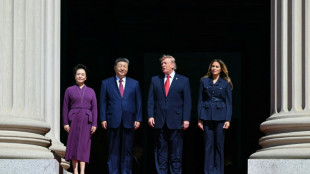 Trump, Xi inspect founding documents of US democracy to close summit

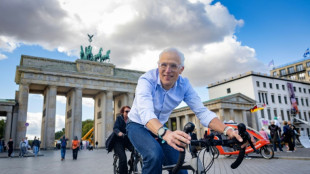 'Bottle Claus': Kipchoge's 'hero' helping runners chase Berlin marathon glory

 Olympic medallist Samba-Mayela handed provisional doping ban

 First US trial against TikTok to open Monday

 Palmer misses 'too many' England games, says Tuchel

 UN refugees chief warns conditions in W.Sahara 'deteriorating'

 Antonelli 'mad' about crash in Azerbaijan qualifying

Soon after disembarking at Hong Kong's train station, Chinese private investor Feng was opening a stock trading account at a nearby brokerage, hoping to evade tighter restrictions on capital leaving the country.
Beijing introduced new rules this month cracking down on overseas investments, citing national security concerns and cranking up curbs on buying US shares that were imposed on Chinese investors in May.
Market regulators have classified cross-border stock trading by some online brokers as "illegal"and have meted out penalties, hoping to stem what analysts say are record capital outflows in recent years.
But mainland investors are still streaming to Hong Kong, where regulations are relatively freer, hoping to trade US stocks.
Feng, who arrived on an overnight train from eastern China, opened three accounts in one day, telling AFP she did not want to miss the chance to invest in US firms.
Although US markets have been volatile recently, "they're still much better than the Chinese stock market", she said.
Seasoned investor Tao flew to Hong Kong from Shanghai, telling AFP he spent two weeks opening bank and broker accounts to retain access to US stocks.
- Crackdown -
China has long imposed strict foreign exchange controls on its citizens in order to maintain regulatory sovereignty and stabilise the valuation of its currency, the yuan.
Mainland investors have been seeking to diversify their holdings in recent years as a debt crisis has crippled the Chinese property sector, long viewed as a safe bet to park assets, analysts told AFP.
The new restrictions come after Beijing slapped more than $330 million in fines in May on major brokers Futu, Tiger and Longbridge, saying they had aided mainland Chinese investors to trade overseas despite lacking the required licences.
Authorities ordered the firms to phase out cross-border businesses in China within two years, vowing to "completely eradicate" such illegal operations.
Around $32 billion in Hong Kong and overseas assetsheld by Chinese investors are traded by the three brokers, according to the companies.
An employee from one of the firms told AFP on condition of anonymity that the severity of the crackdown was unprecedented, despite a previous penalty in 2022.
Investing in US assets in China usually requires going through officially approved channels and is typically subject to ceilings and strict foreign exchange controls.
Designer Iain Wu, a longtime broker platform user, said investors would lose opportunities such as trading newly listed global firms.
The measures signal "China's efforts to control the outflow of citizens' funds and assets", he said.
"I'm concerned that regulations will tighten even further, such as by limiting the annual investment quota per person," Wu added.
- 'Grey areas' -
Households, institutions and companies shifted an estimated record of $807 billion in assets moved out of China in 2025, according to a Bloomberg report citing the Institute of International Finance's data.
The outflows have come as Chinese policymakers have struggled to sustain a post-pandemic economic revival, with annual growth slowing, consumption stuttering and property sector debt mounting.
Top leaders have also spooked some investors by signalling a desire to tackle deep-seated wealth inequality.
May's sanctions on brokers are the toughest measures taken by officials in years to plug loopholes that people long used to bypass capital controls.
Dick Kay, Deloitte China's capital market services group leader, said that officials had cracked down on brokers to steer investors towards trading through compliant channels, which are more "manageable".
"Once the so-called grey areas have been narrowed or reduced, the requirements for the legitimate channels... will be expanded", allowing more people to invest through authorised routes, Kay said.
Han Lin, a cross-border finance specialist at The Asia Group consultancy, said Beijing's move was driven by "concerns over capital outflows, regulatory sovereignty, and unlicensed offshore securities activity".
Investors increasingly see regulatory risk rather than market risk as the key variable shaping overseas investment access, he told AFP.
The rules signal that overseas investment should be carried out "on Beijing's terms", said Lin.
"Future overseas deals will continue, but approvals will increasingly favour strategic sectors aligned with national priorities."
E.Qaddoumi--SF-PST