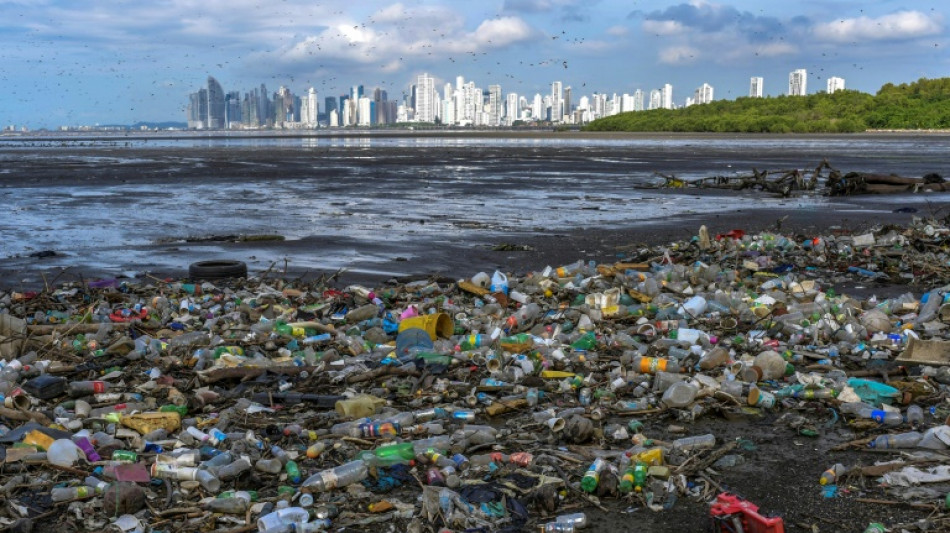
World must work together to tackle plastic ocean threat: WWF

 Star Cameroon goalkeeper Bihina faces Malawi's prolific Chawinga sisters in WAFCON final

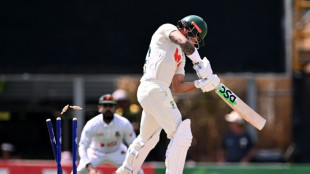
 Mehidy claims Smith to keep Bangladesh on top in Australia Test

 Iran fires back at Trump's threat to declare Hormuz a US territory
 No monkey business: India 'whisperers' guard world championships

 Steady India 101-1 at lunch in first Sri Lanka Test

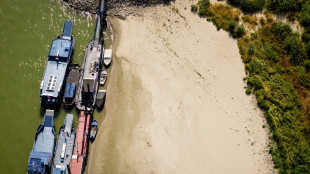 Faced with historic drought, the Dutch rethink water management
 Pallister holds off Ledecky to win Pan Pacs 400m free title
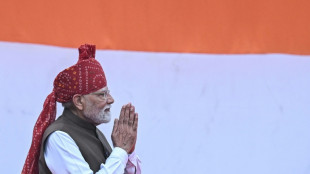 India's Modi woos youth with free coaching, AI training

 Mehidy half-century steers Bangladesh to big lead in Australia Test
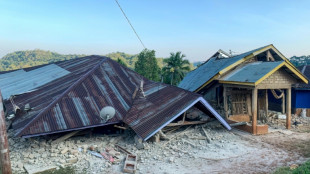
 Powerful quake off Indonesia sparks mass evacuations

 Poweful quake off Indonesia sparks mass evacuations
 LA Olympics has to allow politicians on the bus, just not behind the wheel - Coe
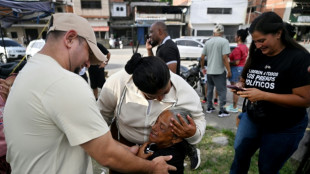
 No.1 Scheffler fires sizzling 61 to seize PGA St. Jude lead

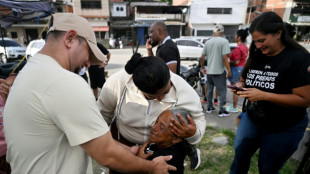 Venezuela frees more political prisoners amid post-Maduro talks
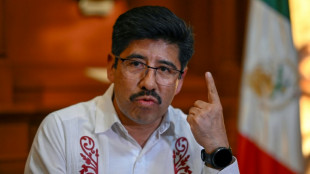
 Werro upstages Hodgkinson to win thrilling Euro 800m gold

 Werro upstages Hodgkinson to win Euro 800m gold

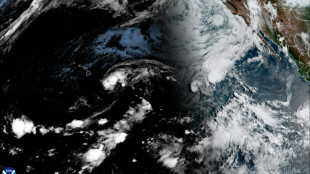 Hurricane poised to hit Hawaii as El Nino stirs Pacific

 Ex-Cambridge professor at centre of plagiarism scandal found dead

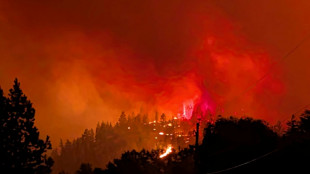 Wildfire threatens Canada wine region

 'Normal guy' turned killer over US insurance industry grievances

 Norway's hurdles king Warholm wins fourth European title
 Liverpool deal with Bezos consortium raises stakes in US battle for Premier League power

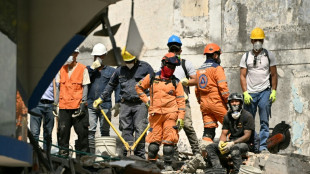 Colombia hopes for miracles as search for quake victims goes on

 Popovici, Quadarella mine more gold at Europeans as Marchand flexes in butterfly

 'I shot Mr Thompson': Stunning confession in US health exec's slaying
Plastic has infiltrated all parts of the ocean and is now found "in the smallest plankton up to the largest whale" wildlife group WWF said on Tuesday, calling for urgent efforts to create an international treaty on plastics.
Tiny fragments of plastic have reached even the most remote and seemingly-pristine regions of the planet: it peppers Arctic sea ice and has been found inside fish in the deepest recesses of the ocean, the Mariana Trench.
There is no international agreement in place to address the problem, although delegates meeting in Nairobi for a United Nations environment meeting this month are expected to launch talks on a worldwide plastics treaty.
WWF sought to bolster the case for action in its latest report, which synthesises more than 2,000 separate scientific studies on the impacts of plastic pollution on the oceans, biodiversity and marine ecosystems.
The report acknowledged that there is currently insufficient evidence to estimate the potential repercussions on humans.
But it found that the fossil-fuel derived substance "has reached every part of the ocean, from the sea surface to the deep ocean floor, from the poles to coastlines of the most remote islands and is detectable in the smallest plankton up to the largest whale".
- 'Saturation point' -
According to some estimates, between 19 and 23 million tons of plastic waste is washed into the world's waterways every year, the WWF report said.
This is largely from single-use plastics, which still constitute more than 60 percent of marine pollution, although more and more countries are acting to ban their use.
"In many places (we are) reaching some kind of saturation point for marine ecosystems, where we're approaching levels that pose a significant threat," said Eirik Lindebjerg, Global Plastics Policy Manager at WWF.
In some places there is a risk of "ecosystem collapse", he said.
Many people have seen images of seabirds choking on plastic straws or turtles wrapped in discarded fishing nets, but he said the danger is across the entire marine food web.
It "will affect not only the whale and the seal and the turtle, but huge fish stocks and the animals that depend on those", he added.
In one 2021 study, 386 fish species were found to have ingested plastic, out of 555 tested.
Separate research, looking at the major commercially fished species, found up to 30 percent of cod in a sample caught in the North Sea had microplastics in their stomach.
Once in the water, the plastic begins to degrade, becoming smaller and smaller until it is a "nanoplastic", invisible to the naked eye.
So even if all plastic pollution stopped completely, the volume of microplastics in the oceans could still double by 2050.
But plastic production continues to rise, potentially doubling by 2040, according to projections cited by WWF, with ocean plastic pollution expected to triple during the same period.
- Enduring risk -
Lindebjerg compares the situation to the climate crisis -- and the concept of a "carbon budget", that caps the maximum amount of CO2 that can be released into the atmosphere before a global warming cap is exceeded.
"There is actually a limit to how much plastic pollution our marine ecosystems can absorb," he said.
Those limits have already been reached for microplastics in several parts of the world, according to WWF, particularly in the Mediterranean, the Yellow and East China Seas (between China, Taiwan and the Korean Peninsula) and in the Arctic sea ice.
"We need to treat it as a fixed system that doesn't absorb plastic, and that's why we need to go towards zero emissions, zero pollution as fast as possible," said Lindebjerg.
WWF is calling for talks aimed at drawing up an international agreement on plastics at the UN environment meeting, from February 28 to March 2 in Nairobi.
It wants any treaty to lead to global standards of production and real "recyclability".
Trying to clean up the oceans is "extremely difficult and extremely expensive", Lindebjerg said, adding that it was better on all metrics not to pollute in the first place.
C.Hamad--SF-PST