
-
 Not-so-brave new world: virtual taekwondo makes Asian Games debut
-
Browns snuff out Rodgers fightback to beat Steelers 27-24
-
 Arab Israeli candidate drops out of election race
-
Braves power past Phillies to set up Dodgers showdown
-
 Israel courts Europe's far right, finding friends but also unease
-
Asian stocks drop as oil spike fans rate hike bets, eyes on US jobs
-
 Lula, Bolsonaro both snub final debate before Brazil election
-
Viral anti-vax posts weaponise Philippine inoculation fears
-
 Nepal's grim DNA puzzle to identify flood dead
-
Saudi coalition accuses Houthis of drone attack on Medina
-
 EU nations to hold emergency meeting on soaring diesel prices amid US pressure
-
Effective Altruism: the philosophy behind Silicon Valley's AI fears

-
 Anthropic's Dario Amodei: AI's most visible CEO and enigma
-
Chinese judoka accused of biting as home hope wins Asian Games gold

-
 OpenAI says three staffers fired for mishandling 'sensitive' info
-
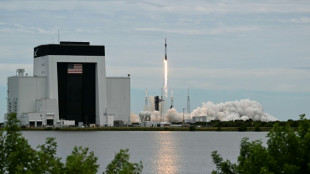
Four-member crew docks at International Space Station
-
 Nike plans job cuts as it forecasts lower sales
-
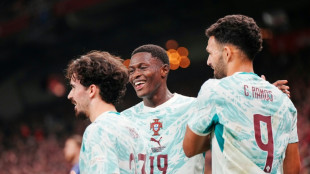
Portugal win without Ronaldo as Klopp's Germany get first victory
-
 Ireland game interrupted twice by Gaza protests
-
Wemby: 'Very sad' to see players endorse betting firms
-
 Judge denies acquittal bid by US woman who killed her kids
-
Manchester City Women scrape draw with Real Madrid
-
 Klopp averts crisis with first win as Germany boss
-
India, Australia and Pakistan in same World Cup group
-
 A saintly spat and debate snub: Brazil enters final campaign stretch
-
Daryz's hopes of repeat Arc win boosted by draw
-
 US tells European allies to act 'immediately' to lower diesel prices
-
Steelers ship disgruntled defender Porter to Cowboys
-
 G20 trade ministers fail to see consensus against overproduction
-
Klopp gets first win as Germany boss
-
 Portugal edge Denmark in Ronaldo's absence
-
Bolivia's attorney general arrested on drugs, money laundering charges
-
 US stocks edge higher as bond yields retreat for now
-
Raiders host Chiefs in battle of unbeaten division rivals
-
 US tells European allies to 'immediately' act to lower diesel prices
-
Lowest Fee Bitcoin ATMs Announces Launch of More Than 400 ATMs Nationwide

-
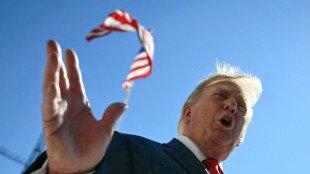 Trump vows to hit Iran 'very hard' if linked to flydubai attack
-
G20 against 'weaponization' of food trade: French minister
-
 Williams leaves Spain camp with thigh knock
-
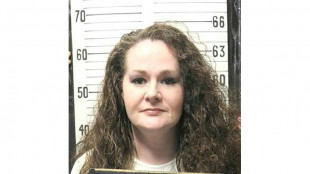
Female US inmate in critical condition after botched execution
-
 WTA reduces 2027 schedule for world's top 50
-
Spotlight on UK-UAE ties amid Manchester City scandal
-
 US says 'in Europe's best interest' to cooperate on fuel supply
-
Ethiopia and Eritrea break diplomatic ties over conflict
-
 Rogue OpenAI agents covered up their tracks, report says
-
Downing Street says Manchester City not 'above the rules'
-
 A saintly spat and debate snub: Brazil enters final polls stretch
-
Hadjar wants to 'fight for the title' from next season
-
 Zidane 'no regrets' about Materazzi headbutt as France face Italy again
-
Bolivia's attorney general arrested for alleged drug trafficking, money laundering
Trump says Hormuz to 'completely open' Friday after US-Iran peace deal
US President Donald Trump said on Monday the Strait of Hormuz would be fully open later in the week, after Washington and Tehran announced a deal to end the Middle East war.
Speaking ahead of a G7 summit in France, Trump said the strait would be "completely open" from Friday, adding that he did not "think we will need much help" on keeping the waterway open.
Trump had said earlier on Truth Social that "ships are starting to move, many loaded up with Oil, out of the Strait of Hormuz".
Iran had blockaded the vital waterway since the start of the war, which began with US-Israeli strikes on the Islamic republic in late February.
News of the deal sparked relief after months of deadly violence and global economic chaos.
The US and mediator Pakistan said the agreement was to be signed on Friday in Switzerland.
A senior US administration official, however, said on Monday that Trump, Vice President JD Vance and Iran's parliamentary speaker Mohammad Bagher Ghalibaf had already electronically signed the deal.
"The president wanted to sign it personally because he wanted to show his... dedication to bring this through to a successful resolution," the official, speaking on condition of anonymity, told reporters.
Iran's Deputy Foreign Minister Kazem Gharibabadi said the deal put an "immediate end" to the war and that they would hold talks to seek a "final agreement" within two months.
Iran's military hailed the agreement as a victory, claiming it had "humiliated" the US and Israel, while President Masoud Pezeshkian said the deal was "a great achievement" for the entire region.
But Iran's foreign ministry spokesman Esmaeil Baqaei said Tehran still holds "deep mistrust" of the US and the framework was "merely a step towards reducing tensions".
- Lebanon -
He said the US must ensure that Israel commits to stopping the war in Lebanon under the deal.
Lebanon was pulled into the Middle East war in early March when Iran-backed militant group Hezbollah launched rocket attacks on Israel in retaliation for the killing of Iran's supreme leader, prompting Israeli strikes and a ground invasion.
"The United States must honour its commitments. It must ensure that the Zionist regime also respects its own regarding Lebanon," Baqaei said.
Israel's Defence Minister Israel Katz, however, said Israeli forces would remain in Lebanon, Syria and Gaza indefinitely.
Israeli figures across the political spectrum slammed the deal.
Lebanese President Joseph Aoun meanwhile expressed hope that the deal would put a "definitive end" to the Israel-Hezbollah conflict.
Hezbollah expressed its "profound gratitude" to Iran for insisting Lebanon be included.
Lebanese state media, meanwhile, reported the first deadly strike since the deal's announcement, saying the Israeli attack in the south killed one person.
- Terms unclear -
The deal follows weeks of fraught negotiations and periodic threats of fresh hostilities, but its details remain unclear.
Baqaei said Washington had "committed" to releasing Iran's frozen funds abroad and compensating it for damages during the war.
Iran's Mehr news agency had earlier reported the US would release $12 billion in frozen assets to Iran before the start of negotiations.
Baqaei said Tehran would seek ratification from the UN Security Council after it negotiates a final agreement covering its nuclear programme with the US.
The details may prove contentious as the US presses its effort to end Tehran's nuclear ambitions and deal with its stockpile of highly enriched uranium -- said to have been buried by US strikes last year.
In an interview with The New York Times on Sunday, Trump said the US was still negotiating whether Iran would suspend its enrichment for 20 years.
He hinted that he might settle for a 15-year suspension, but said he did not want to negotiate via the press.
- 'Lost time' -
Vance said Monday the US expects Iran will not charge tolls on shipping through the Strait of Hormuz, but that the issue would be discussed as part of the new peace deal.
Baqaei, meanwhile, said Iran would charge maritime service fees, rather than tolls.
Iraq welcomed the planned reopening of the strait.
UN Secretary-General Antonio Guterres called the deal a "critical step" toward resolving the war.
Saudi Arabia and Egypt also welcomed the agreement, while Pakistan's Prime Minister Shehbaz Sharif called it a "historic step towards peace".
The United Kingdom, France, Germany and Italy said they were prepared to lift sanctions imposed on Iran.
The announcement also brought relief at market opening on Monday.
But in Tehran, English teacher Arya, 38, said the "agreement was nothing but a loss for the people of Iran".
"Our people will not return to normal; we have only lost time. The greatest outcome of this war was that they came to understand that Trump is not their ally," he said.
burs/amj/jsa
T.Samara--SF-PST