Can ChatGPT be charged in a murder? Florida wants to find out / Photo: SEBASTIEN BOZON - AFP

 Spain's PM calls snap election after housing bill defeat

 STARCARES Equips Seven Foster Homes for Children and Young People in Tanzania

 Alleged Indian leader of neo-Nazi child abuse ring goes on trial in Paris

 Euro, French stocks slide on France debt concerns
 Alcaraz advances to Japan Open final

 US-German trio win medicine Nobel for work on optogenetics

 Hundreds of French high schools shut as protests persist

 Spain PM calls early election after housing crisis defeat

 Stocks rally as 'Goldilocks' jobs data ease rate fears

 Myanmar says 10,000 migrants returned from Malaysia this year
 Big guns back for Australia's Rugby League World Cup defence

 Braves rock Dodgers to level series, Brewers win thriller

 Most Asia stocks rally as 'Goldilocks' jobs data ease rate fears
 Sunken Silk Road city reveals Central Asia's lost history

 Three years on, Israeli rescuer cannot escape October 7
 Research into weight-loss drugs tipped for Nobel as award week opens

 US Supreme Court hears bid to shut the door on climate suits
 Chourio walk-off single lifts Brewers over Padres

 Chervon Names Claudio Chiappetta Vice President of Retail Sales for Chervon Canada
 Chervon Names Peter J. Carlson Director of Sales for Strategic Accounts

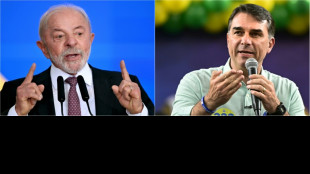 Flavio Bolsonaro leads Lula in near-done Brazil vote count

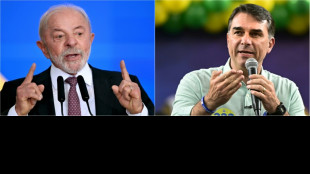 Flavio Bolsonaro leads Lula in partial Brazil poll results

 Titan FX Launches Second “Dream Beyond Borders 2.0” Brand Commercial Featuring Keisuke Honda

 Patriots inflict first Bills defeat as Rams surge late

 Brazil's Indigenous back Lula as El Nino fuels forest fires
Before he opened fire on the Florida State University campus last year, killing two people and wounding six others, Phoenix Ikner had a conversation.
Not with a friend, a parent or anyone who might have talked him out of it -- but with an AI chatbot.
According to evidence gathered by Florida's attorney general, the student had asked ChatGPT which weapon and ammunition would be best suited for his attack, and when and where he could inflict the most casualties.
The chatbot, investigators say, answered his questions.
Now Attorney General James Uthmeier wants to know whether that makes OpenAI a criminal.
"If the thing on the other side of the screen was a person, we would charge it with homicide," he said, announcing a criminal investigation into ChatGPT maker OpenAI and leaving open the possibility of charges against the company or its employees.
The case surrounding the April, 2025 shooting has thrust a provocative question into the legal spotlight: Can the creators of an artificial intelligence be held criminally liable for the role their AI played in a crime -- or even a suicide?
Legal experts say it's a realistic, if deeply complicated, proposition.
-- Criminal product? --
Criminal prosecutions of corporations are possible under US law, though they remain relatively uncommon.
Late last month, Purdue Pharma was hit with more than $5 billion in criminal fines and penalties for its role in fueling the opioid crisis.
Volkswagen was previously found guilty in the emissions cheating scandal, Pfizer over its promotion of the anti-inflammatory drug Bextra and Exxon for the Exxon Valdez oil spill in Alaska.
But those cases all involved human decisions -- executives, salespeople or engineers who made choices and cut corners.
The Ikner case is different, and that difference is precisely what makes it so legally treacherous.
"Ultimately, it was a product that encouraged this crime, that did the act of the crime," said Matthew Tokson, a law professor at the University of Utah. "That's what makes this case so unique and so tricky."
Legal experts consulted by AFP say the two most plausible charges would be negligence or recklessness -- the latter involving a deliberate choice to ignore known risks or safety obligations.
Such charges are often treated as misdemeanors rather than felonies, meaning lighter sentences if convicted.
The bar, however, is high.
"Because this is such a frontier issue, a more compelling, more clear-cut case would probably involve internal documents recognizing these risks and maybe not taking them seriously enough," Tokson said.
"In theory, you could get liability without it," he said. "But in practice, I think that'd be difficult."
In criminal law, "the burden of proof is higher," noted Brandon Garrett, a law professor at Duke University -- with prosecutors required to establish guilt beyond a reasonable doubt.
OpenAI, for its part, insists ChatGPT bears no responsibility for the attack.
"We work continuously to strengthen our safeguards to detect harmful intent, limit misuse, and respond appropriately when safety risks arise," the company said.
-- Civil or criminal? --
For those seeking accountability, a civil lawsuit may offer a more viable path.
Such an approach might push companies to design their products more carefully -- or at least force them to reckon with the human cost of getting it wrong, said Tokson.
Several civil cases have already been filed against AI platforms in the US -- many involving suicides -- though none has yet resulted in a judgment against the companies.
In December, the family of Suzanne Adams sued OpenAI in California court, alleging that ChatGPT contributed to the murder of the Connecticut retiree by her own son.
Newer versions of ChatGPT have introduced additional safeguards, acknowledged Matthew Bergman, founding attorney of the Social Media Victims Law Center.
"I'm not saying that they are adequate guardrails, but there are more guardrails in effect," he said.
A criminal conviction, even with a modest sentence, could still inflict serious damage, including a "big reputational impact," Tokson said.
But for Garrett, prosecutions -- however dramatic -- are no replacement for the regulatory frameworks that Congress and the Trump administration have so far failed to put in place.
That, he said, would be "a much more sensible system."
S.AbuJamous--SF-PST