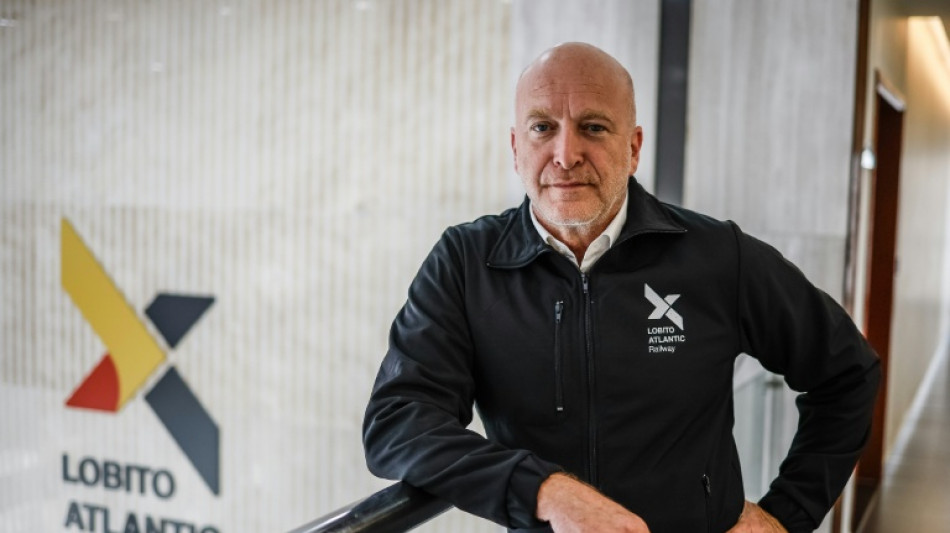
Africa's Lobito Corridor chief tells AFP business, not geopolitics, drives strategy / Photo: Phill Magakoe - AFP

 Spain's PM calls snap election after housing bill defeat

 STARCARES Equips Seven Foster Homes for Children and Young People in Tanzania

 Alleged Indian leader of neo-Nazi child abuse ring goes on trial in Paris
 Euro, French stocks slide on France debt concerns

 Alcaraz advances to Japan Open final

 US-German trio win medicine Nobel for work on optogenetics

 Hundreds of French high schools shut as protests persist

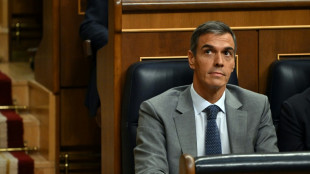 Spain PM calls early election after housing crisis defeat

 Stocks rally as 'Goldilocks' jobs data ease rate fears
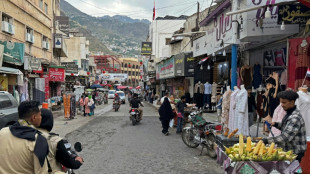
 Myanmar says 10,000 migrants returned from Malaysia this year

 Big guns back for Australia's Rugby League World Cup defence
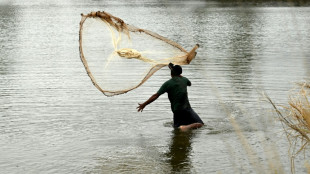
 Braves rock Dodgers to level series, Brewers win thriller

 Most Asia stocks rally as 'Goldilocks' jobs data ease rate fears

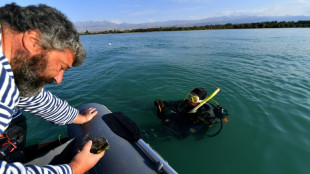 Sunken Silk Road city reveals Central Asia's lost history

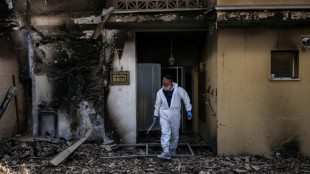 Three years on, Israeli rescuer cannot escape October 7

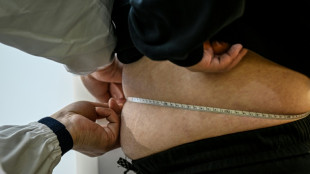 Research into weight-loss drugs tipped for Nobel as award week opens
 US Supreme Court hears bid to shut the door on climate suits

 Chourio walk-off single lifts Brewers over Padres

 Chervon Names Claudio Chiappetta Vice President of Retail Sales for Chervon Canada

 Chervon Names Peter J. Carlson Director of Sales for Strategic Accounts

 Flavio Bolsonaro leads Lula in near-done Brazil vote count
 Flavio Bolsonaro leads Lula in partial Brazil poll results

 Titan FX Launches Second “Dream Beyond Borders 2.0” Brand Commercial Featuring Keisuke Honda

 Patriots inflict first Bills defeat as Rams surge late

 Brazil's Indigenous back Lula as El Nino fuels forest fires
The chief executive of the Lobito Atlantic Railway (LAR) project to link southern African mines to an Angolan export port says his priority is the business of the operation, not the geopolitical tussle over Africa's minerals.
LAR holds a 30-year concession to operate the Benguela railway, a key artery of the planned Lobito Corridor linking Angola to the mining belt of the Democratic Republic of Congo, with a longer-term ambition to connect to Zambia.
Western governments have promoted the corridor as an alternative export route for critical minerals at a time when China dominates much of the region's mining and processing capacity.
But chief executive Nicholas Fournier told AFP in an interview in the port city of Lobito that his priorities are operational.
Around 70 percent of mines in the DRC are Chinese-owned and some are already using the line to ship copper and receive sulphur, which is used in copper processing, Fournier said.
End buyers, he said, are spread across regions.
"They are in the Americas, in Europe or in Asia," Fournier said. "So we are totally apolitical."
The company is owned by a consortium led by commodities trader Trafigura and Portuguese construction firm Mota-Engil, each holding 49.5 percent.
Belgian private rail operator Vecturis owns the remaining one percent.
Financing includes a loan of more than $500 million from the US International Development Finance Corporation (DFC), fuelling perceptions of Western backing.
"It is indeed a loan and we pay interest on it," Fournier said.
- High demand -
LAR began operations in 2023 and is responsible for freight traffic on the Angolan section of the line, moving mining-related cargo as well as supplying fuel and gas to the country's interior.
Passenger services are operated by Angola's state-owned railway company Caminho de Ferro de Benguela (CFB).
Much of the route is single track and it only doubles at stations, where trains can pass each other, a constraint that limits traffic and makes timetable discipline critical.
"In 2025, we ran 5,000 trains in Angola," Fournier said, adding that 90 percent were passenger trains and the rest freight for the domestic market and the DRC.
On the Congolese route, he said LAR can now run up to one "copper train" a day to Lobito and one "sulphur train" a day back toward the mines.
Copper accounts for the bulk of LAR's Congolese freight. The metal is shipped as cathode plates in sealed containers, representing about 95 percent of the volume from the DRC.
LAR has also transported cobalt, packaged in one-tonne bags, and could carry other minerals either in bulk or packaged form.
"We receive a lot of proposals for manganese. For lithium, too. But for the moment, we are focusing on what is in highest demand: copper," Fournier said.
- 'Plan B' -
Scaling up will require more work on the Congolese side of the border, he said.
The corridor's economics would improve if trains could be lengthened from around 15 wagons to 25 and potentially to 50, but that depends on track condition and infrastructure.
LAR is supporting DRC's state railway operator, SNCC, with expertise and a pre-financing mechanism to fund works on the track from the Angolan border to Kolwezi and on to Lubumbashi, the main city in the country's copper belt.
"It will take time, but we are confident that within two years, we will have a continuous line from Lobito to Kolwezi," Fournier said.
The Zambian segment of the Lobito Corridor -- often described as the missing link -- is not on LAR's near-term agenda, he added, citing the scale and cost of rehabilitating the rail infrastructure.
"We have been approached for numerous discussions regarding a possible extension to Ndola in Zambia, but at present, it is not really on my radar."
The interview came as Fournier was managing disruption from severe flooding in Angola's Benguela province 10 days earlier that he said would require weeks of repair work.
"So we put a Plan B in place," describing a 350-kilometre (220-mile) road haul before the cargo can be transferred back onto rail.
"Unfortunately, there's no other way than using trucks in this type of situation."
T.Khatib--SF-PST