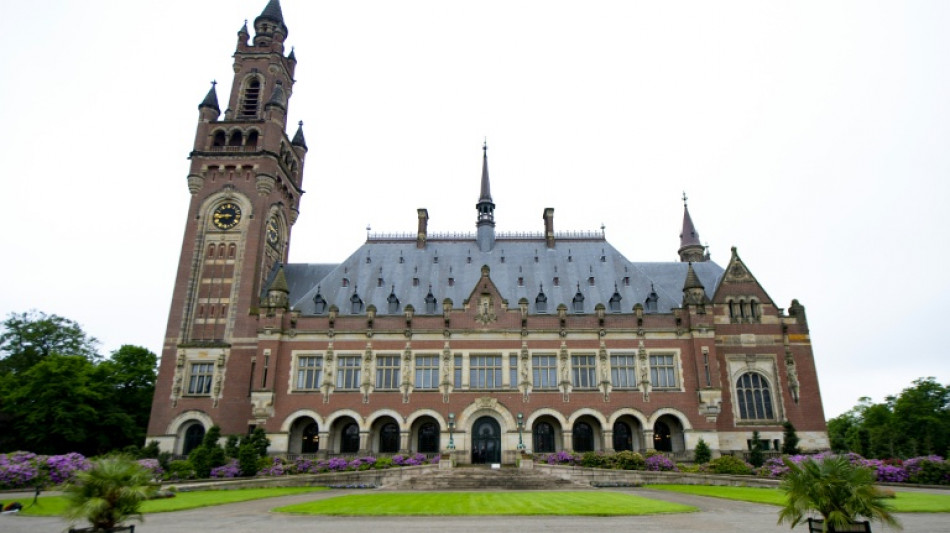
Venezuela to ICJ: Rights to oil-rich region 'inalienable' / Photo: Nick Gammon - AFP

 Euro slides as worries about French debt grow
 US withdraws all bomber aircraft from UK airbase
 Drone hits Ethiopia IDP camp as fears grow of regional war

 US-German trio wins medicine Nobel for illuminating the brain
 England captain Kane driven by desire for records says Tuchel
 N.Irish court hears challenge to disputed Orangemen parade

 Talking points from the Bahrain Grand Prix in Malaysia

 Yemen, Saudi Arabia target Houthis in new campaign as war escalates

 US-German trio wins medicine Nobel for work on optogenetics
 Swiatek, Zheng survive three-set tests in China Open third round

 Hasan says Test cricket momentum turning for Bangladesh
 Intense heat puts births in jeopardy, UN tells Fiji talks
 US arrests woman accused of spying for China on Taiwan leader's family

 Yemen military announces broad strikes against Houthis
 Zuckerberg skewered again on screen in 'The Social Reckoning'
 Fiji urges 'just' climate transition, financing at pre-COP gathering

 Thailand's Jeeno overcomes late wobble to win Lotte Championship

 Brazil heads to run-off as Bolsonaro pulls off shock first place finish over Lula
 EU, China to hold Beijing talks to avert trade war
 Bolsonaro edges past Lula as nail-biter Brazil vote goes to a run-off

 Rubio visits Iceland as US boosts Arctic presence
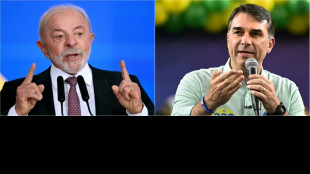 Bolsonaro leads Lula as nail-biter Brazil vote goes to a run-off

 Patriots inflict first Bills defeat as Chiefs keep winning

 Chervon Names Peter J. Carlson Director of Sales for Strategic Accounts

 Chervon Names Claudio Chiappetta Vice President of Retail Sales for Chervon Canada
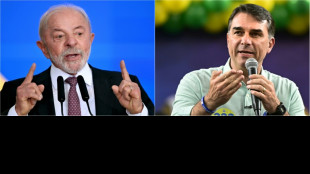
Venezuela's rights to the oil-rich territory of Essequibo are "inalienable", its representative told the top UN court on Wednesday at hearings aimed at resolving a centuries-old border dispute with Guyana.
The International Court of Justice in The Hague is holding a week of hearings between the two countries over the row that has at times threatened to spill over into military action.
"Venezuela's historical rights are inalienable and Venezuela is determined to defend them peacefully," Samuel Reinaldo Moncada Acosta told the court.
The pair have been wrangling over the region since the 1800s, with the dispute intensifying after ExxonMobil discovered massive offshore oil deposits a decade ago, giving Guyana the largest crude oil reserves per capita in the world.
The Essequibo region comprises more than two thirds of Guyana, which currently administers it.
Neighbouring Venezuela, however, claims the territory, which runs roughly along the western side of an eponymous river over an area of 160,000 square kilometres (62,000 square miles).
ICJ judges have been asked to rule on the validity of the border established between the two countries in 1899 under British colonial rule.
Venezuela argues that the border should be drawn in accordance with a later document from 1966 signed before Guyana gained its independence.
It says that the Essequibo River, located much farther east than the current border, is the natural frontier, as it was in 1777 under Spanish colonial rule.
- 'Existential' case -
In testimony on Monday, Guyana's Foreign Minister Hugh Hilton Todd told judges the case had "an existential quality for Guyana" with more than 70 percent of its territory at stake.
"For the Guyanese people, it is tragic even to think about having our country dismembered by stripping from us a vast majority of our land, together with its people, its history, its traditions and customs, its resources and precious ecology," he said.
Venezuela's Acosta dismissed this argument.
"The characterisation by Guyana of an alleged threat to its territorial integrity or to its sovereign territory constitutes a flagrant misinterpretation. a deliberately misleading presentation of both facts and law," he told judges.
The ICJ, which seeks to resolve disputes between states, will hold hearings until Monday but a ruling is likely to take months if not years.
The court's decisions are binding but it has no power to ensure that they are upheld.
Acosta reiterated Venezuela's stance that the ICJ had no power to rule on the case.
"Our historical experience has taught us that delegating vital matters... to international judicial bodies has been detrimental to our sovereignty and our territorial integrity," he said.
"As a result, Venezuela has never agreed to submit this controversy to the court's jurisdiction."
A.AlHaj--SF-PST